

Eco-Friendly Weddings: Why More Couples Are Opting for Lab Grown Diamond Engagement Rings
Somewhere in the last few years, "sustainable wedding" went from niche trend to genuine priority for a meaningful number of couples planning their big day. In India, this shift has been slower than in some Western markets, but it's real and it's accelerating. Younger couples — particularly those who've grown up researching what they consume — are asking questions about their wedding choices that their parents' generation simply didn't think to ask.
- Why the Engagement Ring Is the First Place Couples Start
- The Environmental Case for Lab Grown Diamonds — Honest and Nuanced
- Beyond the Environmental Angle — The Ethical Case
- The Budget Angle — What 70-80% Savings Actually Means for Your Wedding
- Choosing Your Ring for an Eco-Friendly Wedding
- Beyond the Ring — Other Sustainable Wedding Choices
- Frequently Asked Questions
The honest version of this conversation, though, is more complicated than most brand marketing will admit. "Eco-friendly" gets attached to products the way "natural" gets attached to food — loosely, optimistically, and sometimes misleadingly. So before we talk about lab grown diamond engagement rings in the context of a sustainable wedding, let's be clear about what the term actually means, where lab grown diamonds genuinely deliver on it, and where the picture is more nuanced.
Why the Engagement Ring Is the First Place Couples Start
Of all the purchases that go into a wedding, the engagement ring is unusual in a few ways. It's one of the most expensive. It's worn every day for the rest of your life. And it has a supply chain — mining, cutting, trading, setting — that's longer and more geographically dispersed than almost anything else you'll buy for the occasion.
Flowers come from farms. Catering comes from local vendors. But a diamond engagement ring, in its traditional form, involves a stone that was likely extracted from a mine in Russia, Botswana, or Canada, traded through Antwerp or Dubai, cut in Surat, and set in a Mumbai workshop. For couples who care about where their money goes and what it funds, the ring becomes the natural starting point for sustainable wedding thinking.
The Environmental Case for Lab Grown Diamonds — Honest and Nuanced
Lab grown diamonds have real environmental advantages over mined diamonds. They also have one honest caveat. Let's take both seriously.
What Mining Actually Does to Land and Water
Diamond mining at industrial scale is a significant land-use and water-use operation. Open-pit mining involves removing vast quantities of earth to access diamond-bearing rock — traditional diamond mining uses approximately 57 litres of water per carat produced. The land disruption associated with large mines is permanent on any human timescale.
Beyond land and water, mining operations create tailings — waste rock and processing residue — that can leach chemicals into local water systems. Even well-regulated mines have a significant physical footprint. There's no mining in lab grown diamond production. A lab grown diamond is grown in a controlled chamber using HPHT or CVD technology. No earth is disturbed. No water courses are diverted. No tailings are produced. On these metrics, lab grown diamonds are straightforwardly better.
Where Lab Grown Diamonds Fit — and the Honest Caveat About Energy

Growing diamonds in a laboratory requires significant electricity. The HPHT and CVD processes both run energy-intensive equipment for extended periods. If that electricity comes from a coal-heavy grid, the carbon footprint can be meaningful.
The environmental calculus varies depending on where the diamond is grown and what powers the facility. Producers running on renewable energy have a genuinely low carbon footprint. Those on coal-heavy grids less so. So the honest conclusion: for land disruption, water use, and local environmental impact, lab grown is clearly better. For carbon emissions, it depends on the producer. The environmental case is strong — it's just not perfectly simple, and any brand that tells you otherwise is overstating the case.
Beyond the Environmental Angle — The Ethical Case

Conflict-Free by Definition
The "blood diamond" or "conflict diamond" issue — the use of diamond revenues to fund armed conflict — became widely known in the early 2000s. The Kimberley Process certification scheme was established in 2003 to address it, though its critics note that its definition of "conflict diamond" is narrow and its enforcement uneven.
A lab grown diamond bypasses this entire question — not because it has a cleaner certificate, but because the issue structurally doesn't apply. There are no mining communities involved. The stone was grown in a laboratory. Conflict-free isn't a claim that needs verifying — it's a fact about how the stone was made.
Supply Chain Transparency
Lab grown diamonds offer a shorter, more traceable supply chain. The stone's origin is the growing facility. Its journey to a finished ring involves cutting (primarily in Surat) and setting by your jeweller. For buyers who value supply chain transparency, that simplicity is genuinely meaningful. Worth acknowledging honestly: responsible mining operations do provide employment in some regions — lab grown removes both the risks and those economic benefits from the equation.
The Budget Angle — What 70-80% Savings Actually Means for Your Wedding
Lab grown diamonds are currently priced at approximately 70–80% less than mined diamonds of equivalent grade. On a ring that would have cost ₹3 lakhs for a mined stone, you're looking at roughly ₹60,000–90,000 for an equivalent lab grown stone.
What does that budget difference represent in wedding terms? A significantly better venue. The photographer you actually wanted. Contribution toward a home. Or a second piece of jewellery — a matching band or an upgrade to a larger stone in the ring itself.
There's also an argument that aligns squarely with sustainable wedding values: if you're spending less on the ring, you have more budget to direct toward local vendors, sustainable catering choices, or experiences rather than things. The financial flexibility that lab grown diamonds provide isn't separate from the sustainable wedding conversation — it's part of it.
Choosing Your Ring for an Eco-Friendly Wedding
What to Look for in a Lab Grown Diamond
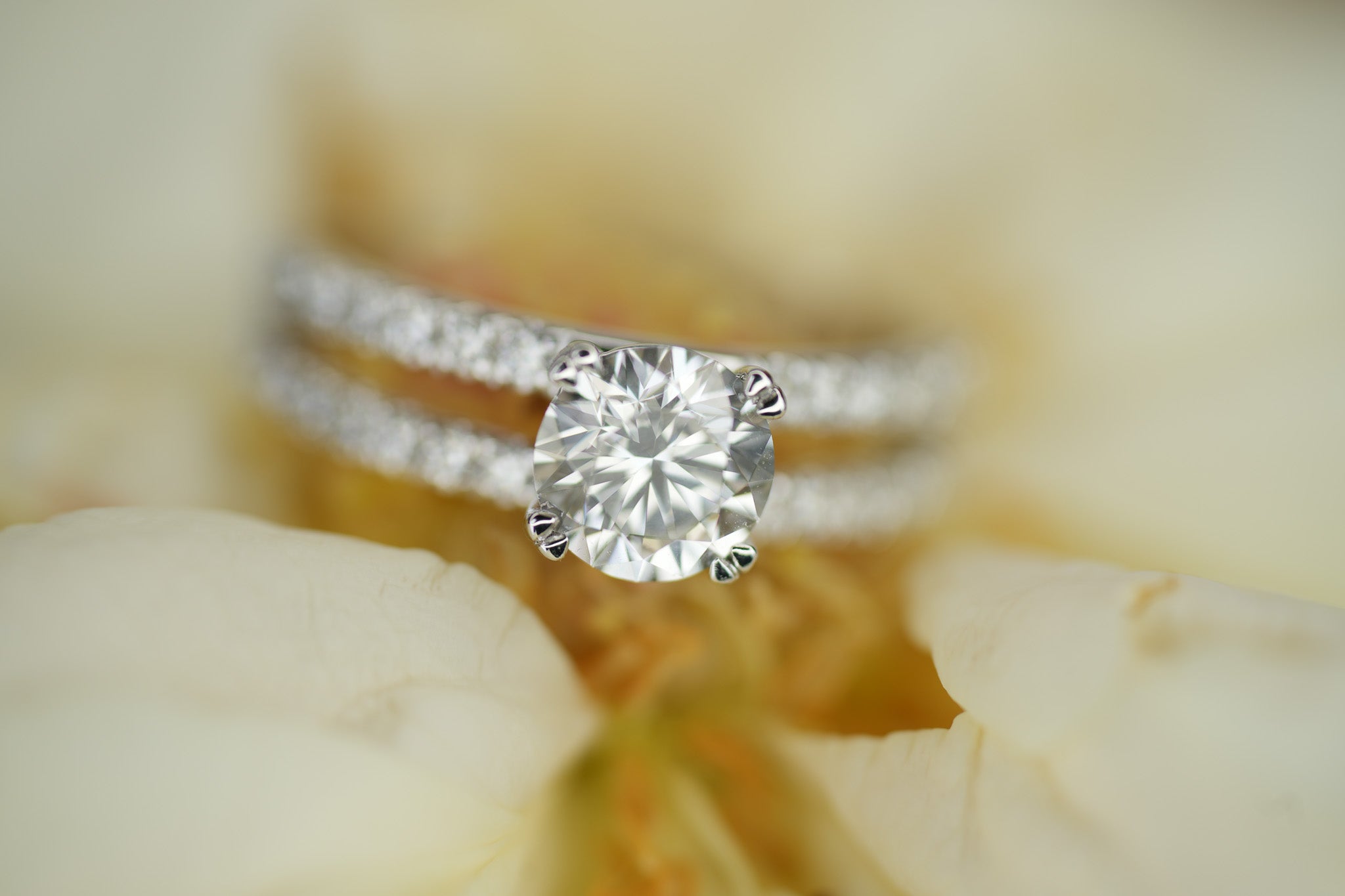
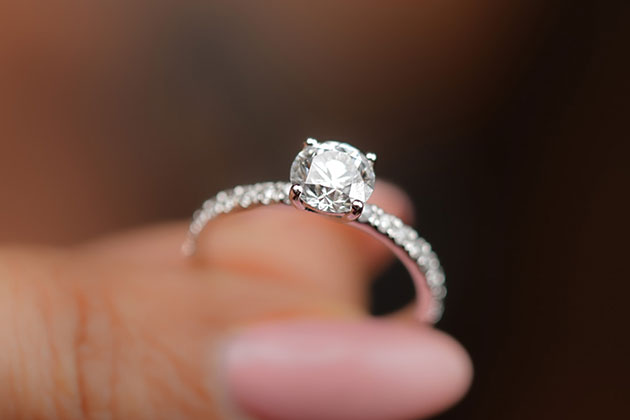
Certification is non-negotiable. Reputable lab grown diamonds are certified by IGI, SGL, or GIA. At Blu Diamonds, solitaires carry IGI certification, documenting all four Cs — cut, colour, clarity, and carat — with the same rigour applied to mined stones.

Prioritise cut above everything else. A well-cut stone is brilliant and alive regardless of its other grades. Aim for H colour or better, and VS2 clarity or above for brilliant cuts. With 700+ designs available at Blu Diamonds, you're not limited to a small selection — whether you want a classic four-prong solitaire, a halo setting, or something more contemporary, the range is genuinely comparable to what you'd find in the mined diamond market.

Metal Choices — Yellow Gold, White Gold, Rose Gold
Yellow Gold is the most traditional, and in Indian jewellery, deeply resonant. It flatters near-colourless lab grown diamonds beautifully — the warm tone makes the stone appear even whiter by contrast.
White Gold has a cool, contemporary look that suits minimalist settings particularly well. It shows colour in a diamond more visibly, so opt for G or H colour in a White Gold setting. White Gold is rhodium-plated to achieve its finish, and that plating will need occasional renewal over years of wear.
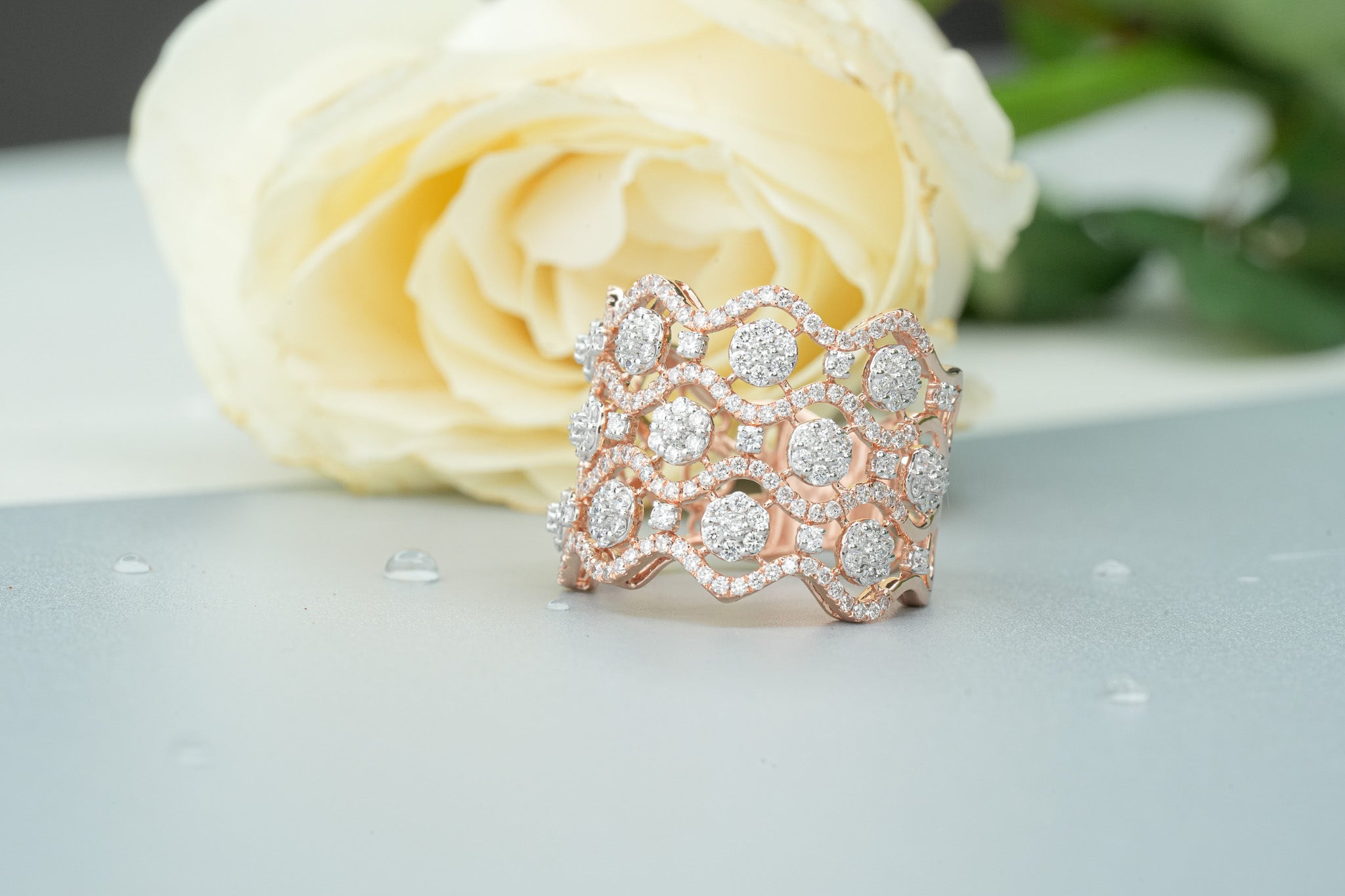
Rose Gold has become one of the most popular choices for engagement rings. The warm, romantic tone pairs beautifully with lab grown diamonds — particularly striking in halo and pavé settings.
On the sustainability front: some jewellers offer settings made with recycled gold — refined from existing jewellery rather than newly mined. Blu Diamonds can advise on recycled gold options for couples who want to extend their sustainable choices to the metal as well as the stone.
Beyond the Ring — Other Sustainable Wedding Choices
Couples who are thinking carefully about their ring tend to apply the same lens to other aspects of their planning. The most impactful choices tend to be in catering — food waste is one of the largest contributors to a wedding's environmental footprint. Working with caterers who source locally, reduce single-use packaging, and have food donation arrangements makes a genuine difference.
Digital invitations — or recycled paper stock for printed invites — is an easy win. Locally grown, seasonal flowers have a fraction of the carbon footprint of imported blooms. And clothing: a lehenga or sherwani that is vintage, made from sustainably sourced fabric, or designed to be worn again is both an ethical and often a better style choice.
None of this has to be all-or-nothing. A sustainable wedding isn't a perfect zero-carbon event — it's a series of choices made with more awareness than the default. Start where it matters most to you.
Frequently Asked Questions
Are lab grown diamonds truly eco-friendly, or is that just marketing?
Partly yes, with caveats. Lab grown diamonds definitively eliminate land disruption, water use associated with mining, and community displacement. The energy consumption of the growing process is a genuine consideration — its impact depends on the energy source used by the specific producer. "Eco-friendly" is largely accurate on land and water metrics, more variable on carbon. It's a better choice than mined on most environmental dimensions, but not a perfect zero-impact one.
How do I know a lab grown diamond is certified?
Ask for the certificate at point of purchase. Reputable lab grown diamonds are graded by IGI, SGL, or GIA. At Blu Diamonds, solitaires carry IGI certification as standard. You can verify any IGI certificate directly on IGI's website using the report number.
Does choosing a lab grown diamond mean compromising on the ring's appearance?
Not in any way. A lab grown diamond is chemically and physically identical to a mined diamond — same crystal structure, same refractive index, same hardness, same brilliance. A well-cut lab grown diamond will outperform a poorly-cut mined diamond every time. Even trained gemologists cannot distinguish them without specialised equipment.
Is a lab grown diamond engagement ring a good long-term choice?
A lab grown diamond ring is a real diamond ring. It will look the same in five years, ten years, fifty years as it does today. The stone won't fade, tarnish, or wear down — diamonds rate 10 on the Mohs hardness scale, the maximum. Whether it's the right choice depends on what matters to you. If a mined diamond's geological origin is important to you, that's a legitimate preference. If what matters is a beautiful, certified, real diamond that will last forever — a lab grown diamond delivers that completely, with more budget left over and a cleaner supply chain conscience.
Shop Lab Grown Diamond Jewellery: Rings | Earrings | Pendants | Bracelets | Engagement Rings | Tennis Bracelets
Read more
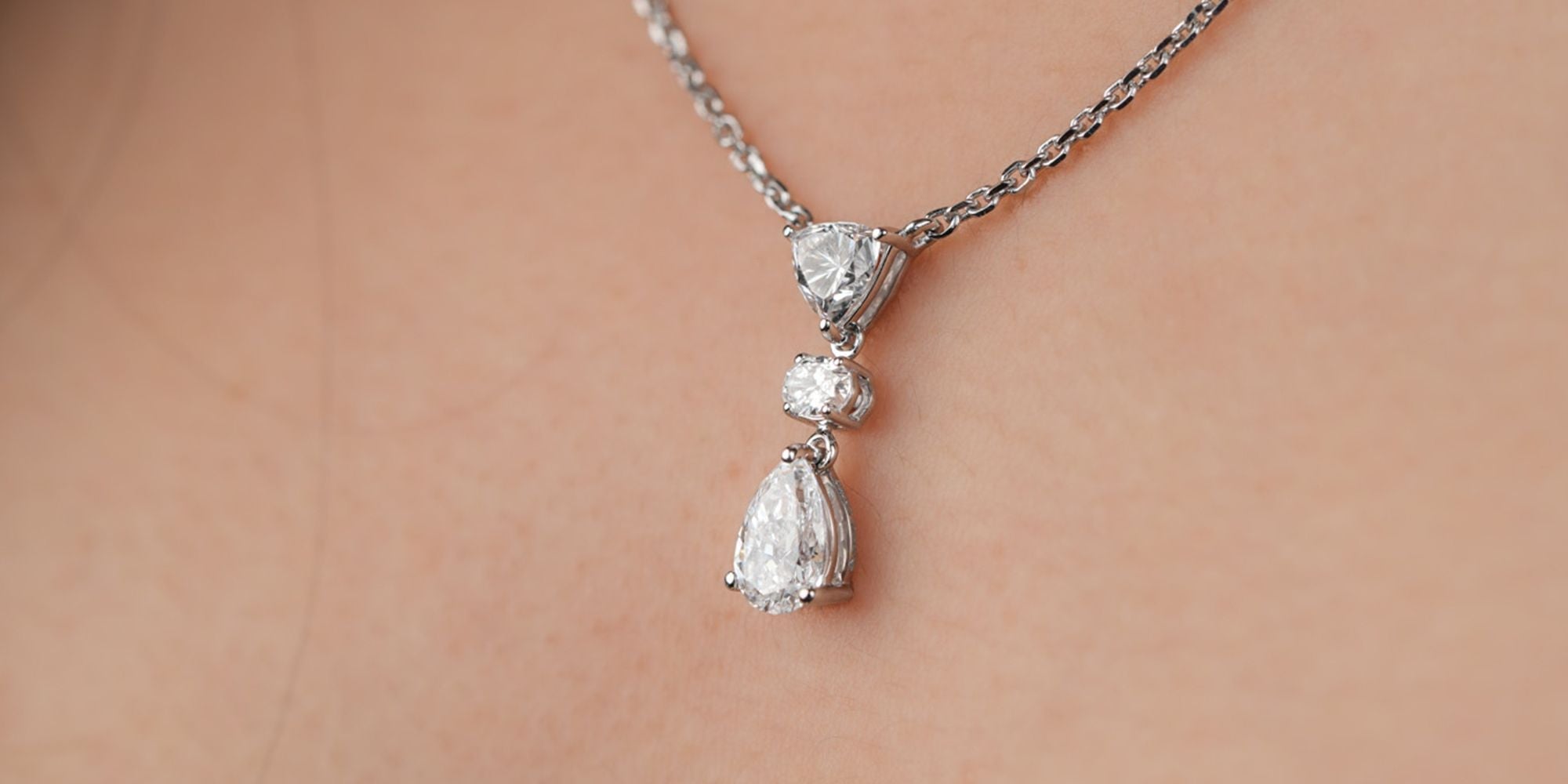
Exploring the Beauty of Lab Grown Diamond Pendant Designs
In the realm of fine jewellery, the allure of diamonds has captivated hearts for centuries. Blu Diamonds.
Read more
Sparkling Style: Top 10 Tips to Match Jewellery with Your Saree
Sarees are timeless garments that embody elegance and grace. Blu Diamonds.
Read more