

Article: Which Hand and Finger Should You Wear Your Engagement Ring On in India?
Which Hand and Finger Should You Wear Your Engagement Ring On in India?
- Which Hand Should You Wear an Engagement Ring On in India?
- Which Finger Is the Engagement Ring Finger?
- Why Do People Wear Engagement Rings on the Ring Finger?
- Left Hand or Right Hand: What Is Common in India?
- What About Men and Women's Engagement Rings?
- Does the Hand Change After Marriage?
- Choosing Lab Diamond Engagement Rings for Everyday Wear
- Which Metal Should You Choose?
- Engagement Rings and Indian Wedding Jewellery
- How to Make Your Engagement Ring Comfortable
- What Should You Consider Before Buying?
- FAQs
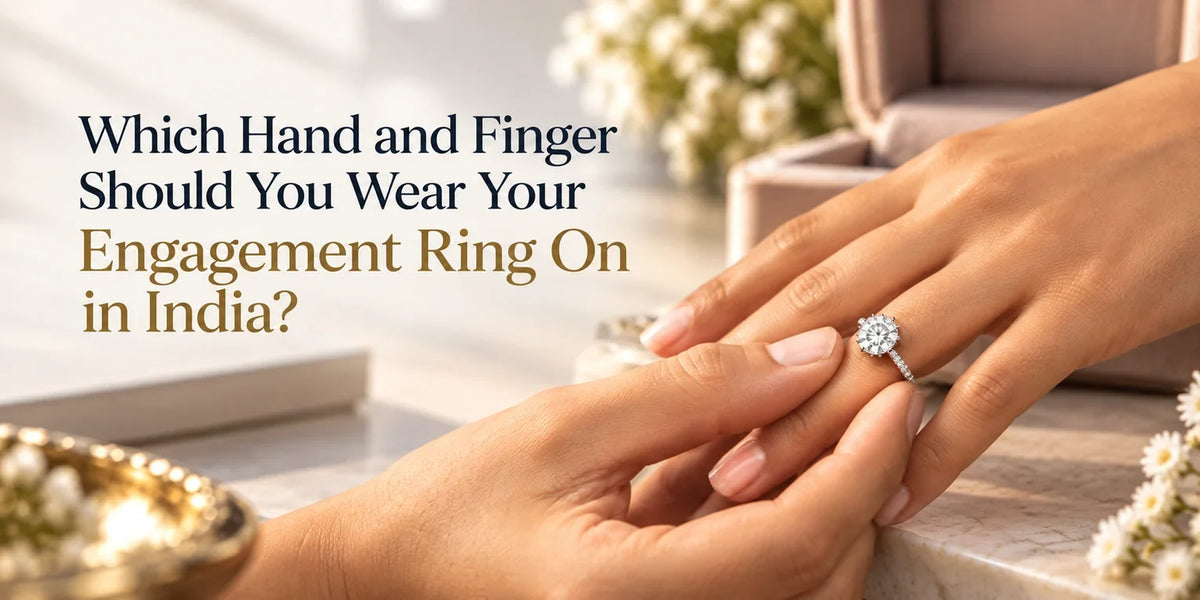
If you are wondering which hand and finger you should wear your engagement ring on in India, the short answer is: there is no single rule followed by every Indian family or community. The ring finger, which is the fourth finger of the hand, is the usual choice, but whether it is worn on the left or right hand can depend on family customs, regional practices, religious traditions, and personal preference.
For many couples today, the decision is also practical. The hand you use more often, the type of ring you choose, and whether you plan to wear it with your wedding band can all affect the final choice.
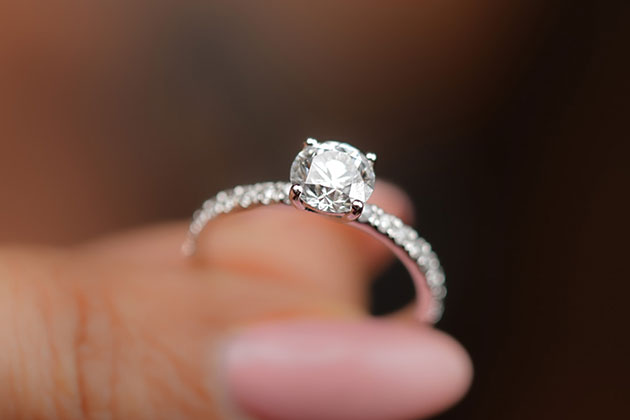
If you are considering lab diamond engagement rings, the hand and finger are only one part of the decision. The diamond, metal, setting, comfort, and everyday wearability also deserve attention.
Which Hand Should You Wear an Engagement Ring On in India?
In India, engagement-ring customs are not completely uniform. Some couples wear the engagement ring on the left-hand ring finger, following a widely seen modern engagement-ring convention. Others, particularly where family or community traditions favour the right hand, wear it on the right-hand ring finger.
There can also be differences between communities and regions. A practice followed by one family should not automatically be treated as a rule for all Indian engagements. This is especially relevant when the engagement ceremony is part of a larger traditional wedding programme — families may have their own expectations about which hand should be used during the ring exchange.
Which Finger Is the Engagement Ring Finger?
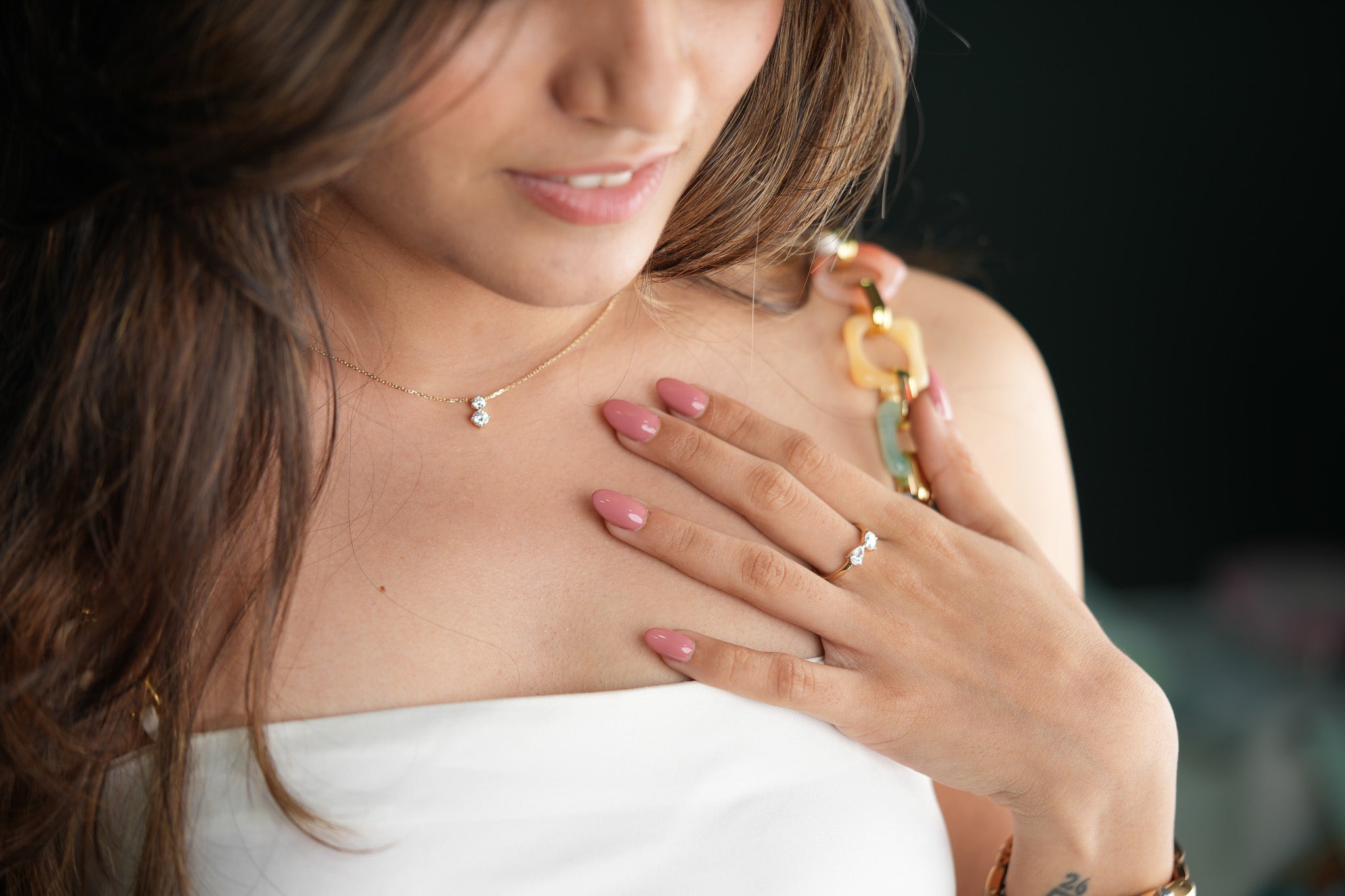
The engagement ring is generally worn on the fourth finger, counting from the thumb — commonly called the ring finger. The same finger can be used on either hand. Therefore, the real choice in India is often not the finger itself but which hand feels appropriate for your family tradition and lifestyle.
For example: left hand + fourth finger = left ring finger; right hand + fourth finger = right ring finger. If you are buying a ring specifically for an engagement ceremony, make sure the size is measured for the hand on which you intend to wear it, since finger measurements can differ slightly between the two hands.
Why Do People Wear Engagement Rings on the Ring Finger?
The ring finger has long been associated with relationships and marriage in several cultures. The modern engagement-ring tradition, however, has developed differently across countries and communities.
You may also come across the historical term vena amoris, often described as a supposed "vein of love" connecting the ring finger to the heart. This is a historical belief rather than an established anatomical explanation. For an Indian couple, the more useful consideration is the custom followed by your family and the way you actually intend to wear the ring. The meaning of an engagement ring comes from the commitment it represents, not from a particular finger having a special physical connection to the heart.
Left Hand or Right Hand: What Is Common in India?
There is no reliable single rule that applies to all Indians.
Wearing the Engagement Ring on the Left Hand
The left ring finger is familiar to many Indian couples, particularly those following contemporary engagement-ring practices influenced by international jewellery traditions. A left-hand ring can also be convenient if you plan to follow a wedding-ring arrangement where both rings are eventually worn on the same finger. For couples who do not have a specific family tradition, the left hand may simply feel more familiar because of how engagement rings are commonly shown in jewellery stores, films and international media.
Wearing the Engagement Ring on the Right Hand
The right ring finger is also used in India, particularly where family or community customs favour the right hand for important rituals or jewellery. Some people also prefer the right hand because of personal beliefs, comfort, or the way they use their left hand during daily activities.
Neither choice automatically makes an engagement ring more meaningful. The important point is to distinguish a particular community's tradition from a universal Indian rule.
What About Men and Women's Engagement Rings?
The same basic principle applies to both men and women: the engagement ring can be worn on the ring finger, but the hand can vary according to cultural practice and personal preference.
In some Indian families, the groom may be expected to wear the engagement ring on the right hand, while the bride may follow a different convention. Other couples simply wear their rings on the same side. Modern engagement jewellery is also less restricted by older assumptions about who should wear a ring — men increasingly choose engagement bands and diamond rings, while couples may select matching or complementary designs.
If both partners are exchanging rings, discuss the hand beforehand. This avoids confusion during the engagement ceremony, particularly when family members have different expectations.
Does the Engagement Ring Hand Change After Marriage?
It can, but it does not have to. Some couples continue wearing the engagement ring on the same hand after marriage. Others move it temporarily or permanently to accommodate a wedding band. There is no universal requirement to move the ring after marriage — the practical issue is whether the two rings fit comfortably together and whether their designs work as a pair.
Engagement Ring and Wedding Band Stacking
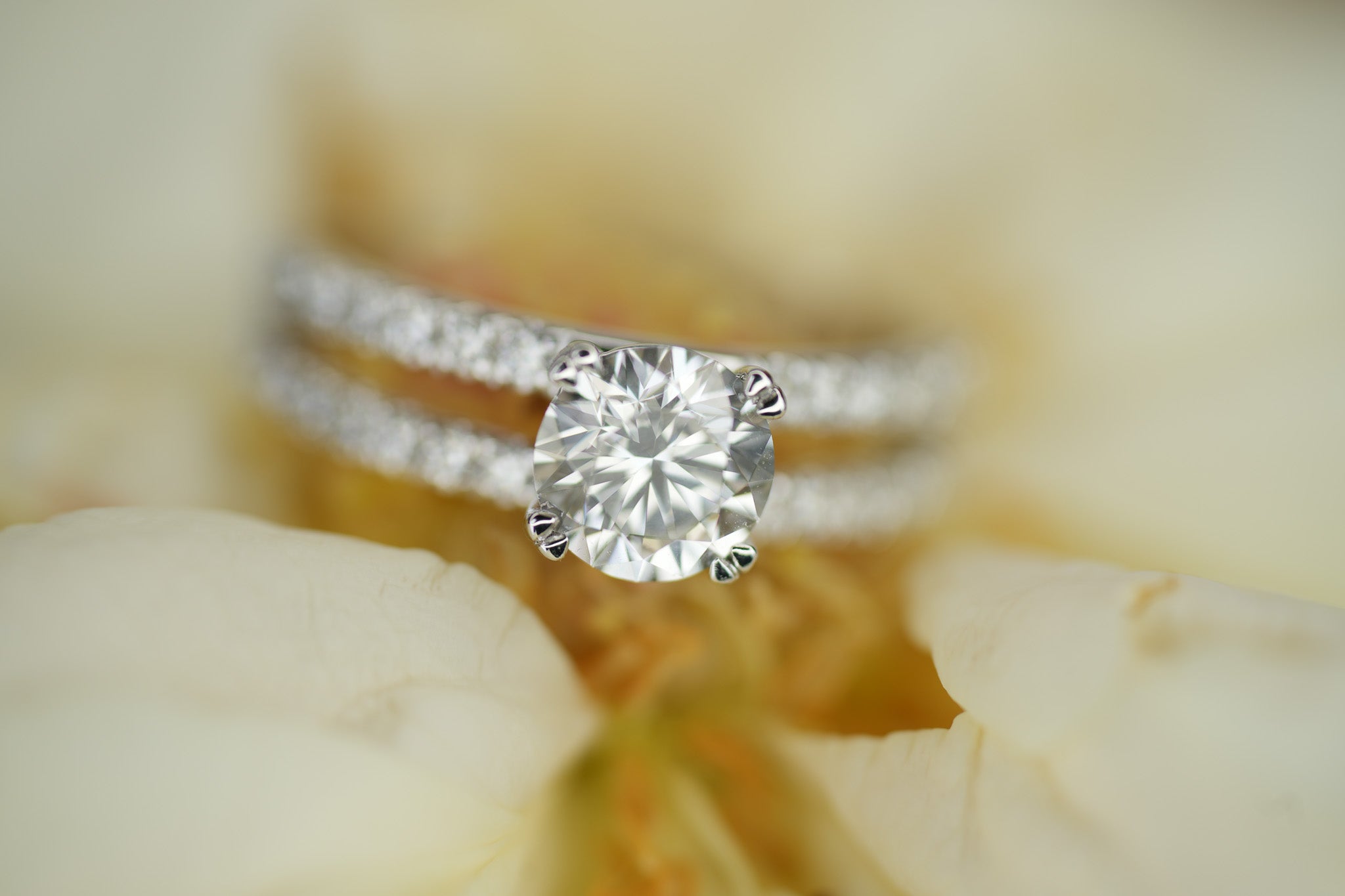
If you plan to wear both rings on the same finger, consider this before buying the engagement ring. Look at the width of the engagement-ring band, the height of the centre setting, the shape of the underside of the ring, the fit between the two rings, whether the stones rub against each other, and how comfortable the combination feels during everyday activities. A very high solitaire setting, for example, may leave a noticeable gap between the engagement ring and a straight wedding band, while a contoured or shaped wedding band may sit closer to the engagement ring.
How to Choose Lab Diamond Engagement Rings for Everyday Wear
If you are considering lab diamond engagement rings, choose the ring based on both the diamond and the setting. Lab-grown diamonds are diamonds produced using controlled technological processes rather than formed naturally underground. When comparing rings, you should still examine the diamond's characteristics and the quality of the finished jewellery.
Consider the 4Cs
The four standard diamond characteristics are cut, colour, clarity and carat weight. Do not judge an engagement ring only by carat weight — two diamonds with the same carat weight can look different because of their cut, proportions, colour and clarity, and the setting can also change how large or prominent the centre stone appears. If you have a fixed budget, compare complete rings rather than focusing only on the centre diamond's size.
Which Metal Should You Choose for an Engagement Ring?
The metal affects the appearance, durability, maintenance, and overall price of an engagement ring. For Indian buyers, yellow gold remains a familiar choice, while white gold, rose gold and platinum can provide different styling options.
14kt Gold Engagement Rings
14kt gold engagement rings contain 58.5% pure gold, with the remaining composition made up of other metals used in the alloy. The added metals can make 14kt gold harder than higher-purity gold, which is one reason it is used for jewellery designed for regular wear. If you are comparing 14 karat gold engagement rings, don't look at purity alone — check the ring's construction, gold weight, setting, and finish as well.
A 14kt white gold engagement ring can suit someone who prefers a cooler, contemporary appearance. White gold is often finished with rhodium plating to provide a bright white surface, and this finish can wear over time, especially on areas that experience regular friction, so maintenance may eventually be required.
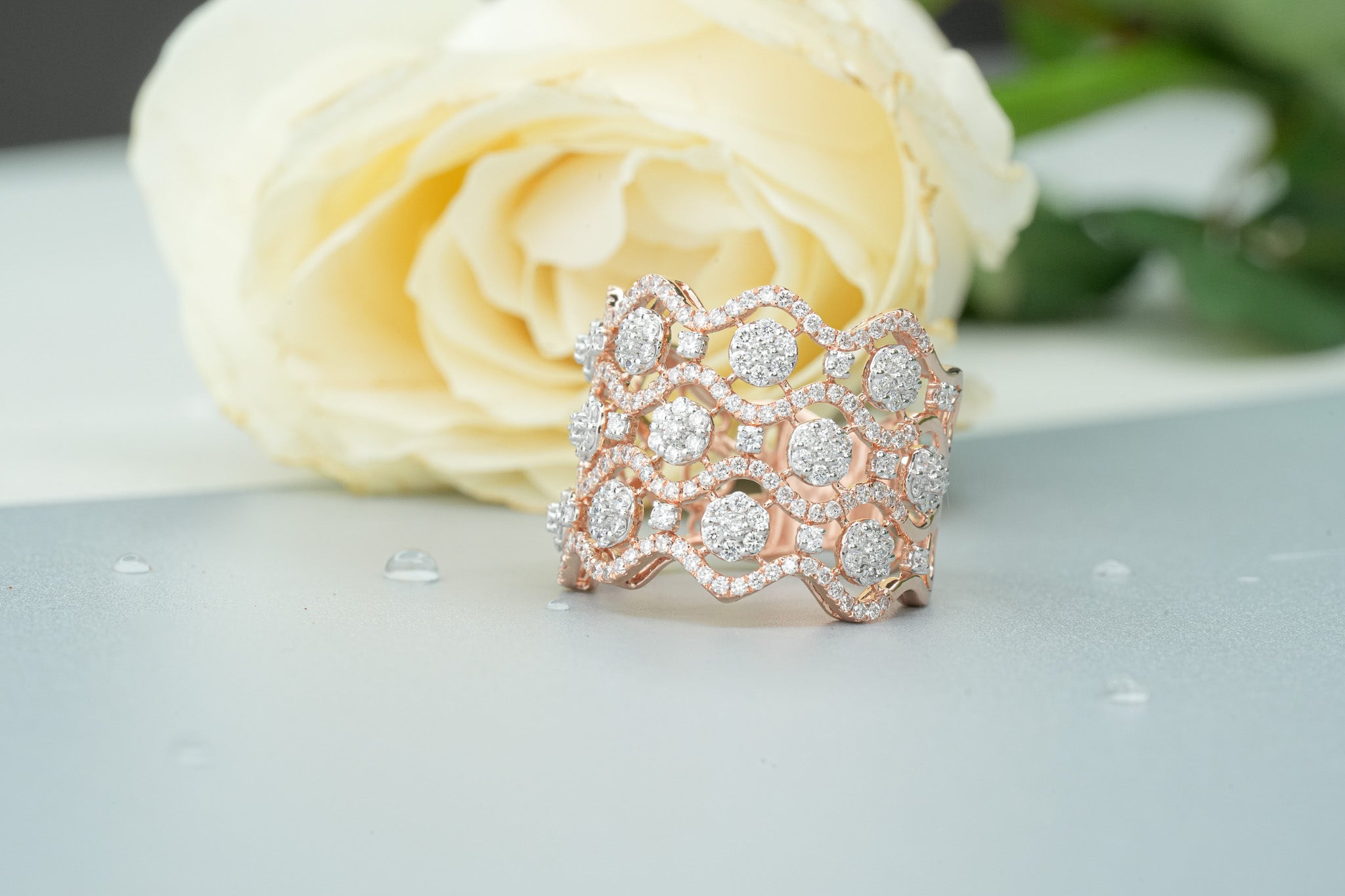
A 14kt rose gold engagement ring has a warm pinkish tone created by the alloy used with the gold. It can be a useful option for someone who wants something different from traditional yellow gold without choosing a white metal, and can work particularly well with minimalist engagement rings, delicate bands and designs featuring smaller accent diamonds.
Yellow gold can coordinate naturally with traditional Indian jewellery, particularly if your wedding jewellery includes gold bangles, necklaces, earrings or other yellow-gold pieces. However, you do not have to match every piece of jewellery to the same metal colour — mixing gold colours is also a valid styling choice.
Engagement Rings and Indian Wedding Jewellery
Indian weddings often involve several jewellery pieces worn together. Depending on the community and region, the bride may wear a combination of necklaces, earrings, bangles, rings and other traditional ornaments. Your engagement ring does not need to compete with all of them.
If your bridal jewellery is heavy and detailed, a simpler engagement ring may provide balance. If your wedding jewellery is minimal, a more prominent solitaire or diamond setting can become the main focus. For example, a bride wearing a traditional red or green bridal saree may prefer the warmth of yellow or rose gold, while someone wearing a contemporary pastel lehenga with diamond jewellery may prefer white gold. These are styling choices rather than cultural rules.
Should You Wear the Engagement Ring on Your Dominant Hand?
This is mainly a practical consideration. If you are right-handed, wearing a ring on your right hand means the ring will be exposed to more frequent movement and contact during many everyday tasks. This does not mean you should automatically put the ring on your non-dominant hand — instead, consider your routine. If you regularly type, work with tools, exercise, cook extensively, or perform hands-on work, a low-profile ring may be more practical than a tall setting regardless of which hand you choose.
How to Make Your Engagement Ring Comfortable
A ring can look excellent in photographs and still become irritating after several hours of wear. Before buying, check the following:
Ring size: Your fingers can change slightly in size depending on temperature, time of day, and other factors. Get professionally measured rather than relying only on the size of another ring.
Band width: Very narrow bands can create a delicate look, while wider bands can feel more substantial.
Centre stone height: A high-set diamond can catch on clothing or hair more easily than a lower-profile setting.
Ring edges: Run your finger around the inside and outside of the ring — sharp or uncomfortable edges can become annoying during daily wear.
Future ring stacking: If you expect to add a wedding band later, tell the jeweller before finalising the design.
How to Care for Your Engagement Ring
Your engagement ring will likely be exposed to everyday products such as handwash, moisturiser, sunscreen, soap and cosmetics. Clean the ring according to the jeweller's recommended method, remove it when doing heavy manual work, avoid exposing it unnecessarily to harsh chemicals, check the setting periodically, and have the ring inspected if the centre stone feels loose. If you choose white gold, ask about rhodium-plating maintenance and the recommended care routine.
What Should You Consider Before Buying an Engagement Ring?
Before choosing between different engagement ring options, such as 14 kt gold designs or other metal options, make a short checklist:
Tradition: Does your family or community follow a specific hand for engagement rings?
Comfort: Which hand will be more convenient for your daily routine?
Diamond: Have you compared cut, colour, clarity, and carat weight?
Metal: Do you prefer yellow gold, white gold, rose gold, or another metal?
Setting: Is the diamond securely held and comfortable for everyday wear?
Wedding band: Will you eventually wear another ring alongside it?
Budget: Are you comfortable with the total price, including the ring design and any additional stones?
Maintenance: Do you understand how the selected metal and setting should be cared for?
Frequently Asked Questions
Which hand should a woman wear an engagement ring on in India?
There is no single rule for all Indian women. The left ring finger is commonly used by many couples, while some families and communities prefer the right ring finger. Family tradition and personal preference can determine the choice.
Which finger is the engagement ring finger in India?
The engagement ring is generally worn on the fourth finger, known as the ring finger. It can be the fourth finger of either the left or right hand, depending on the custom followed.
Can I wear my engagement ring on my right hand?
Yes. Wearing an engagement ring on the right ring finger is followed by some Indian families and communities and is also a personal choice for some couples.
Should men wear engagement rings in India?
Men can wear engagement rings or engagement bands. The hand and finger can be selected according to family tradition, cultural practice, comfort, and personal preference.
Should an engagement ring and wedding ring be worn on the same finger?
They can be worn on the same finger if the designs fit comfortably together. However, there is no universal requirement to wear both rings together.
Are lab diamond engagement rings suitable for everyday wear?
They can be, provided the ring has a suitable setting and is cared for properly. Consider the diamond's characteristics, metal, setting, ring profile, and your daily activities before choosing a design.
Are 14kt gold engagement rings suitable for daily wear?
14kt gold can be suitable for regular jewellery wear because its alloy composition provides greater hardness than pure gold. The durability of the complete ring also depends on its design, setting, and how it is used.
Final Thoughts
So, which hand and finger should you wear your engagement ring on in India? The ring finger is the usual choice, but the left-versus-right decision depends on your family's customs, community practices, lifestyle, and personal preference.
There is no need to treat one hand as the only correct option for every Indian couple. If tradition matters to your family, follow the custom that applies to you. If there is no specific tradition, choose the hand that feels comfortable and works with your plans for a wedding band.
If you are exploring lab-grown diamond engagement rings, Blu Diamonds can be a useful place to compare designs, diamond shapes and metal options before making your final choice.
You May Also Like
Read more
What Is a Promise Ring? Meaning, Which Finger & When to Give One
What a promise ring means, how it differs from an engagement ring, which finger to wear it on, and how to choose one — including lab-grown diamond options.
Read more