

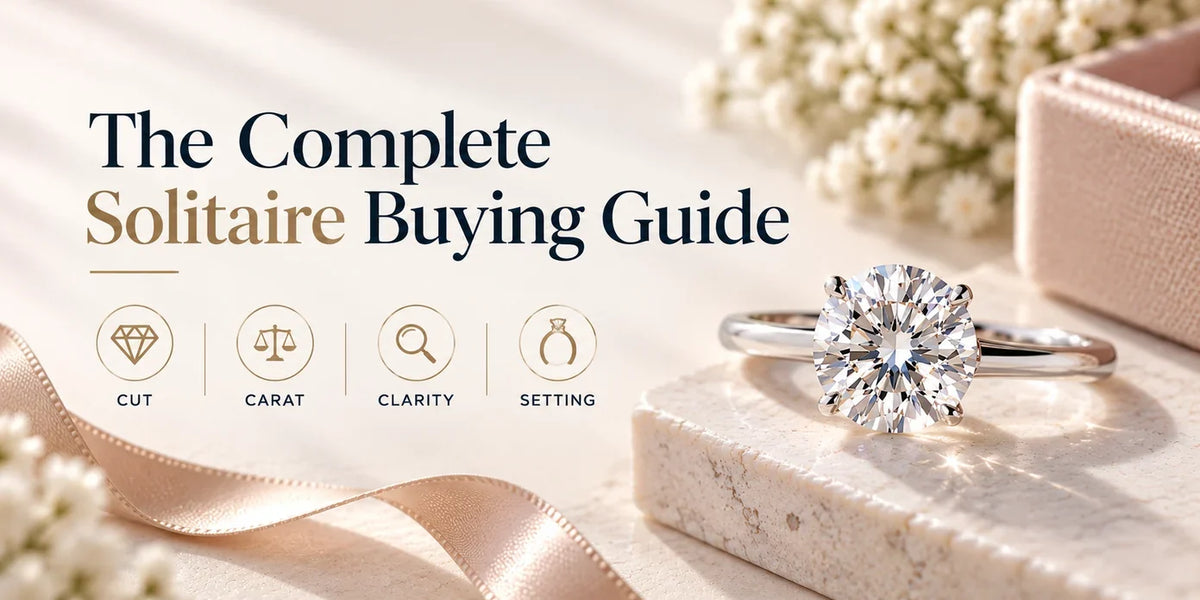
The Complete Solitaire Buying Guide: Cut, Carat, Clarity & Setting
A solitaire ring puts the focus on one centre stone, which is why the diamond you choose matters so much. With fewer surrounding stones competing for attention, the centre diamond's cut, proportions, colour and clarity can have a noticeable effect on the finished ring.
A good solitaire buying guide should therefore go beyond choosing a carat size. The diamond and setting need to work together. A well-cut diamond in the right setting can look balanced, elegant and proportionate, while choosing the stone first without considering the setting can make the final ring look different from what you expected.
Whether you are buying an engagement ring, upgrading an existing ring or simply prefer the clean look of a single centre stone, understanding the 4Cs and solitaire ring setting will help you make a more informed decision.
1. What Is a Solitaire Ring?
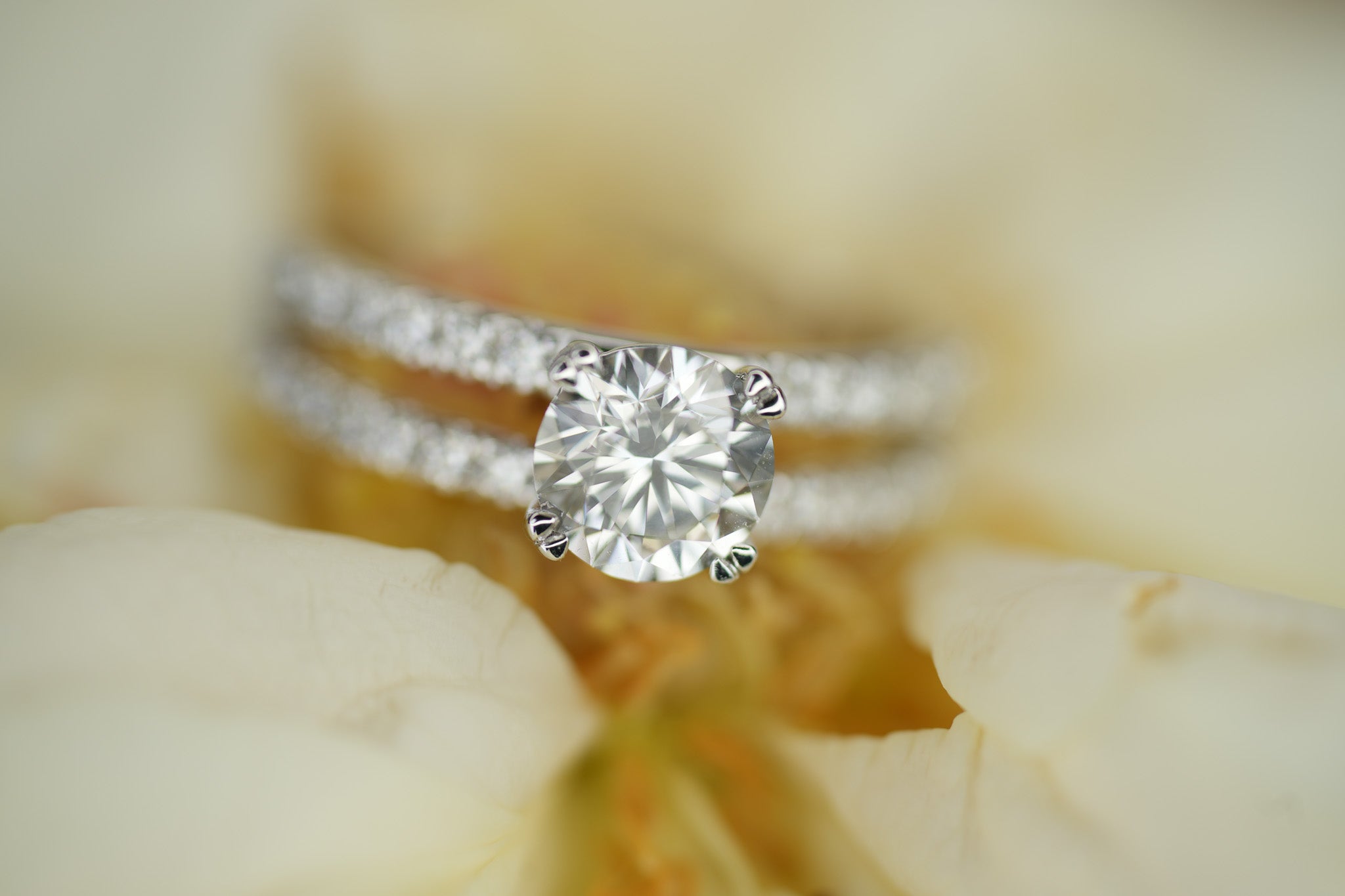
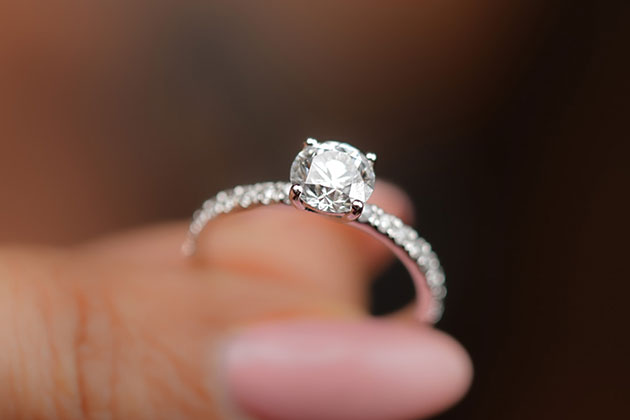
A solitaire diamond ring is a ring designed primarily around a single centre diamond or gemstone.
The classic solitaire design usually has one prominent centre stone held by a setting, often with a plain or relatively simple band. Because there are no substantial side stones competing with the centre stone, the design naturally draws attention towards it.
Solitaire rings are popular for engagement rings because the design is simple, versatile and focused on the centre diamond. A solitaire can be designed in several ways, including:
- Round solitaire rings
- Oval solitaire rings
- Princess-cut solitaire rings
- Cushion-cut solitaire rings
- Emerald-cut solitaire rings
- Pear-shaped solitaire rings
The shape you select affects the ring's outline, how large the diamond appears from above and the way it interacts with light.
The setting also matters. A high-set prong design can create a traditional look, while a bezel setting can give the same solitaire concept a more contemporary appearance.
2. Choosing the Right Diamond Cut
Cut is one of the most important considerations when buying a solitaire because the centre diamond has nowhere to hide.
It is also useful to distinguish diamond shape from diamond cut. Shape describes the outline of the diamond, such as round, oval or emerald. Cut refers to how the diamond's facets, proportions and finish affect its interaction with light.
A well-cut diamond can display strong brightness, fire and scintillation. These characteristics contribute to the sparkle you see when the diamond moves or catches light.
Popular Solitaire Diamond Shapes
Round: The classic choice for a solitaire. Its symmetrical outline and brilliant-style faceting make it a versatile option.
Oval: An elongated shape that can create a larger-looking face-up appearance while maintaining a brilliant-style sparkle.
Princess: A square or rectangular shape with sharp corners and a modern appearance.
Cushion: Known for its softer corners and vintage-inspired appearance. Cushion cuts can have different faceting styles, so visual comparison is particularly useful.
Emerald: A step-cut shape recognised for broad, mirror-like flashes rather than the glittering appearance associated with brilliant cuts. Because the facets are more open, clarity can be more noticeable.
Pear: Combines a rounded end with a pointed tip. Its elongated outline can create an elegant, distinctive solitaire.
How to Choose
For a classic engagement ring, round is the safest choice. If your priority is a larger-looking centre stone, compare elongated shapes such as oval, pear and some elongated cushion or radiant designs. If you prefer a sophisticated, understated appearance, an emerald cut may be more suitable.
There is no universally best solitaire diamond shape. The right choice depends on your preferred appearance, finger proportions, setting and budget.
3. Understanding Carat Weight
Carat measures the weight of a diamond. It does not directly measure its visible size or quality. This distinction matters when buying a solitaire.
A diamond with a higher carat weight is not automatically more brilliant or visually superior. Two diamonds with the same carat weight can have different proportions and face-up dimensions. For example, an elongated diamond can appear larger from above than a round diamond with the same carat weight because of its shape and dimensions.
What to Consider
When deciding on carat weight, consider:
- Your preferred visual size.
- Your finger proportions.
- Your ring setting.
- The diamond shape.
- Your total jewellery budget.
- The balance between carat and the other 4Cs.
A larger centre diamond can make a strong statement, but an excessively large stone may look disproportionate on a narrow band or smaller finger.
A Practical Approach
Instead of deciding, "I need a 2-carat solitaire," start with the appearance you want. Ask: how large should the centre stone look on my hand? Then compare different shapes and proportions within your budget.
This approach gives you more flexibility than treating carat weight as the primary measure of quality.
4. Choosing Clarity
Clarity refers to the internal characteristics and surface features found in a diamond.
For solitaire buyers, the practical question is not necessarily "What is the highest clarity grade I can afford?" It is: does the diamond look clean and attractive at normal viewing distance?
A diamond can contain characteristics that are difficult to see without magnification. Paying substantially more for a higher clarity grade may therefore have little visible benefit if two stones look similar when worn.
Consider the Shape
Clarity becomes especially relevant with certain diamond shapes. Step-cut diamonds such as emerald cuts have larger, open facets that can make inclusions easier to notice. Brilliant-cut diamonds can sometimes disguise inclusions more effectively because of their facet pattern and sparkle.
5. Choosing Colour
Diamond colour describes the degree of body colour visible in a diamond.
For the traditional D-to-Z colour scale, D represents the highest colour grade, with progressively more noticeable warmth as you move down the scale. But, just like clarity, the highest grade is not automatically the best purchase for every person.
Consider Your Metal
Your ring's metal can influence how the diamond looks. A very high-colour diamond can provide a crisp appearance in a white-metal setting. A slightly warmer diamond may work naturally with yellow or rose gold.
The diamond shape also matters. Some shapes can show body colour more readily than others, particularly elongated shapes with larger areas viewed through the side or corners.
Cut, Carat, Clarity & Colour: What Matters Most?
The solitaire ring 4Cs are Cut, Carat, Clarity and Colour. They provide a useful framework for comparing diamonds, but they should not be treated as four numbers that need to be maximised.
Cut — prioritise light performance: Cut has a direct effect on how effectively a diamond interacts with light. For a solitaire, this is particularly important because the centre stone is the visual focus of the entire ring. When comparing diamonds with similar specifications, look for the stone that shows better brightness and balanced sparkle.
Carat — choose the size you want: Carat determines diamond weight. Use it to establish the approximate size you want, then assess whether the shape and proportions give you the desired face-up appearance.
Clarity — pay for what you can see: Higher clarity can mean fewer or less noticeable characteristics, but you do not necessarily need the highest grade. An eye-clean diamond can provide an attractive balance between appearance and cost.
Colour — match your setting: Choose a colour grade that looks right in the metal and setting you prefer. Do not automatically spend more on the highest colour grade if a lower grade already appears sufficiently white to you.
For many buyers, a useful starting point is: cut → overall visual appearance → carat → colour and clarity. This is not a universal formula — your priorities may change depending on the diamond shape, setting and budget. The main lesson is to avoid treating one specification as the definition of quality.
6. Selecting the Right Setting
The solitaire ring setting holds the centre stone securely while also influencing its appearance, height and relationship with the band. Here are some of the most relevant options.
Prong Setting
Prongs use small metal claws to hold the diamond. Four- and six-prong configurations are common.
Appearance: Provides a classic, open look and allows substantial visibility of the centre diamond.
Protection: The stone remains more exposed than in a bezel setting, and individual prongs should be checked periodically.
Best for: Classic engagement rings and buyers who want the diamond to remain the main visual focus.
Bezel Setting
A bezel surrounds the diamond's edge with a metal rim.
Appearance: Creates a sleek, contemporary outline and can make the ring look more streamlined.
Protection: The surrounding metal can offer greater protection to the stone's edges than a fully exposed setting.
Best for: Everyday wear and modern minimalist designs.
Halo Setting
A halo places smaller diamonds around the centre stone. Strictly speaking, this moves away from the traditional single-stone solitaire concept because the surrounding stones become part of the design.
Appearance: Creates a larger visual frame around the centre diamond and adds additional sparkle.
Protection: The surrounding stones and setting can provide some visual framing, but the centre stone still requires appropriate protection.
Best for: Buyers who like the solitaire centre but want a more elaborate look.
If your goal is a true minimalist solitaire, a halo is not the most appropriate setting.
Cathedral Setting
A cathedral setting uses raised metal shoulders that curve or slope upward towards the centre stone.
Appearance: Adds height and architectural detail while maintaining focus on the centre diamond.
Protection: The structure can support the centre setting, although the diamond's actual protection depends on the specific construction.
Best for: Traditional engagement rings and designs where you want the centre diamond to sit prominently above the band.
Hidden Halo Setting
A hidden halo places smaller diamonds beneath the centre stone rather than directly around its visible perimeter.
Appearance: From the top, the ring can retain a relatively clean solitaire appearance. From the side, the hidden diamonds add detail and sparkle.
Protection: The setting does not replace proper centre-stone protection, but it can add design interest without changing the main face-up silhouette substantially.
Best for: Buyers who want a minimalist-looking ring with a subtle detail that appears from certain angles.
7. Matching the Solitaire to Your Budget
There is no universal rule stating how much of your income should be spent on a solitaire ring. A better approach is to decide which characteristics matter most to you and allocate your budget accordingly.
If Sparkle Is the Priority
Put more emphasis on cut and visual performance. A beautifully proportioned diamond can be more visually impressive than a larger diamond with weaker cutting.
If Size Is the Priority
Compare different shapes. Oval, pear and other elongated shapes can provide more visible surface area for a given carat weight, depending on their proportions. You can also compare slightly different carat weights rather than targeting a single round number.
If Colour Is the Priority
Allocate more of the budget towards the colour grade you can actually distinguish and appreciate. The setting metal should be considered at the same time.
If Clarity Is the Priority
Decide whether you need high clarity for personal reasons or whether an eye-clean diamond meets your needs. For many buyers, the latter provides a more practical balance.
8. Common Solitaire Buying Mistakes
Even experienced jewellery buyers can make mistakes when comparing diamonds online.
Choosing Carat Before Cut
A large diamond with poor light performance may disappoint. Better approach: Compare visual performance before increasing carat weight.
Treating the 4Cs as a Scorecard
A diamond with four impressive grades is not necessarily the best choice for your budget. Better approach: Evaluate the characteristics together.
Ignoring the Setting
A diamond can look different once placed in a specific setting. Better approach: Choose the centre stone and setting as one design.
Buying Based on a Product Photograph
Jewellery photography can be carefully lit and edited. Better approach: Review multiple images, video and grading information where available.
Assuming "Certified" Means "Best"
A grading report provides information about the diamond. It does not automatically mean that the diamond is the ideal choice for your budget or preferences. Better approach: Read the report and assess the actual stone.
Ignoring Finger Proportions
The same carat weight can look very different on different hands. Better approach: Consider the diamond's face-up dimensions, shape and band width.
9. How to Choose the Right Solitaire
Use this process when comparing a solitaire diamond ring.
Step 1: Choose your shape. Decide whether you prefer round, oval, princess, cushion, emerald, pear or another shape.
Step 2: Set your visual size target. Think about how large you want the centre diamond to appear rather than focusing only on carat.
Step 3: Prioritise cut. Compare light performance and proportions, particularly when choosing between similar stones.
Step 4: Choose clarity. Look for a diamond that appears clean to your eye at normal viewing distance.
Step 5: Choose colour. Match the diamond to your preferred appearance and jewellery metal.
Step 6: Select the setting. Decide whether you want maximum diamond visibility, additional protection, a higher profile or a hidden detail.
Step 7: Compare complete rings. Look at the centre stone, setting, band width, metal and overall proportions together.
This is the simplest way to choose a solitaire ring without getting trapped by one specification.
How to Choose a Solitaire Based on Your Lifestyle
The right solitaire should also make sense for how you plan to wear it.
For everyday wear: Consider a secure setting such as a well-constructed bezel or a prong setting appropriate for regular wear. Avoid choosing a setting solely for appearance without considering how exposed the centre stone will be.
For engagement rings: A classic prong solitaire offers a timeless approach, while cathedral and hidden-halo designs provide additional architectural detail. Focus heavily on the centre diamond because it will dominate the finished ring.
For minimalist styles: Choose a simple band and an uncluttered setting. A classic four- or six-prong design can keep attention on the centre stone without adding unnecessary detail.
For a larger-looking diamond: Compare elongated shapes and look at the diamond's actual measurements rather than carat weight alone. An oval or pear may create a different face-up appearance from a round diamond of the same weight.
For different hand and finger proportions: Longer diamond shapes can visually elongate the finger, while wider bands can create a stronger, more substantial appearance. If you have shorter or wider fingers, compare elongated shapes and band widths rather than assuming a particular carat weight will always look proportionate.
Frequently Asked Questions
What is the most important factor when buying a solitaire diamond ring?
Cut deserves particular attention because it strongly influences light performance and sparkle. However, the right balance depends on your shape, budget, setting and personal preferences.
How do I choose a solitaire ring?
Start by choosing the diamond shape, then determine your preferred visual size. Evaluate cut and appearance before balancing carat, colour and clarity. Finally, choose a setting that complements both the diamond and your lifestyle.
What are the 4Cs of a solitaire ring?
The 4Cs are Cut, Carat, Clarity and Colour. They describe different aspects of a diamond, but they should be evaluated together rather than treated as independent scores.
Is a higher carat diamond always better?
No. Carat measures diamond weight. It does not directly measure cut quality, brilliance or overall beauty. A well-cut diamond with a lower carat weight can look more attractive than a larger, poorly cut stone.
Which solitaire setting is best?
There is no universally best setting. Prongs offer a classic, open appearance; bezels provide a more enclosed design; cathedral settings add height; and hidden halos add detail without substantially changing the top-down appearance. Your lifestyle and preferred style should determine the choice.
What clarity should I choose for a solitaire diamond?
Choose a clarity level that looks clean to the naked eye and works with the diamond's size and shape. Paying for the highest clarity grade is not always necessary if the difference is not visible during normal wear.
Which diamond shape looks largest for a solitaire ring?
Elongated shapes such as oval and pear can have a larger-looking face-up appearance relative to their carat weight, depending on their proportions. Compare actual measurements rather than relying only on carat.
Final Thoughts
A solitaire ring is simple in design, but choosing one well requires more than selecting a diamond with a large carat number.
Explore certified solitaire-ready lab-grown diamonds and settings at bludiamonds.com.
You May Also Like
Read more
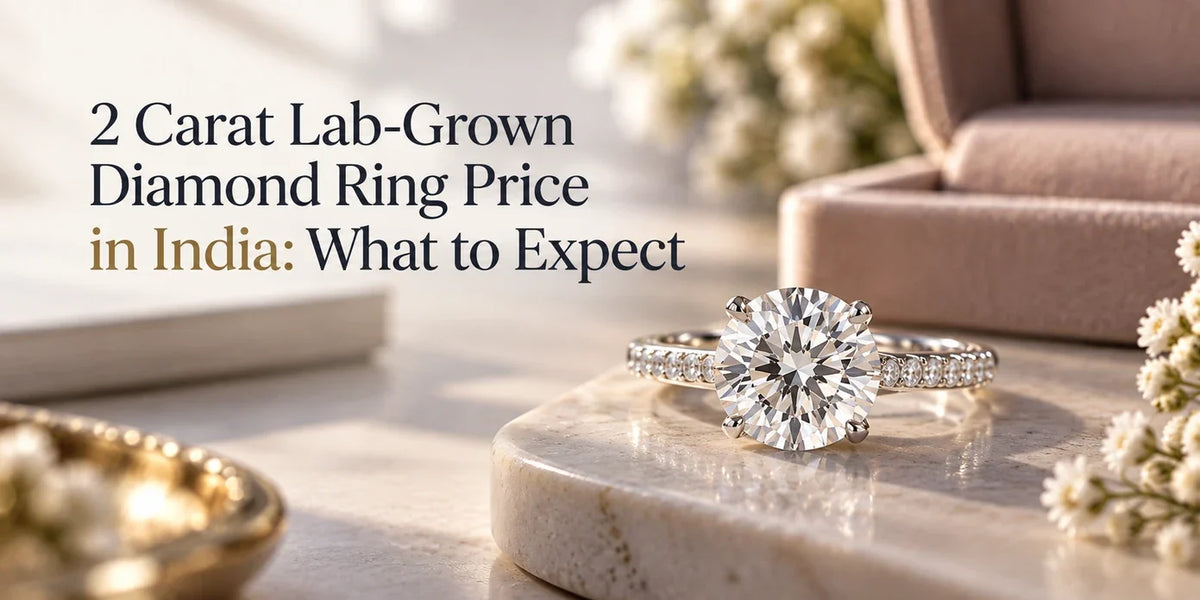
2 Carat Lab-Grown Diamond Ring Price in India: What to Expect
A practical 2026 price breakdown for 2-carat lab-grown diamond rings in India — loose stone vs finished ring pricing, what drives the cost, and how to buy smart.
Read more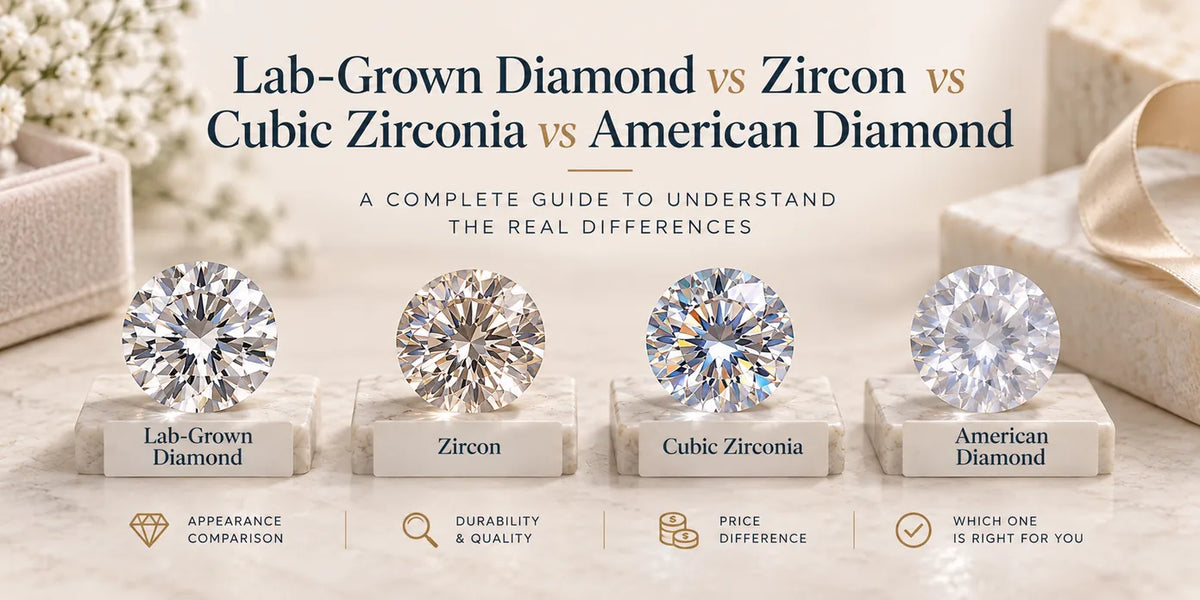
Lab-Grown Diamond vs Zircon vs Cubic Zirconia vs American Diamond: The Complete Guide
Confused between lab-grown diamonds, zircon, cubic zirconia and American diamond? This guide breaks down the real differences in composition, hardness, price and which stone suits your jewellery.
Read more