

7 Signs You're Buying a High-Quality Lab-Grown Diamond
- The Diamond Has a Reliable Grading Report
- The Cut Produces Strong Brilliance
- The Colour Grade Matches Your Preference and Setting
- The Clarity Is Appropriate for the Diamond's Size
- The Proportions and Symmetry Are Well Balanced
- The Diamond Has the Expected Visual Appearance
- The Seller Provides Transparent Product Information
- Understanding the 4Cs of a Lab-Grown Diamond
- How to Check a Lab-Grown Diamond Before Buying
- FAQs
Lab-grown diamonds are real diamonds, but that does not mean every lab-grown diamond will look or perform the same. Individual stones can differ in cut quality, colour, clarity, proportions, symmetry and overall appearance.
That is why choosing a high quality lab grown diamond requires more than looking at carat weight or a single grading on a product page. A larger diamond with weak proportions may look less lively than a smaller, well-cut stone.
If you know how to identify a good lab grown diamond, you can compare stones more confidently and focus your budget on the characteristics that make the biggest visual difference.
1. The Diamond Has a Reliable Grading Report
One of the first things to check when buying a lab-grown diamond is its grading report.
A grading report documents characteristics such as carat weight, colour, clarity and, depending on the report and diamond type, cut and other identifying information. Laboratory-grown diamond reports can also identify the stone as laboratory-grown and may provide information about its growth type and treatments.
A report does not automatically mean the diamond is the best quality. It gives you an independent reference point for comparing what you are being offered.
What to look for
Check that:
- The report identifies the stone as laboratory-grown.
- The report number matches the stone or its documentation.
- The 4Cs listed on the report match the product listing.
- Any disclosed treatments or relevant characteristics are understood before purchase.
Why it matters
Without reliable documentation, it is harder to verify whether the specifications advertised by a seller accurately describe the stone.
Practical buying tip
Ask the seller for the grading report before making your final decision, especially for a larger or higher-value stone.
2. The Cut Produces Strong Brilliance
If you remember only one thing about lab grown diamond quality, remember this: cut has a major influence on how a diamond looks.
Cut describes how effectively the diamond's facets interact with light. It involves proportions, facet relationships, polish and symmetry. A well-cut diamond can return more light to the viewer, creating brightness, fire and scintillation. GIA's cut assessment considers factors including brightness, fire, scintillation, weight ratio, durability, polish and symmetry.
This is why cut should not be treated as just another specification alongside colour, clarity and carat.
What to look for
Look for:
- Strong brightness across the stone.
- Balanced light and dark patterns.
- Good facet alignment.
- Appropriate proportions for the diamond's shape.
- A cut grade or proportion information when available.
For round brilliant diamonds, recognised grading systems can provide a useful starting point. Fancy shapes such as oval, pear, cushion and emerald cuts require more visual assessment because cut grading systems differ by shape.
Why it matters
Two diamonds with identical carat, colour and clarity grades can look noticeably different if their proportions and cutting quality differ.
Practical buying tip
When comparing two diamonds with similar 4Cs, prioritise the stone that demonstrates stronger light performance rather than automatically choosing the larger one.
3. The Colour Grade Matches Your Preference and Setting
Diamond colour refers to how much body colour is visible in a diamond. For colourless-to-near-colourless diamonds, grading scales commonly move from D downward, with D representing the highest colour grade in the D-to-Z scale.
But the highest available colour grade is not automatically the right choice for every buyer.
What to look for
Consider:
- Your preferred appearance.
- The diamond's shape.
- The metal colour of your jewellery.
- Whether you prefer a crisp, icy appearance or a slightly warmer look.
White metals can make subtle body colour more noticeable, while yellow or rose gold can complement warmer-looking diamonds.
Why it matters
Colour is a visual preference as much as a specification. Spending more to move to a higher colour grade may make sense to one buyer but provide little visible benefit to another.
Practical buying tip
Compare diamonds side by side whenever possible. If shopping online, use consistent product photography and check the listed colour grade against the grading report.
4. The Clarity Is Appropriate for the Diamond's Size
Clarity describes the presence of internal characteristics and surface features in a diamond. These characteristics are commonly assessed under magnification.
A higher clarity grade means fewer or less noticeable characteristics, but buying the highest possible clarity is not always necessary.
What to look for
Look for a stone where:
- Inclusions are not distracting at normal viewing distance.
- The clarity grade is appropriate for the diamond's size.
- The stone does not have a prominent inclusion in a visually obvious location.
- The grading report accurately describes the clarity characteristics.
Why it matters
As diamond size increases, inclusions can sometimes become easier to notice. Shape also affects visibility. Step-cut shapes such as emerald cuts can make clarity characteristics more apparent because their larger, open facets create a different visual effect.
Practical buying tip
For an engagement ring, focus on whether the diamond appears clean to the naked eye rather than paying automatically for the highest clarity grade.
5. The Proportions and Symmetry Are Well Balanced
A diamond's proportions describe the relationships between different parts of the stone, including measurements and facet angles. Symmetry refers to how consistently those facets are arranged.
These details can strongly influence how a diamond interacts with light.
What to look for
Depending on the shape, review:
- Table percentage.
- Depth percentage.
- Length-to-width ratio.
- Girdle information.
- Pavilion and crown proportions where available.
- Symmetry and polish grades.
The exact ideal ranges vary by diamond shape. There is no single set of numbers that guarantees a beautiful diamond. GIA notes that diamond cut assessment considers proportions and facet angles alongside polish and symmetry because these factors contribute to appearance and performance.
Why it matters
Poorly balanced proportions can contribute to reduced brightness or undesirable visual patterns.
Practical buying tip
Do not evaluate proportions independently. Consider the numbers together with the diamond's actual video, images or in-person appearance.
6. The Diamond Has the Expected Visual Appearance
Specifications tell you what a diamond is. Your eyes tell you whether you actually like it.
A best quality lab grown diamond should not be selected solely from a specification sheet. Look at the stone from different angles and under different lighting conditions when possible.
What to look for
Check for:
- Overall brightness.
- Balanced sparkle.
- Visible fire.
- Consistent appearance across the stone.
- Excessive dark areas.
- Noticeable light leakage.
- A pleasing face-up shape and outline.
The terms brilliance, fire and scintillation describe different aspects of a diamond's optical performance. Brilliance relates primarily to white light, fire to flashes of spectral colour and scintillation to sparkle caused by movement and changing light patterns.
Why it matters
A diamond can have impressive grades on paper and still not be your preferred stone visually.
Practical buying tip
If shopping online, look for high-quality images and videos rather than relying on a single static photograph. If shopping in-store, move the diamond under different lighting instead of judging it under one display light.
7. The Seller Provides Transparent Product Information
The final sign of a quality purchase is not a characteristic of the diamond itself. It is the quality of information provided by the seller.
A trustworthy product listing should make it easy to understand what you are buying.
What to look for
Look for clear information about:
- Diamond origin: laboratory-grown.
- Carat weight.
- Shape and measurements.
- Colour.
- Clarity.
- Cut, where applicable.
- Certification or grading documentation.
- Metal purity and jewellery specifications.
- Treatment disclosure where relevant.
- Return and exchange terms.
- Product images or videos.
Why it matters
Transparent information allows you to compare one diamond with another without relying entirely on sales language.
Practical buying tip
Create a shortlist of two or three diamonds and compare their reports, 4Cs, measurements, videos and total jewellery price side by side.
Understanding the 4Cs of a Lab-Grown Diamond
The lab grown diamond 4Cs are Cut, Colour, Clarity and Carat.
These four factors provide a framework for describing diamond quality, but they should not be treated as four independent boxes that can simply be maximised.
Cut
Cut describes how the diamond has been fashioned and how effectively its proportions and facets interact with light. For buyers focused on sparkle, cut deserves particular attention because it has a direct relationship with visual performance. GIA's diamond cut assessment incorporates brightness, fire, scintillation, proportions, durability, polish and symmetry.
Buying approach: Prioritise a visually well-performing stone over simply chasing a higher carat or clarity number.
Colour
Colour describes the degree of body colour in a diamond. In the D-to-Z system, D is at the top of the scale.
Buying approach: Choose the colour level that looks right with your preferred setting and metal rather than automatically selecting the highest grade.
Clarity
Clarity describes internal and surface characteristics.
Buying approach: Look for a diamond that appears clean and attractive at normal viewing distance. The appropriate clarity depends on the diamond's size, shape and your personal preference.
Carat
Carat is a measurement of weight, not visual quality. A larger carat weight does not guarantee greater brilliance. Two diamonds of the same carat weight can have different face-up appearances because of differences in cut and proportions.
Buying approach: Choose carat weight after establishing the visual quality and characteristics that matter most to you.
Why Cut Should Not Be Treated Like the Other 3Cs
The 4Cs are useful because they standardise important diamond characteristics. But cut has a special role in the way the finished stone handles light.
A diamond can have excellent colour and clarity but still appear less lively if its cutting is not effective. Conversely, a well-cut diamond with slightly lower colour or clarity can look highly attractive.
How to Check a Lab-Grown Diamond Before Buying
Use this checklist when comparing diamonds online or in-store.
Lab-Grown Diamond Buying Checklist
1. Verify the identity
- Is the stone clearly described as laboratory-grown?
- Does the documentation match the product?
2. Check the grading report
- Is there a report number?
- Do the reported specifications match the listing?
- Are relevant treatments or growth information disclosed?
3. Review the 4Cs
- Cut: Does it show strong light performance?
- Colour: Does the colour suit your preference and setting?
- Clarity: Is it eye-clean for its size and shape?
- Carat: Does the weight give you the size you want?
4. Check the proportions
- Review measurements and shape-specific proportions.
- Compare length-to-width ratio for elongated shapes.
- Check symmetry and polish information where available.
5. Watch the diamond
- Look at videos from multiple angles.
- Check for dark areas or distracting visual patterns.
- Compare several stones under similar conditions.
6. Compare like for like
- Compare diamonds of the same shape and similar carat weight.
- Review total jewellery price, not only the diamond price.
- Do not compare marketing labels as if they were grading standards.
7. Review the seller
- Check product disclosures.
- Understand return and exchange policies.
- Confirm what documentation is included.
- Ask questions before purchasing if information is missing.
This process makes how to check lab grown diamond quality much more straightforward. You do not need to memorise every gemological measurement. You need enough information to compare stones consistently.
Frequently Asked Questions
What makes a high-quality lab-grown diamond?
A high-quality lab-grown diamond is one that meets your desired standards for cut, colour, clarity, carat and overall appearance, with reliable documentation and transparent product information. There is no single specification that makes every diamond the "best."
How can I identify a good lab-grown diamond?
Start with a reliable grading report, then assess cut and visual performance. Compare colour and clarity against the diamond's shape, size and setting. Finally, review proportions, symmetry, images and video before making your choice.
Is certification necessary for a lab-grown diamond?
A grading report provides useful independent information about a diamond's characteristics and identity. It should be considered alongside the stone's actual appearance and the seller's product information. Certification alone does not determine whether a particular diamond is the right choice for you.
Which of the 4Cs is most important for a lab-grown diamond?
There is no universal ranking that works for every buyer, but cut deserves particular attention because it strongly influences how the diamond interacts with light. Colour, clarity and carat should then be balanced according to your preferences, setting and budget.
Is a higher clarity grade always better?
A higher clarity grade indicates fewer or less noticeable clarity characteristics, but that does not necessarily mean the difference will be visible without magnification. For many buyers, an eye-clean diamond can provide a better balance than paying for clarity that cannot be seen during normal wear.
How do I check a lab-grown diamond online?
Check the grading report, 4Cs, measurements, shape, proportions and seller disclosures. Then examine high-quality photos and video if available. Compare multiple diamonds using the same criteria instead of selecting one based only on price or carat.
What is the best quality lab-grown diamond for an engagement ring?
There is no single "best" specification. For an engagement ring, focus on a well-cut diamond with an attractive visual appearance, suitable colour and eye-clean clarity, backed by clear documentation and transparent seller information. Your ideal combination will depend on your budget, chosen shape, setting and personal preference.
Final Thoughts
Buying a high quality lab grown diamond is less about finding the highest grade in every category and more about understanding how the characteristics work together.
Start with reliable documentation. Prioritise cut and visual performance. Choose colour and clarity according to what you can actually see and what suits your setting. Use carat weight to achieve the size you want, not as a shortcut for quality.
Explore certified, transparently documented lab-grown diamonds at bludiamonds.com.
You May Also Like
Read more
2 Carat Lab-Grown Diamond Ring Price in India: What to Expect
A practical 2026 price breakdown for 2-carat lab-grown diamond rings in India — loose stone vs finished ring pricing, what drives the cost, and how to buy smart.
Read more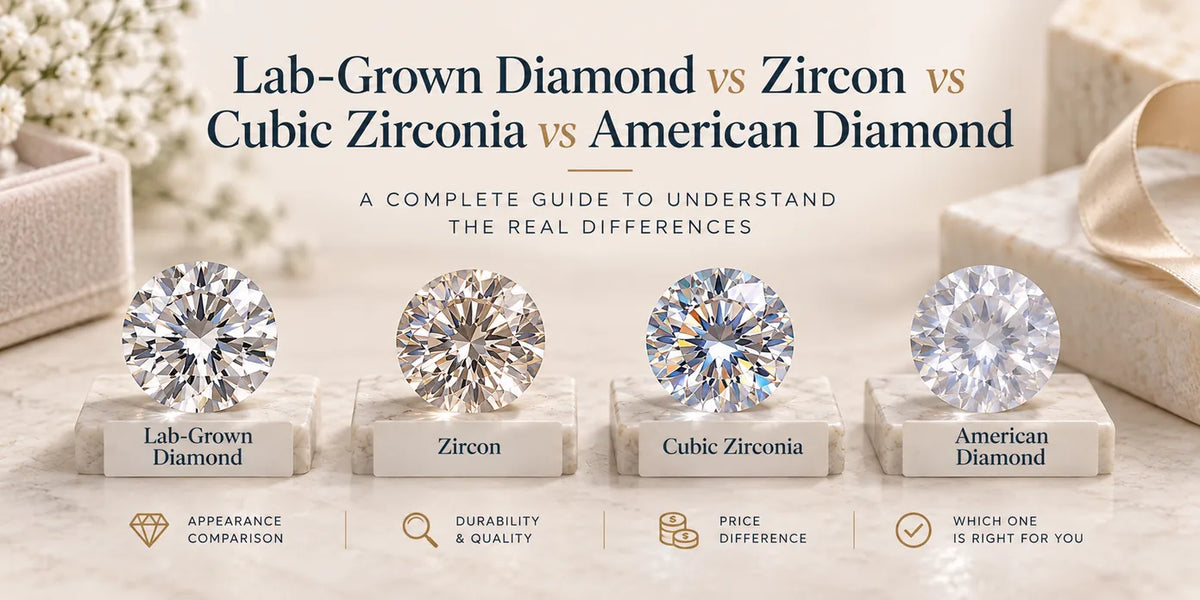
Lab-Grown Diamond vs Zircon vs Cubic Zirconia vs American Diamond: The Complete Guide
Confused between lab-grown diamonds, zircon, cubic zirconia and American diamond? This guide breaks down the real differences in composition, hardness, price and which stone suits your jewellery.
Read more