

How to Choose the Perfect Lab Grown Diamond: A First-Time Buyer's Guide for India (2026)
Updated April 2026 | Reading time: 12 minutes
- Table of Contents
- 1. Why Buy a Lab Grown Diamond in 2026?
- 2. Understanding the 4Cs for Lab Grown Diamonds
- 3. Shape Selection Guide
- 4. Metal Options: 14KT vs 18KT, and Which Gold Colour to Pick
- 5. Certification: IGI vs SGL vs GIA — What to Look For
- 6. Setting Types: Prong, Bezel, Channel, and Pavé
- 7. Budget Planning: How Much Should You Actually Spend?
- 8. Red Flags to Avoid When Buying Lab Grown Diamonds in India
- Frequently Asked Questions
- Conclusion
- You May Also Like
Buying a diamond for the first time can feel overwhelming — dozens of terms, grades, certifications, and price points competing for your attention. If you've been wondering how to choose a lab grown diamond that's genuinely worth your money, you're in the right place. This lab grown diamond buying guide is written specifically for Indian buyers, covering everything from the 4Cs to certification bodies you can actually trust, budget ranges in INR, and the red flags that should make you walk away from a purchase. Whether you're shopping for an engagement ring, a birthday pendant, or your own everyday studs, this guide will help you buy with confidence.
1. Why Buy a Lab Grown Diamond in 2026?
Lab grown diamonds are chemically, physically, and optically identical to mined diamonds. They're made of the same carbon crystal structure, they score 10 on the Mohs hardness scale, and they sparkle with the same fire and brilliance. The difference? How they're made — and what they cost.
The Price Advantage
Lab grown diamonds typically cost 60-80% less than mined diamonds of comparable quality. That means a beautifully cut 1-carat solitaire that might cost ₹3-4 lakh as a mined stone can be yours for ₹70,000-₹1,20,000 as a lab grown diamond. That's not a compromise — it's the same diamond at a fraction of the cost, because you're not paying for mining operations, land rights, and a decades-long supply chain.
The Ethical Choice
Lab grown diamonds sidestep the environmental and ethical concerns associated with diamond mining. No land displacement, no questionable labour practices, and a significantly smaller carbon footprint. For a generation of Indian buyers who care about where their products come from, this matters.
The Quality Reality
Here's the part that surprises most first-time buyers: even a trained gemologist cannot tell the difference between a lab grown and a mined diamond with the naked eye. Both are graded using the same 4Cs framework. Both come with certifications from the same laboratories. The only way to distinguish them is with specialised equipment that detects trace growth patterns.
| Factor | Lab Grown Diamond | Mined Diamond |
|---|---|---|
| Chemical Composition | Pure carbon crystal | Pure carbon crystal |
| Hardness (Mohs) | 10 | 10 |
| Brilliance & Fire | Identical | Identical |
| Price (1 ct solitaire, approx.) | ₹70,000 – ₹1,20,000 | ₹3,00,000 – ₹5,00,000 |
| Environmental Impact | Significantly lower | High (mining, transport) |
| Certification | IGI, SGL, GIA | IGI, SGL, GIA |
| Resale / Exchange | Varies by brand (up to 80%) | Varies widely |
2. Understanding the 4Cs for Lab Grown Diamonds
The 4Cs — Carat, Cut, Clarity, and Colour — are the universal grading system for diamonds, whether lab grown or mined. Understanding them is non-negotiable if you want to make a smart purchase. Let's break each one down in practical terms.
Carat: Weight, Visual Size, and Popular Choices in India
Carat refers to the weight of a diamond, not its size. One carat equals 0.2 grams. This is an important distinction because two 1-carat diamonds of different shapes can look quite different in terms of how large they appear when set in jewellery.
For example, a 1-carat oval diamond looks visually larger than a 1-carat round diamond because the oval's elongated shape covers more surface area on your finger. If visual size matters to you (and for most people it does), consider shapes that maximise the face-up appearance.
Popular Carat Weights in India
- 0.30 – 0.50 ct: The sweet spot for everyday jewellery — studs, delicate pendants, and stackable rings. Budget-friendly and elegant.
- 0.50 – 1.00 ct: The most popular range for engagement rings and statement pieces. Offers visible brilliance without a steep price jump.
- 1.00 – 2.00 ct: A head-turner. With lab grown diamonds, a stone in this range is achievable for many Indian buyers — something that was out of reach with mined diamonds.
Pro tip: Consider "just under" weights like 0.90 ct or 0.48 ct. These stones look nearly identical to their round-number counterparts but cost noticeably less, because pricing jumps at half- and full-carat marks.
Cut: The Single Biggest Factor in Brilliance
If you take one thing away from this lab grown diamond guide for India, let it be this: cut is the most important of the 4Cs. A well-cut diamond will have exceptional brilliance, fire, and scintillation — that mesmerising sparkle that catches light from across the room. A poorly cut diamond, even with perfect colour and clarity, will look dull.
Cut is graded on how well the diamond's facets interact with light. The grades, from best to worst:
| Cut Grade | What It Means | Should You Buy It? |
|---|---|---|
| Excellent / Ideal | Maximum brilliance and fire. Light enters and reflects back beautifully. | Yes — this is the gold standard. Always aim for this. |
| Very Good | Nearly as brilliant as Excellent. Minor deviations in proportions. | Yes — great value. Most people can't tell the difference from Excellent. |
| Good | Reflects most light. Some brilliance is lost to imperfect angles. | Acceptable if budget is tight, but try to go higher. |
| Fair | Noticeable loss of brilliance. Light leaks from the sides or bottom. | Avoid for centre stones. Fine for tiny accent stones. |
| Poor | Most light escapes. Diamond looks glassy or lifeless. | Avoid entirely. |
The bottom line: Never go below Very Good for your centre diamond. If you need to save money, reduce carat weight or go one step lower in colour — but protect the cut grade.
Clarity: What You Can (and Can't) See

Clarity measures the presence of internal inclusions (tiny imperfections inside the diamond) and external blemishes. The clarity scale runs from Flawless (FL) down to Included (I1, I2, I3).
Here's the practical reality: most inclusions are invisible to the naked eye. You're paying a significant premium for clarity grades that only a gemologist with 10x magnification can appreciate.
| Grade | Meaning | Visible to Naked Eye? | Value Rating |
|---|---|---|---|
| FL / IF | Flawless / Internally Flawless | No | Premium — mostly for collectors |
| VVS1 / VVS2 | Very Very Slightly Included | No | Excellent, but you're paying for peace of mind |
| VS1 / VS2 | Very Slightly Included | No | Best value — the sweet spot |
| SI1 / SI2 | Slightly Included | Sometimes (SI2 may be visible) | Good value if eye-clean; inspect carefully |
| I1 / I2 / I3 | Included | Yes | Avoid — affects brilliance and durability |
Our recommendation: Aim for VS1 or VS2. These grades are "eye-clean" — meaning no inclusions are visible without magnification — and they offer the best balance of quality and value. If budget is a concern, an eye-clean SI1 can also work, but examine the stone (or its high-resolution imagery) carefully before buying.
Colour: D to J and What Actually Matters
Diamond colour is graded on a scale from D (completely colourless) to Z (light yellow or brown). For lab grown diamonds, you'll typically find stones in the D to J range.

The key insight: colour perception depends heavily on the metal you set it in.
| Metal | Recommended Colour Grades | Why |
|---|---|---|
| White Gold / Platinum | D – G | White metal highlights any warmth in the stone. Stay colourless to near-colourless. |
| Yellow Gold | G – J | The warm metal tone masks slight colour in the diamond. You can save money here without visible difference. |
| Rose Gold | F – I | Rose Gold's warm pink hue is forgiving. Mid-range colour grades look perfectly white in this setting. |
Budget-smart move: If you're choosing Yellow Gold (which remains the most popular choice in India for cultural and aesthetic reasons), you can comfortably go with an H or I colour diamond and pocket the savings — or put them toward a larger carat weight.
3. Shape Selection Guide
Diamond shape is a matter of personal style, but each shape has practical characteristics worth knowing. Here's a quick overview of the most popular shapes you'll find in Indian lab grown diamond jewellery:
| Shape | Best For | Visual Size | Brilliance | Things to Know |
|---|---|---|---|---|
| Round Brilliant | Everything — studs, solitaires, pendants | Standard | Highest | Most popular and most expensive per carat. Maximum sparkle. |
| Oval | Engagement rings, pendants | Looks 10-15% larger | Very High | Elongates the finger. Watch for the "bow-tie" effect (dark shadow across the centre). |
| Princess | Modern solitaires, channel settings | Standard | High | Sharp corners need protective settings (like V-prongs or bezel). |
| Emerald | Art deco, vintage-style pieces | Looks larger | Moderate (hall-of-mirrors effect) | Step-cut facets show clarity more. Go VS1 or higher. |
| Cushion | Engagement rings, halo settings | Standard | High | Soft, romantic look. Available in square and elongated versions. |
| Pear | Pendants, drop earrings | Looks larger | High | Teardrop shape is stunning for earrings. Check for symmetry. |
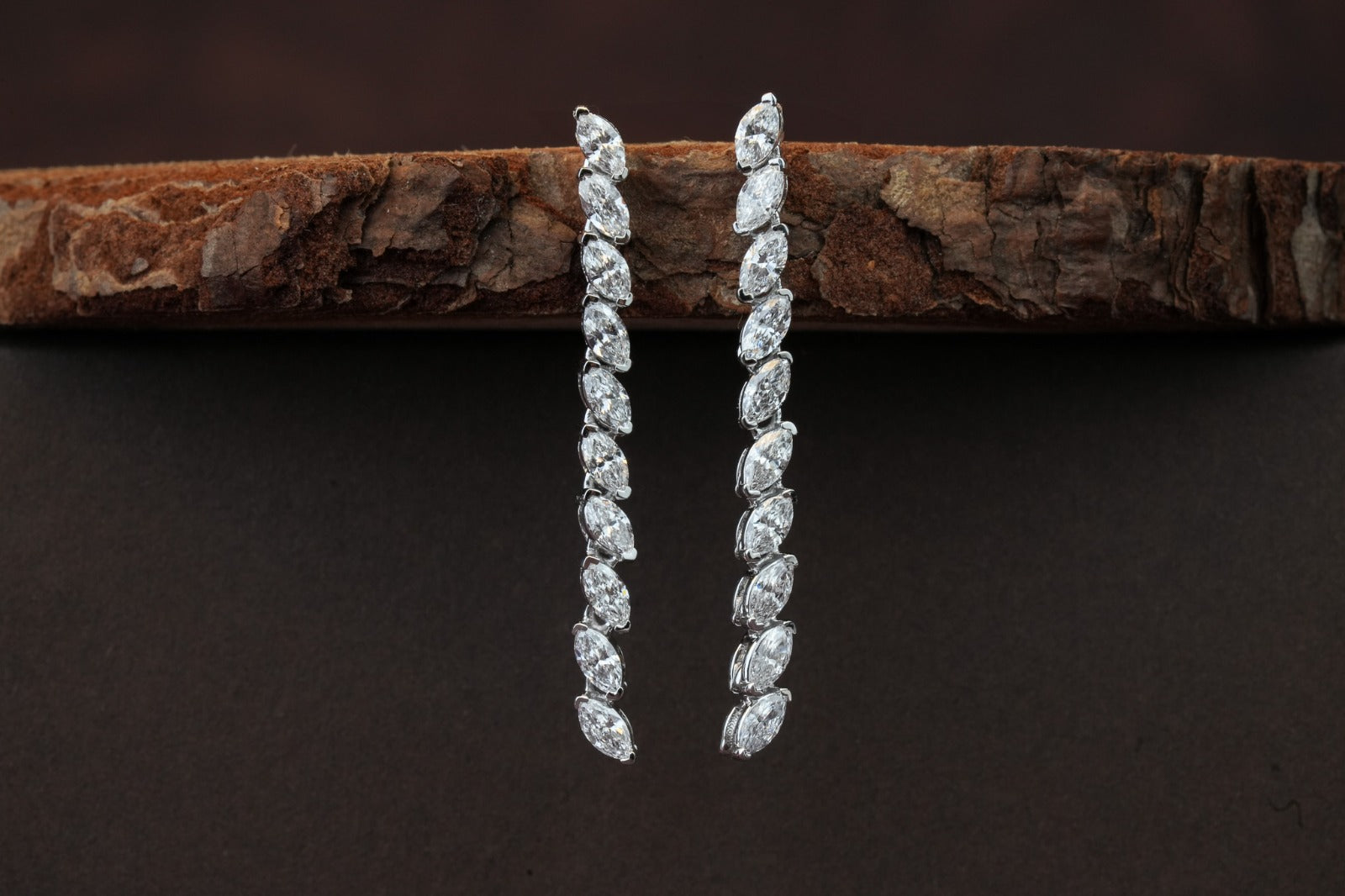
| Marquise | Vintage rings, statement pieces | Looks largest per carat | High | Maximum visual size. Pointed ends need protective prongs. |
For Indian buyers: Round brilliant remains the most versatile and popular choice across all jewellery types, from daily-wear studs to bridal sets. Oval and cushion shapes have seen a strong surge in popularity for engagement rings over the past two years. If you want something traditional yet distinctive, pear and marquise shapes work beautifully in mangalsutra pendants and cocktail rings.
4. Metal Options: 14KT vs 18KT, and Which Gold Colour to Pick
In India, gold jewellery is most commonly available in 14KT and 18KT purity. Here's how they compare for diamond jewellery specifically:
| Factor | 14KT Gold (58.3% pure) | 18KT Gold (75% pure) |
|---|---|---|
| Durability | More durable — better for everyday wear | Softer — more prone to scratches |
| Colour Richness | Slightly lighter gold tone | Richer, deeper gold tone |
| Price | More affordable | 20-30% more expensive |
| Best For | Daily wear, active lifestyles | Special occasions, investment pieces |
| Allergies | Higher alloy content — rare, but possible reactions | Lower alloy content — generally more hypoallergenic |
14KT is the practical choice for most diamond jewellery. It holds prongs and settings more securely (because it's harder), costs less, and withstands daily wear better. This is why most quality lab grown diamond jewellery brands — including Blu Diamonds — use 14KT gold as their standard.
Choosing Your Gold Colour
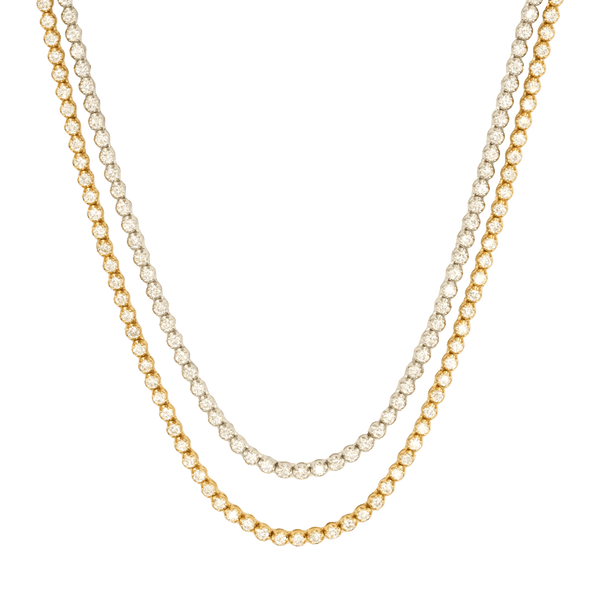
Yellow Gold: The classic choice that resonates deeply with Indian tradition. Yellow Gold complements warmer skin tones beautifully and pairs well with diamonds in the G-J colour range. It remains the most popular metal for wedding and festive jewellery across India.
White Gold: A contemporary favourite for engagement rings and Western-style jewellery. White Gold creates a sleek, modern look and makes colourless diamonds (D-F) appear even more brilliant. It's also a more affordable alternative to platinum.
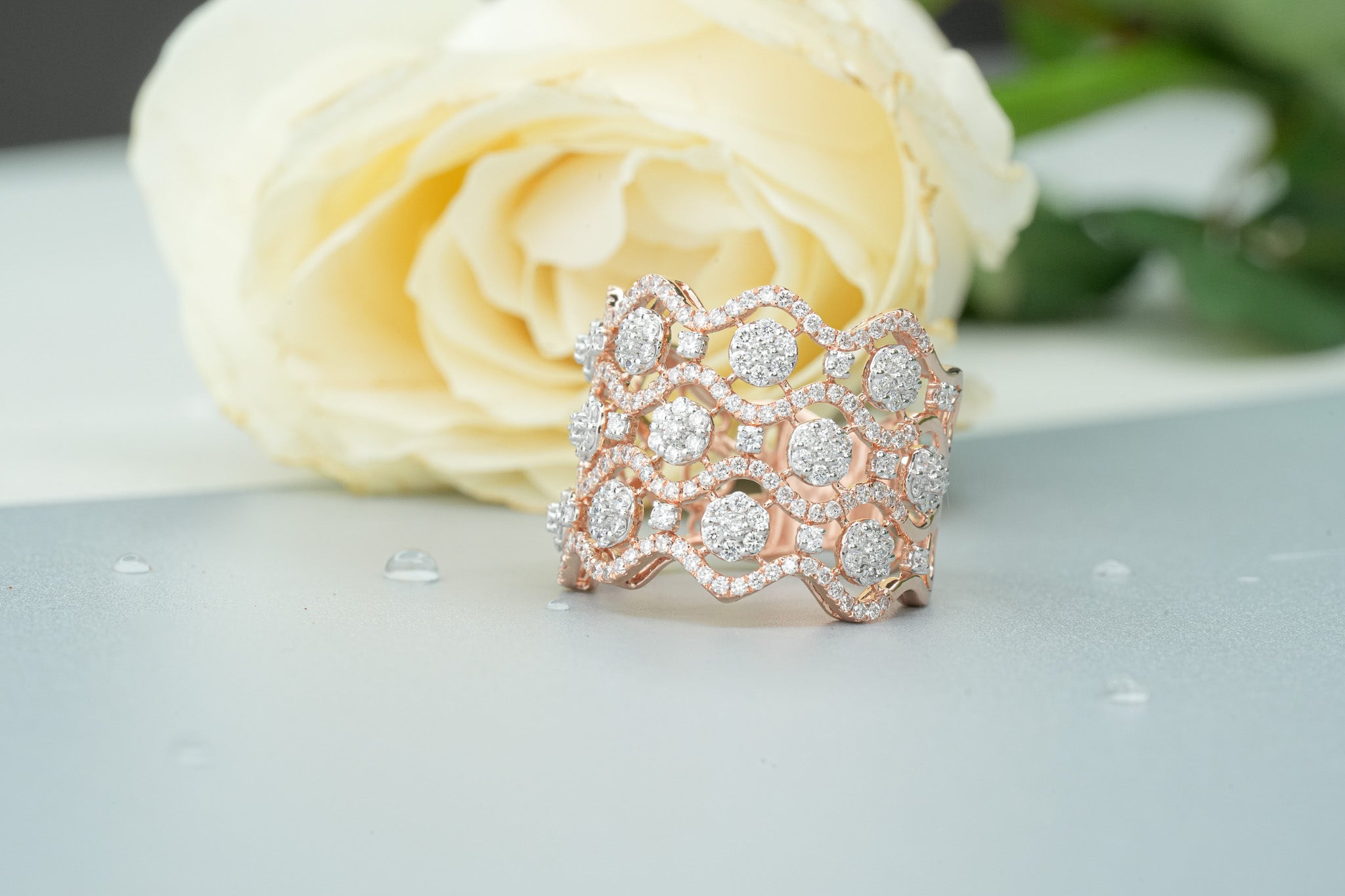
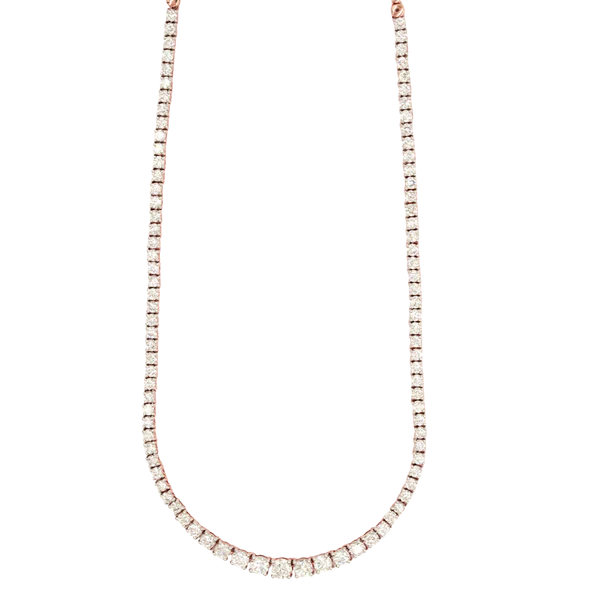
Rose Gold: The romantic option that's been gaining popularity in Indian metros. Rose Gold has a warm, pinkish hue that flatters most Indian skin tones and gives jewellery a distinctive, fashion-forward feel. It pairs especially well with oval and cushion-cut diamonds.
Can't decide? Consider your existing jewellery. If most of your pieces are Yellow Gold, a Yellow Gold diamond ring will sit harmoniously alongside them. If you're building a new collection or want something different, White Gold and Rose Gold offer a refreshing change.
5. Certification: IGI vs SGL vs GIA — What to Look For
A diamond without a certificate is a gamble. Certification is your guarantee that the diamond has been independently assessed by a qualified gemological laboratory. In India, three certifications dominate the lab grown diamond market:
IGI (International Gemological Institute)
IGI is the most widely used certification for lab grown diamonds globally and in India. They have labs in Mumbai and Surat, which means faster turnaround for Indian jewellers. IGI certificates include detailed grading for all 4Cs, a plotted diagram of inclusions, and a unique report number that you can verify online.
Verdict: The industry standard for lab grown diamonds. Trusted and well-recognised.
SGL (Solitaire Gemological Laboratories)
SGL is an Indian gemological lab with a strong reputation in the domestic market. They're known for consistent grading standards and are widely accepted by Indian jewellers and insurers. SGL certification is slightly more affordable than IGI, which can translate to marginally lower prices for the end buyer.
Verdict: Excellent choice for the Indian market. Well-respected domestically.
GIA (Gemological Institute of America)
GIA is considered the most prestigious certification globally. They set the original standards for diamond grading. However, GIA certification is more common for mined diamonds. Their lab grown diamond reports are thorough but tend to be pricier, which adds to the final cost of the jewellery.
Verdict: Gold standard globally, but less common for lab grown diamonds in India. Worth it if available, but IGI and SGL are perfectly reliable.
What to Check on Any Diamond Certificate
- Report number: Verify it on the lab's official website.
- 4Cs grading: Carat, Cut, Clarity, Colour — all should be clearly stated.
- "Laboratory Grown" or "Lab Grown" declaration: Reputable labs clearly state this. If it's missing or ambiguous, that's a red flag.
- Shape and measurements: Cross-check these with what you see in person.
- Date of certification: Recent reports are preferable.
6. Setting Types: Prong, Bezel, Channel, and Pavé
The setting is how the diamond is secured in the metal. It affects both aesthetics and practicality. Here's what you need to know:
Prong Setting (Claw Setting)

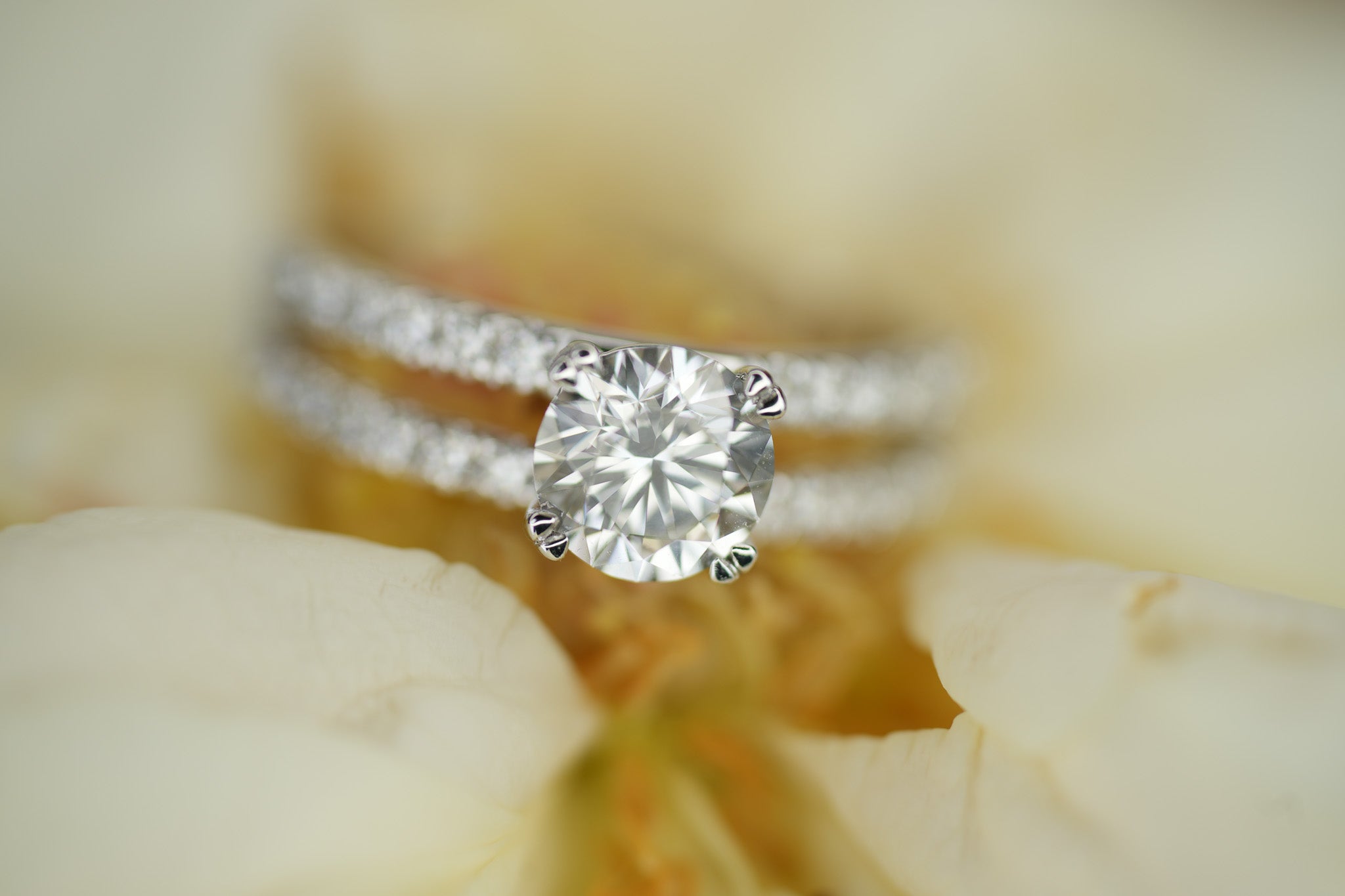
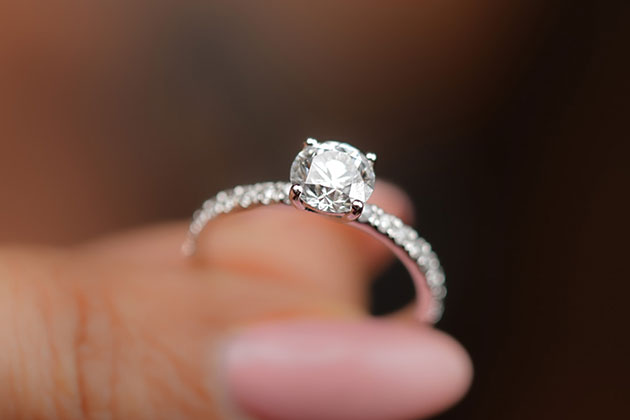
The most popular setting for solitaire rings and stud earrings. Four or six metal claws hold the diamond, allowing maximum light to enter from all angles. This means more sparkle. The downside? Prongs can snag on fabric and may loosen over time with heavy wear. Ideal for engagement rings and special-occasion jewellery.

Bezel Setting
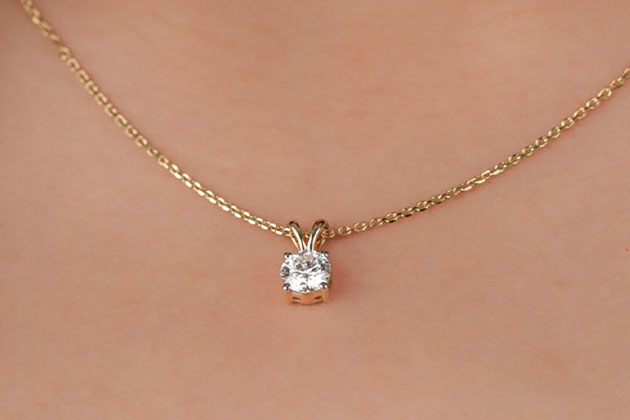
A rim of metal wraps around the diamond's edge, holding it securely in place. The bezel setting is the most protective option — excellent for active lifestyles and daily wear. It gives a clean, modern look but allows slightly less light into the diamond compared to prong settings. Great for pendants, everyday rings, and jewellery you don't want to worry about.
Channel Setting
Diamonds are set between two parallel strips of metal, creating a smooth, continuous line of stones. There are no prongs to catch on clothes, making this setting comfortable for everyday wear. Channel settings are commonly used for wedding bands, eternity bands, and accent stones on engagement rings.
Pavé Setting
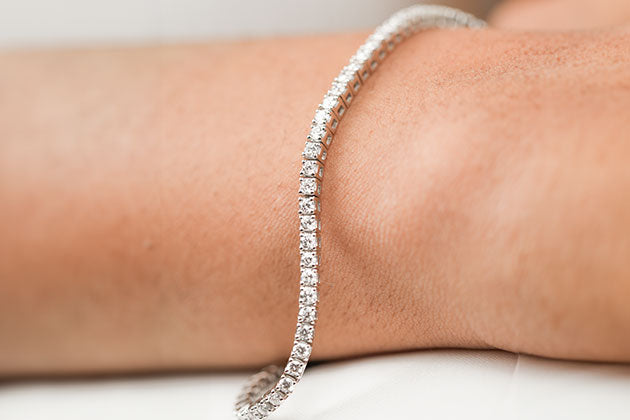
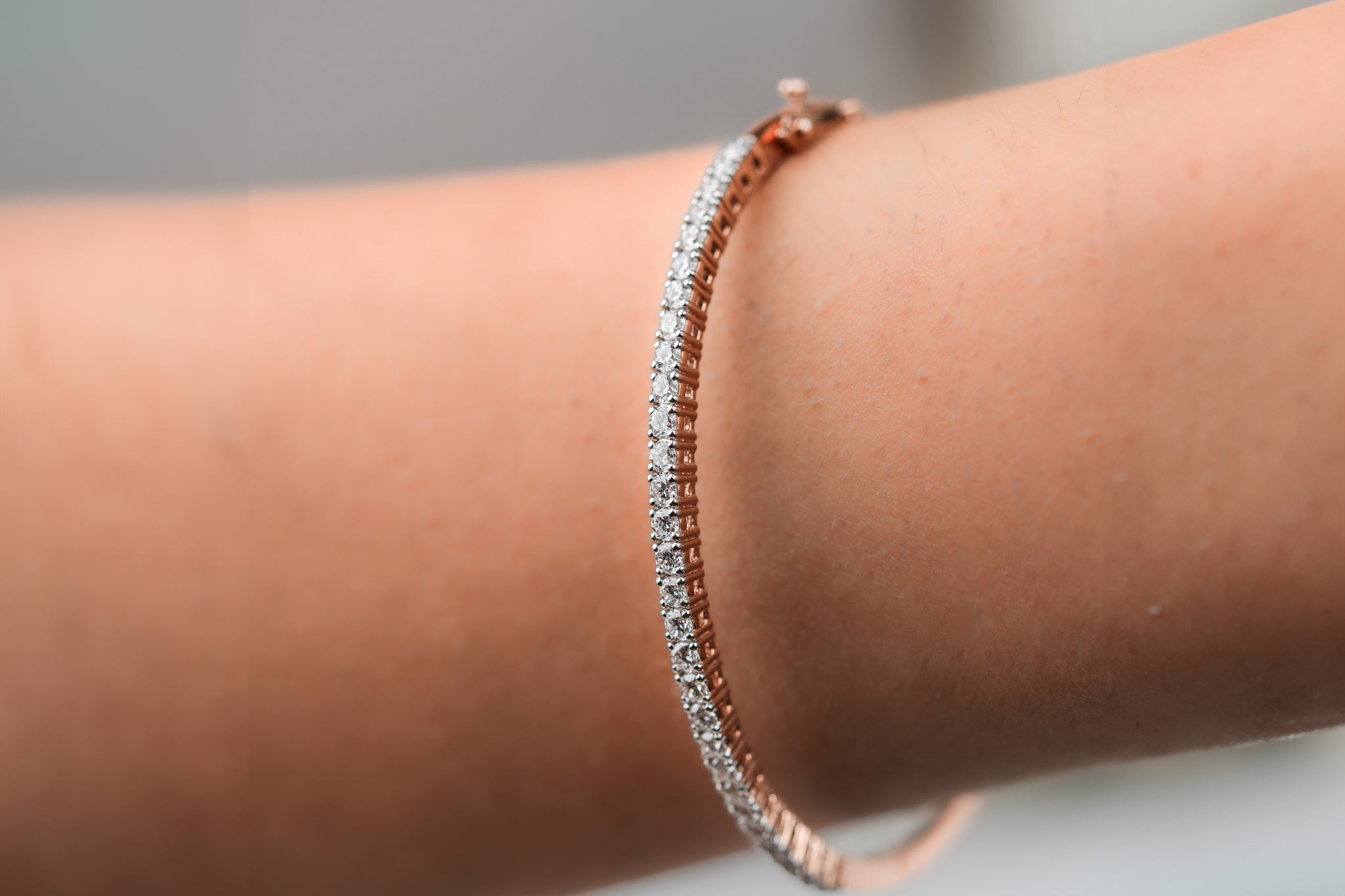
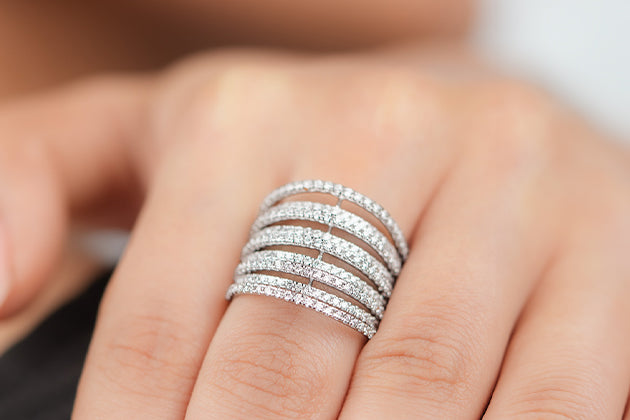
Tiny diamonds are set closely together across the metal surface, held by small beads or mini-prongs. The result is a surface that appears encrusted with diamonds, creating serious visual impact and maximising sparkle. Pavé is popular for bands, halo settings around a centre stone, and tennis bracelets. One consideration: pavé-set stones can occasionally come loose, so periodic inspections are wise.
Which Setting Should You Choose?
- For maximum brilliance: Prong (especially 4-prong for larger stones)
- For daily wear and durability: Bezel or channel
- For maximum visual impact: Pavé or halo (pavé around a centre stone)
- For comfort (no snagging): Bezel or channel
7. Budget Planning: How Much Should You Actually Spend?
Forget the outdated "two months' salary" rule — it was a marketing invention, not financial advice. The right budget is one that makes you comfortable while getting you a piece you'll genuinely love wearing.
Here's a realistic look at what lab grown diamond jewellery costs in India in 2026:
| Jewellery Type | Budget Range | Mid Range | Premium Range |
|---|---|---|---|
| Diamond Studs (pair) | ₹15,000 – ₹30,000 | ₹30,000 – ₹70,000 | ₹70,000 – ₹1,50,000 |
| Solitaire Ring | ₹25,000 – ₹60,000 | ₹60,000 – ₹1,50,000 | ₹1,50,000 – ₹4,00,000+ |
| Engagement Ring | ₹30,000 – ₹80,000 | ₹80,000 – ₹2,00,000 | ₹2,00,000 – ₹5,00,000+ |
| Pendant | ₹12,000 – ₹35,000 | ₹35,000 – ₹80,000 | ₹80,000 – ₹2,00,000 |
| Tennis Bracelet | ₹50,000 – ₹1,00,000 | ₹1,00,000 – ₹3,00,000 | ₹3,00,000 – ₹8,00,000+ |
| Mangalsutra | ₹20,000 – ₹50,000 | ₹50,000 – ₹1,20,000 | ₹1,20,000 – ₹3,00,000 |
Smart Ways to Maximise Your Budget
- Prioritise cut over everything else. A smaller, well-cut diamond will always look better than a larger, poorly cut one.
- Choose the clarity sweet spot. VS1-VS2 gives you an eye-clean diamond without the premium of VVS or Flawless grades.
- Match colour to metal. Setting a slightly warm diamond (H-J) in Yellow Gold makes its colour invisible — and saves you 15-20%.
- Consider fancy shapes. Ovals, pears, and marquise shapes cost 15-30% less per carat than round brilliants while often appearing larger.
- Look for exchange policies. A brand offering 80% lifetime exchange value gives you flexibility to upgrade later — making your first purchase lower risk. Blu Diamonds, for example, offers exactly this, which means your jewellery retains tangible value over time.
8. Red Flags to Avoid When Buying Lab Grown Diamonds in India
The lab grown diamond market in India has matured significantly, but there are still pitfalls to watch for. Be cautious if you encounter any of the following:
- No certification: Any credible seller will provide an IGI or SGL certificate. If a seller says "we do our own grading" or "certification isn't necessary for this size," walk away.
- Vague origin claims: The diamond should be clearly identified as "lab grown" or "laboratory grown" — not "type IIA," "cultured," or other euphemisms designed to confuse.
- "Same as mined, same price": If a seller is pricing lab grown diamonds close to mined diamond rates, they're overcharging. The 60-80% price difference is well established.
- No return or exchange policy: Reputable brands offer clear return windows and exchange policies. The absence of these suggests the seller isn't confident in their product.
- Pressure tactics: "This is the last piece" or "price goes up tomorrow" — classic pressure selling. A good diamond will be available from a good seller without manufactured urgency.
- Mismatched certificate and stone: Always check that the report number on the certificate matches any inscription on the diamond (laser-inscribed on the girdle). If the seller can't show you this, be wary.
- No hallmarking on gold: BIS hallmarking on gold jewellery is mandatory in India. Check for the hallmark stamp that confirms the gold purity (14KT or 18KT) matches what's claimed.
- Unrealistically low prices: If a deal seems too good to be true, it probably is. Extremely low prices may indicate lower-grade stones being passed off as higher quality, or issues with the metal purity.
Frequently Asked Questions
Q1: Are lab grown diamonds "real" diamonds?
Yes, absolutely. Lab grown diamonds are real diamonds — they have the same chemical composition (pure carbon), the same crystal structure, the same hardness (10 on the Mohs scale), and the same optical properties as mined diamonds. The Federal Trade Commission (FTC) in the US and the Bureau of Indian Standards both recognise lab grown diamonds as real diamonds. The only difference is their origin: a laboratory instead of the earth.
Q2: Will a lab grown diamond lose its sparkle over time?
No. Lab grown diamonds are permanent. They won't cloud, fade, or lose their brilliance — ever. They're made of the same material as mined diamonds, which is the hardest natural substance on earth. Your lab grown diamond will look exactly the same in 50 years as it does today (assuming you keep it clean — diamonds do attract oil and grime from everyday wear, but a simple cleaning restores their sparkle instantly).
Q3: How much cheaper are lab grown diamonds compared to mined diamonds in India?
Lab grown diamonds are typically 60-80% less expensive than mined diamonds of comparable quality. The exact savings depend on the carat weight, cut, clarity, and colour grade. For example, a well-cut 1-carat lab grown diamond solitaire ring in 14KT gold might cost ₹70,000-₹1,20,000, while a comparable mined diamond ring could be ₹3,00,000-₹5,00,000.
Q4: What's the best diamond shape for an engagement ring?
Round brilliant is the most popular and maximises sparkle, making it a safe choice. However, oval and cushion cuts have become increasingly popular in India for engagement rings because they offer a distinctive look and often appear larger per carat. The "best" shape is ultimately the one that matches your partner's personal style — pay attention to the jewellery they already wear for clues.
Q5: Should I prioritise carat size or diamond quality?
Quality — specifically cut quality — should always come first. A beautifully cut 0.70-carat diamond will look more impressive than a poorly cut 1-carat diamond. After securing an Excellent or Very Good cut, allocate your remaining budget between carat weight and the other quality factors (clarity and colour) based on what matters most to you.
Q6: Can I get a lab grown diamond resized or exchanged later?
Resizing depends on the jewellery design — most rings can be resized one or two sizes up or down. For exchanges, it depends entirely on the brand's policy. Look for brands that offer lifetime exchange value. Blu Diamonds, for instance, offers 80% lifetime exchange value, which means you can upgrade to a different design or a larger diamond later without losing most of your original investment.
Q7: What certification should I insist on when buying a lab grown diamond in India?
Look for IGI (International Gemological Institute) or SGL (Solitaire Gemological Laboratories) certification. Both are well-respected, widely recognised in India, and provide detailed, reliable grading reports. GIA certification is also excellent but less common for lab grown diamonds in the Indian market. The key thing is to have some reputable third-party certification — never buy an uncertified diamond.
Conclusion
Choosing a lab grown diamond doesn't have to be complicated. Focus on the cut first — it's what makes a diamond come alive. Find your sweet spot in clarity (VS1-VS2) and match your colour grade to your metal choice. Pick a shape that speaks to you, insist on IGI or SGL certification, and buy from a brand with a clear exchange policy and genuine expertise in diamonds.
Lab grown diamonds have made stunning, certified diamond jewellery accessible to a much wider audience in India. With five decades in the diamond industry and over 700 certified designs to explore, Blu Diamonds is a solid place to start your search — whether you're looking for an engagement ring that makes a statement, everyday studs that add quiet sparkle, or a tennis bracelet that turns heads.
The best diamond is the one you'll love wearing every day. Now you have the knowledge to find it.
You May Also Like
Read more
Lab Grown Diamond Engagement Rings in India: Designs, Prices & How to Pick the Perfect Ring (2026)
Your complete guide to choosing a stunning, ethical, and affordable lab grown diamond engagement ring in India — with real price ranges, style breakdowns, and tips that actually help. In This ...
Read more
CVD vs HPHT Diamonds: Which Should You Buy? Complete India Guide (2026)
Last updated: April 2026 In This Guide Table of Contents What is a CVD Diamond? (Chemical Vapor Deposition) What is an HPHT Diamond? (High Pressure High Temperature) Key Differences: CVD vs H...
Read more