

The Men's Guide to Buying a Lab Grown Diamond Engagement Ring
Most men buying an engagement ring have never bought a piece of jewellery in their life. Not a ring, not a bracelet, nothing. And suddenly you're supposed to walk into a shop — or navigate a website — and make a decision worth tens of thousands of rupees on something you know essentially nothing about, for someone whose opinion matters more to you than anyone's.
- Start Here — The Four Questions to Answer Before You Buy
- Why Lab Grown Diamonds Are the Smart Choice for This Purchase
- Understanding the Ring — Parts of an Engagement Ring
- Choosing the Diamond — The 4Cs in Plain Language
- Choosing the Metal — Yellow Gold, White Gold, Rose Gold
- Choosing the Setting Style
- Getting the Ring Size Right
- The Certificate — What to Ask For
- Frequently Asked Questions
It's completely normal to find this intimidating. The jewellery industry hasn't always made it easier — the combination of unfamiliar terminology, high stakes, and an obvious information asymmetry between buyer and seller is a stressful one.
This guide gives you what you actually need to know. It won't cover every last detail — it'll cover the things that matter.
Start Here — The Four Questions to Answer Before You Buy

Before you look at a single diamond, answer these four questions. Everything else follows from them.
What's my budget?
Be honest with yourself. The old "two months' salary" rule is a marketing invention created by De Beers in the 1980s to sell more diamonds. It has no basis in what's meaningful or appropriate. Your budget is whatever you can comfortably spend without financial stress. The good news: with lab grown diamonds at 2026 prices, a budget of ₹50,000–1,50,000 gets you a genuinely beautiful, certified diamond engagement ring. You don't need to spend ₹5 lakh to give her something she'll be proud of.
What's her ring size?
This is the logistical challenge nobody talks about enough. We'll cover this in detail later in this guide. For now: getting the size wrong is fixable. Most jewellers resize rings for a modest fee. Don't let this derail the whole plan.
What's her style?
Look at what she already wears. Does she wear jewellery at all? Is it delicate or bold? Yellow gold, White Gold, or Rose Gold? Simple or detailed? Does she tend toward classic and elegant or modern and fashion-forward? You know her better than any jeweller does. Trust your observations.
Does she prefer a surprise or to be involved?
There's no right answer. Some women dream of the perfect surprise proposal with a ring chosen entirely by you. Others would be quietly horrified at the idea of wearing a ring someone else picked for them for the rest of their life. If you genuinely don't know which she is, the safest approach is a beautiful placeholder ring or a well-chosen solitaire in her known preferred metal, with the explicit offer of choosing the final setting together. Many couples do this and find the process of choosing together becomes part of the engagement story.
Why Lab Grown Diamonds Are the Smart Choice for This Purchase
If you've landed on a lab grown diamond, you've made a good decision. Here's why it makes particular sense for an engagement ring purchase.
First, the obvious: price. A 1ct lab grown diamond — IGI certified, G colour, VS2 clarity, Excellent cut — costs approximately ₹25,000–45,000. The equivalent mined diamond costs ₹1.5–3 lakh. The difference in appearance? Zero. Both are carbon in the same cubic crystal structure. A standard diamond tester can't tell them apart. A trained gemologist examining the stone under magnification can identify growth characteristics that indicate it's lab grown — but that same gemologist would also confirm, definitively, that it is a diamond.
The price difference means you can either buy a significantly larger or higher quality stone for the same budget, or keep the budget lower and reduce financial stress around the purchase. Both are valid choices.
Second, the ethics are clean. Lab grown diamonds don't involve mining. Whatever your views on the diamond mining industry, that's one less thing to think about.
Third, and most importantly for an engagement ring: it is a real diamond. When she shows her ring to her mother, her friends, her colleagues — it's a diamond ring. It's certified by IGI. It has the same hardness (10 on the Mohs scale), the same brilliance, the same durability. It will look as beautiful in 30 years as it does the day she puts it on. The "lab grown" part is something to be proud of in 2026, not something to hide.
Understanding the Ring — Parts of an Engagement Ring
Let's cover the basics so you're not confused by terminology when you're shopping.
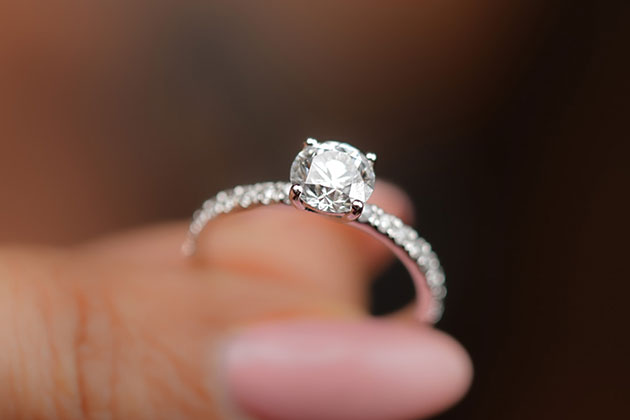
- Centre stone: The main diamond. The star of the show. This is what most of the conversation — and most of the budget — will be about.
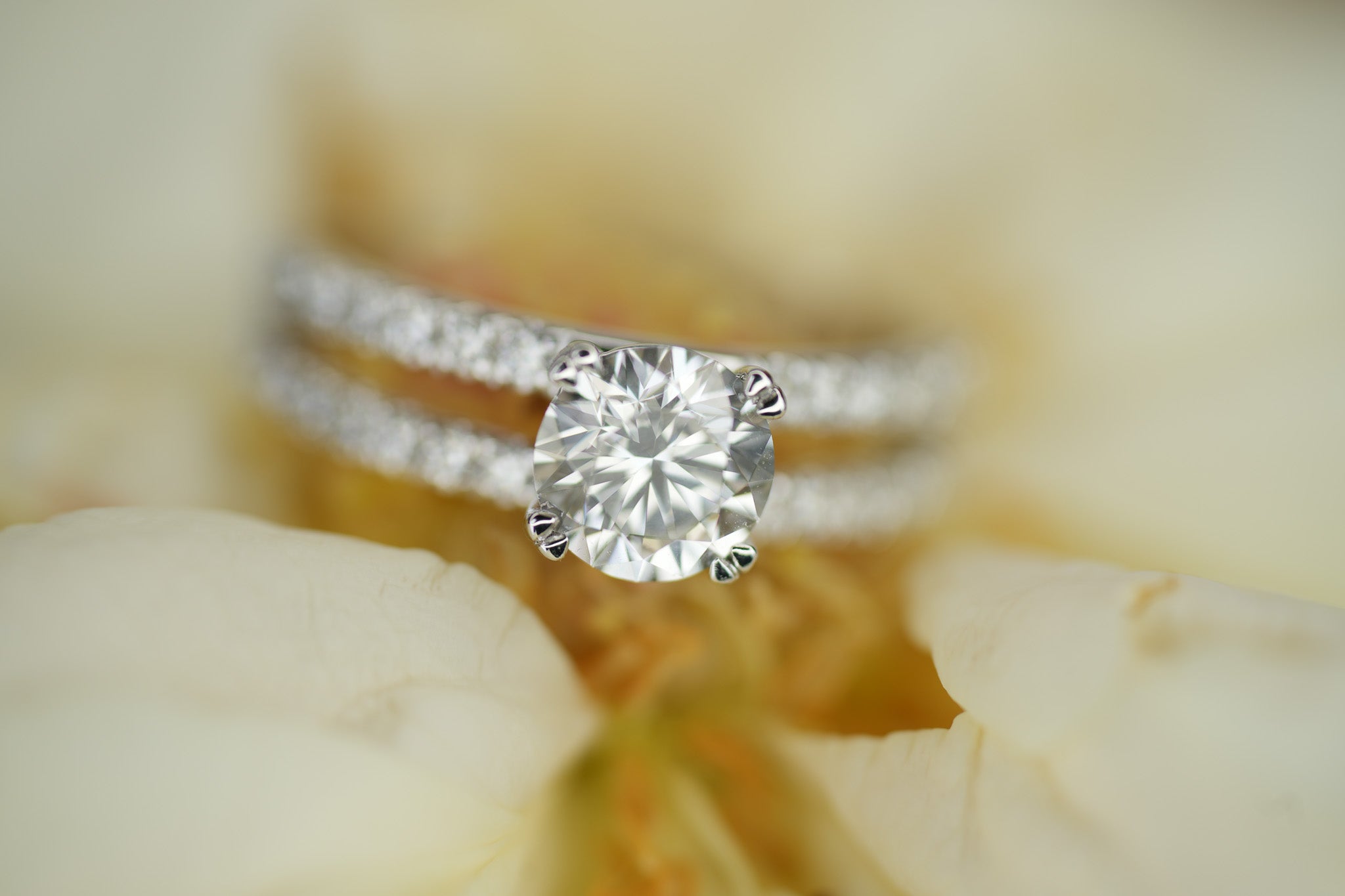
- Setting: The metal framework that holds the diamond in place. Prong settings (small metal claws gripping the diamond) are most common for solitaires. Bezel settings wrap metal around the edge of the stone. Both secure the diamond; prong settings show more of the stone, bezel settings are more protective.
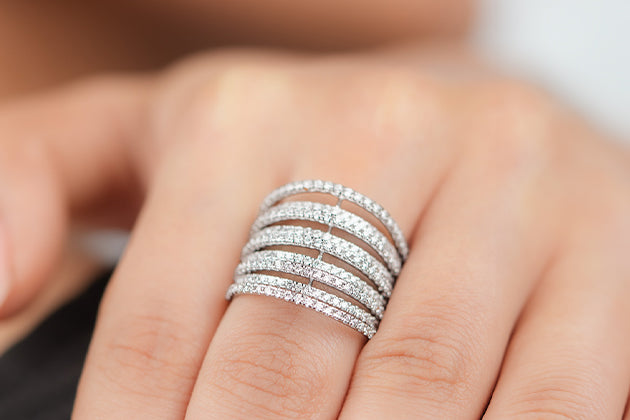
- Band: The ring portion that circles the finger. Can be plain metal, have diamonds set into it (pavé), or be designed to complement the setting in various ways.
- Metal: Usually gold — Yellow Gold, White Gold, or Rose Gold — in 14kt or 18kt purity. Platinum is also an option at higher price points.
- Head: The part of the setting that holds the centre stone — the elevated portion with the prongs. "Head height" affects how prominent the diamond sits above the finger.
Choosing the Diamond — The 4Cs in Plain Language
Every diamond is graded on four criteria. Understanding them takes ten minutes and will save you from making an expensive mistake.
- Cut: How well the diamond has been shaped and polished. This is the most important factor for how brilliant and sparkly the stone looks. Always buy Excellent or Very Good cut. A poorly cut diamond looks dull no matter how large it is. Never compromise cut to save money.
- Colour: Diamonds are graded from D (perfectly colourless) to Z (obviously yellow). For most people, G or H is the sweet spot — essentially colourless to the naked eye, without paying the premium for D–F which requires magnification to distinguish.
- Clarity: How many natural inclusions (tiny imperfections) the diamond has. The scale runs from Flawless (FL) down to Included (I). VS2 or SI1 is the practical sweet spot — inclusions not visible without a loupe, but priced significantly below VVS and Flawless grades.
- Carat: The weight of the diamond, which roughly corresponds to size. The 1ct mark is psychologically significant and commands a price premium. If you're budget-conscious, a well-cut 0.90ct stone looks nearly identical to a 1ct on the hand, but may cost 20–30% less.
If you want to prioritise: Cut first, always. Then Colour. Then Clarity. Then Carat. A beautifully cut smaller stone beats a poorly cut larger one every time.
Choosing the Metal — Yellow Gold, White Gold, Rose Gold
Gold comes in three colours, each with its own character. Your choice should be guided by what she already wears.
Yellow Gold is the classic. Warm, traditional, and having a significant fashion resurgence. Suits warmer skin tones particularly well, though it looks beautiful on all skin tones. The "gold ring" of imagination is typically Yellow Gold.
White Gold is Yellow Gold alloyed with white metals and plated with rhodium to give it a bright, silver-white finish. It was the dominant choice for engagement rings for the past two decades. Looks similar to platinum but at a lower price point. Note that White Gold may need re-plating with rhodium every few years as the plating wears — this is normal and inexpensive.
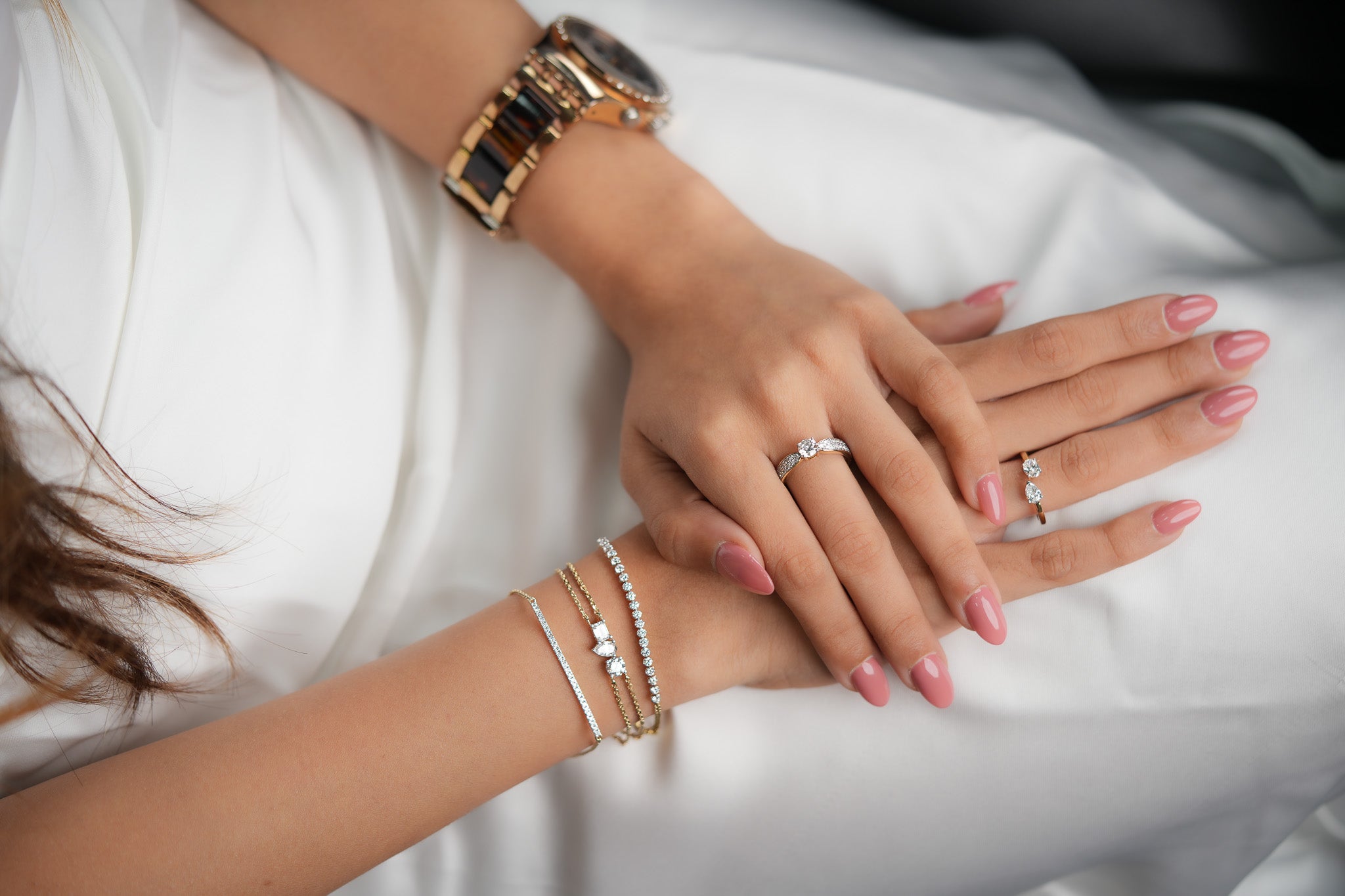
Rose Gold is Yellow Gold alloyed with copper, which gives it its warm pink tone. It's become very popular over the past decade for its romantic, distinctive look. If she wears Rose Gold jewellery or watches, this is an easy call. The copper content means Rose Gold is slightly harder than Yellow or White Gold.
If you genuinely can't tell which she prefers, ask her best friend. Seriously — that person almost certainly knows.
Choosing the Setting Style
Solitaire
A single diamond on a plain or simple band. Classic, timeless, and by far the most popular engagement ring style in the world. The design philosophy of a solitaire is that nothing should compete with the diamond. Simple works because the diamond is the point. This is the safest choice for a man who doesn't know his partner's specific preferences — almost no one dislikes a well-chosen solitaire.
Halo
A centre stone surrounded by a circle of smaller diamonds. The halo makes the centre stone appear larger, adds brilliance, and creates a more elaborate, decorative look. Extremely popular currently. If she loves jewellery and wears statement pieces, a halo is likely to appeal. If she prefers minimal, clean design, a solitaire is safer.
Pavé Band
Small diamonds set into the band itself, typically in a channel or with tiny prongs. Can be combined with a solitaire or halo centre, or used on its own as a continuous diamond band. Adds sparkle and visual texture to the band. Maintenance note: very small pavé stones can occasionally come loose — check settings periodically and have a jeweller inspect once a year.
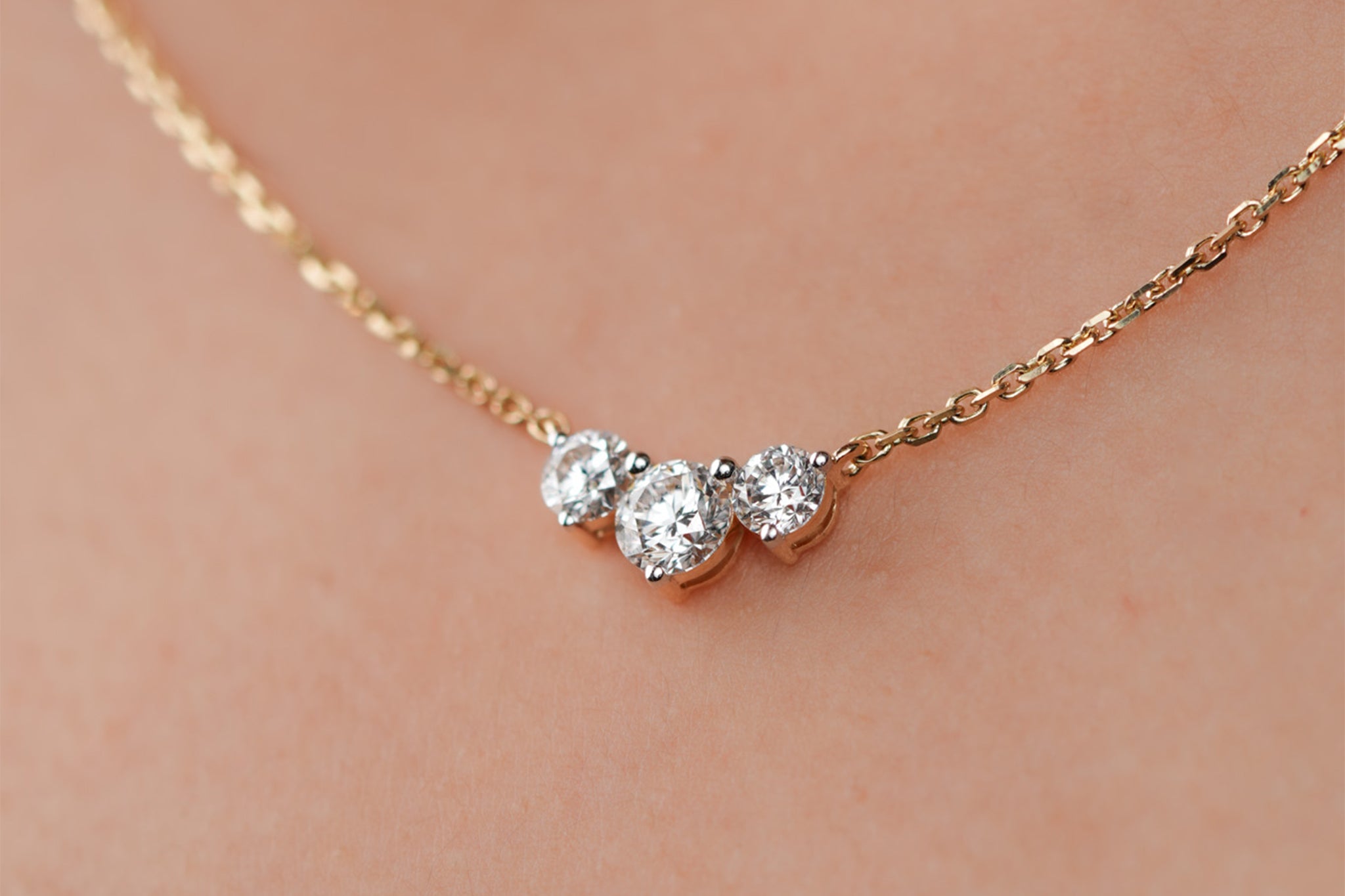
Three-Stone
A centre stone flanked by two side stones. Traditionally symbolic of past, present, and future — which makes it a meaningful choice if symbolism matters to you. The side stones can match the centre (all round brilliants, for instance) or contrast for visual interest. The three-stone has a balanced, substantial look that suits people who appreciate jewellery with meaning behind the design.
Getting the Ring Size Right
The practical challenge of the surprise proposal. Here's how men actually solve this problem.
The simplest method: borrow a ring she already wears on her ring finger (left hand, specifically — the sizing can differ between hands) while she's asleep or otherwise occupied, and bring it to the jeweller to measure. Done.
If borrowing isn't feasible, ask her best friend or a close family member. Women often discuss ring preferences with their closest friends. Her friend may already know her ring size.
Alternatively, trace the inner circumference of a ring she wears on that finger onto paper. A jeweller can size from a good tracing.
If all else fails: women's average ring size in India is approximately size 7–9 in US sizing (approximately 17–19mm inner diameter). Going slightly large is better than slightly small — a ring that's too large sits loosely but stays on; a ring that's too tight literally can't go on the finger during the proposal. Err large.
Most rings can be resized one to two sizes in either direction. It usually takes a week and costs ₹1,000–3,000. It's not a disaster if the fit isn't perfect on proposal day.
The Certificate — What to Ask For
Always buy a certified diamond. For lab grown diamonds, the certificate you want is from IGI (International Gemological Institute). At Blu Diamonds, every solitaire comes with IGI certification.
The certificate is a document from an independent laboratory confirming the diamond's cut, colour, clarity, and carat weight. It also confirms the stone is lab grown. It is issued by people with no financial stake in the sale — their job is accurate grading, not selling you a diamond.
When the ring is presented, the certificate can be presented with it. It's a mark of seriousness and transparency. It tells the recipient: "I knew what I was buying. I bought you something real."
If a jeweller tries to sell you a diamond without certification and you can't easily get one elsewhere, treat that as a red flag. There's no legitimate reason to avoid certifying a diamond you're proud of.
Related Reading
- Diamond Shape Guide: Round, Oval, Cushion, Pear, Emerald
- Lab Grown Diamond Price Guide India 2026
- Lab Grown Diamond Resale Value: The Honest Truth
Frequently Asked Questions
How much should I actually spend on an engagement ring?
Whatever you can spend without financial stress. There is no correct number. A ₹50,000 lab grown diamond ring from a reputable jeweller, with IGI certification, is a genuinely beautiful and meaningful piece of jewellery. The ring's significance comes from what it represents, not what it costs. Don't go into debt for a ring.
Should I tell her it's lab grown?
Yes. Be upfront and confident about it. "It's a lab grown diamond — same material as a mined diamond, IGI certified, I chose it because I wanted a real diamond without paying three times the price for something you literally can't distinguish." That's a sensible, confident explanation. Most people respond well to it. If someone in her life responds badly, that's about their values, not your choice.
What if I get the ring wrong and she doesn't like the style?
Most reputable jewellers will work with you to adjust the setting after the fact, particularly if you've communicated this is for a proposal. You can also propose with the stone and choose the final setting together — this is increasingly common and gives her ownership over the piece she'll wear daily. The proposal is about the question you're asking, not the specific prong count on the setting.
How long does it take to make the ring?
For a standard design from existing inventory, typically 3–7 days. For custom work or personalisation, allow 2–4 weeks. Don't leave this to the last minute — if you have a specific proposal date in mind, start the ring process at least three weeks before to avoid stress.
Shop Lab Grown Diamond Jewellery: Rings | Earrings | Pendants | Bracelets | Engagement Rings | Tennis Bracelets
Read more
Lab Grown Diamond Resale Value: The Honest Truth Nobody Tells You
The honest truth about lab grown diamond resale value — plus how Blu Diamonds' 80-90% buyback and lifetime exchange changes the equation entirely.
Read more
Do Lab Grown Diamonds Have Resale Value? What Every Indian Buyer Should Know
An honest guide from Blu Diamonds, Mumbai — no sugarcoating, just facts. In This Guide Let's Address the Elephant in the Room The Honest Truth About Lab Grown Diamond Resale Why Resale...
Read more