

Diamond Shape Guide: Round, Oval, Cushion, Pear, Emerald — Which Suits You?
Of all the decisions involved in buying a diamond, shape is the one people tend to underestimate. Cut quality, carat weight, colour grade — those all feel like they should matter more. But shape is what you see every time you glance at your hand. It's the first thing someone across the table notices. It's fundamentally personal in a way that clarity grades are not.
- The Classic — Round Brilliant
- The Modern Favourite — Oval
- The Romantic — Cushion Cut
- The Elongated Teardrops — Pear and Marquise
- The Architectural — Emerald and Asscher (Step Cuts)
- The Bold — Princess Cut
- How to Choose Based on Hand Shape and Finger Type
- Shape and Setting — What Works Together
- Frequently Asked Questions
There is no objectively best diamond shape. There are compatibility considerations — certain shapes suit certain hand types, certain settings, certain personalities. But anyone who tells you one shape is definitively superior is selling you a shape.
Here's what you actually need to know about each.
The Classic — Round Brilliant
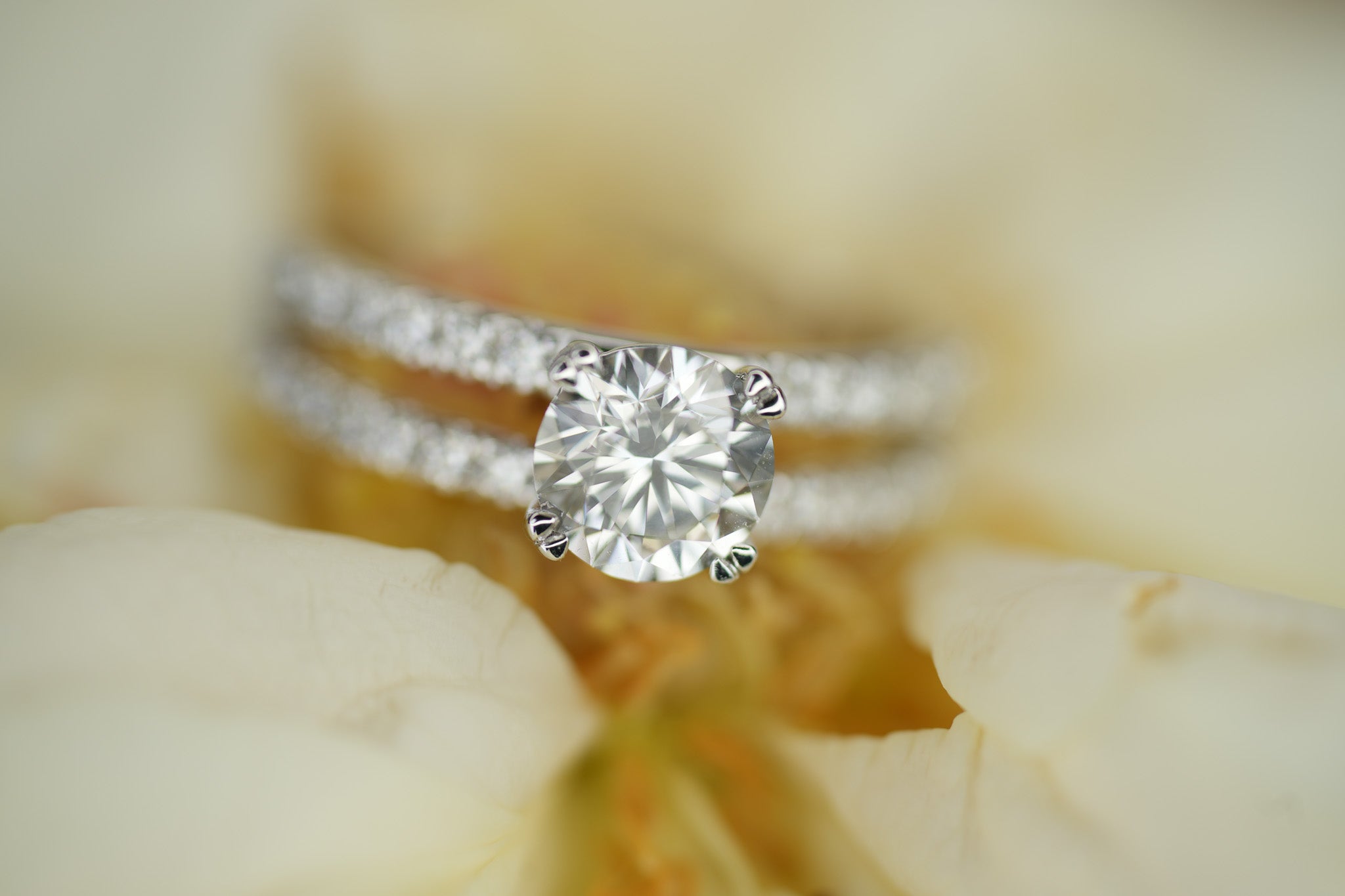
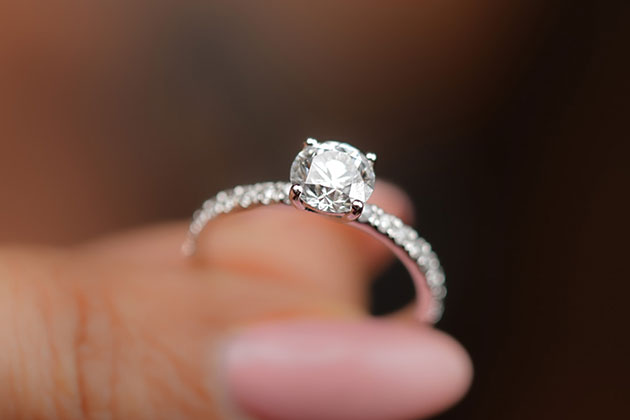
The round brilliant cut is, by an enormous margin, the world's most popular diamond shape. It accounts for roughly 60% of all diamond sales globally. That dominance isn't accidental — the round brilliant was mathematically engineered over more than a century of gemological refinement to maximise the amount of light returned to the viewer's eye. When someone pictures a diamond, they picture a round brilliant.
The 58 facets of a well-cut round brilliant interact with light in a way that no other shape quite matches. Maximum brightness, balanced fire, extraordinary sparkle from every angle. An Excellent or Ideal cut round brilliant in a simple solitaire setting is one of the finest optical achievements in jewellery design.
The trade-off is price. Round brilliants command a premium of 10–30% over equivalent fancy shapes. This is because cutting a round from rough diamond crystal wastes more material than other shapes — the excess rough that gets polished away is priced into the finished stone. You're paying for that waste.
Who it suits: Essentially everyone, but particularly those who want a timeless, universally recognised look. If she has never expressed a strong preference for another shape, round brilliant is the safe and excellent choice.
The Modern Favourite — Oval
Oval has become the dominant fancy shape of the current era, and for good reason. It combines the brilliant-cut facet structure of a round (meaning very similar fire and brightness) with an elongated silhouette that flatters almost every hand type. An oval diamond sits larger on the finger face-up than a round of the same carat weight — you get more visible surface area per rupee.
The elongated shape creates an optical illusion that makes fingers appear longer and more slender. For shorter fingers, this can be genuinely flattering. For longer fingers, it's equally elegant.
One thing to watch with ovals: the "bow-tie effect." This is a dark shadow in the centre of the stone that occurs when light is not adequately returned from the central facets. It's present to some degree in almost all elongated brilliant cuts, but a well-cut oval minimises it. Always view an oval in person or via video before purchasing — a bowtie that's barely perceptible in one stone can be prominent and distracting in another.
Who it suits: Those who want brilliant-cut sparkle with a modern, fashion-forward edge. Great for medium to shorter fingers. Currently very popular for engagement rings.

The Romantic — Cushion Cut
The cushion cut is one of the oldest diamond shapes still in widespread use — it's been popular for over 200 years, which tells you something about its enduring appeal. The shape is roughly square or rectangular with softly rounded corners, reminiscent of a pillow (hence "cushion"). It has a warm, romantic, slightly vintage quality.
Modern cushion cuts come in two main varieties: cushion brilliant (more sparkle, similar to round) and cushion modified brilliant (a slightly different facet pattern that often creates a "crushed ice" effect — more scattered, glittery light rather than the large, bold flashes of a classic brilliant). Neither is better; they're different looks.

Cushions tend to retain colour more than rounds, which means a stone that grades H might show slightly more warmth in a cushion than in a round. If colour-facing is important to you, go one grade higher in colour for a cushion than you might for a round.
Who it suits: Those drawn to vintage or romantic aesthetics. Works beautifully with halo settings, which enhance the cushion's soft outline. Popular for both engagement rings and fashion pieces.
The Elongated Teardrops — Pear and Marquise
We're grouping these two because they share the most important characteristic: they're the longest-looking shapes in the diamond world, and both create a significant slimming effect on the finger.
Pear (teardrop): A combination of round at the base and marquise point at the top. The pear should always be worn with the point facing toward the fingertip — point-down tends to look awkward and can make the hand appear wider. The pointed end is a vulnerability; prong settings for pear diamonds need to have a sturdy V-prong or bezel protecting that tip. A chip at the point is the most common damage scenario for pear diamonds.
Like ovals, pears can show a bowtie effect — check for it before buying. A well-cut pear is stunning. A poorly-cut one with a pronounced bowtie is disappointing.
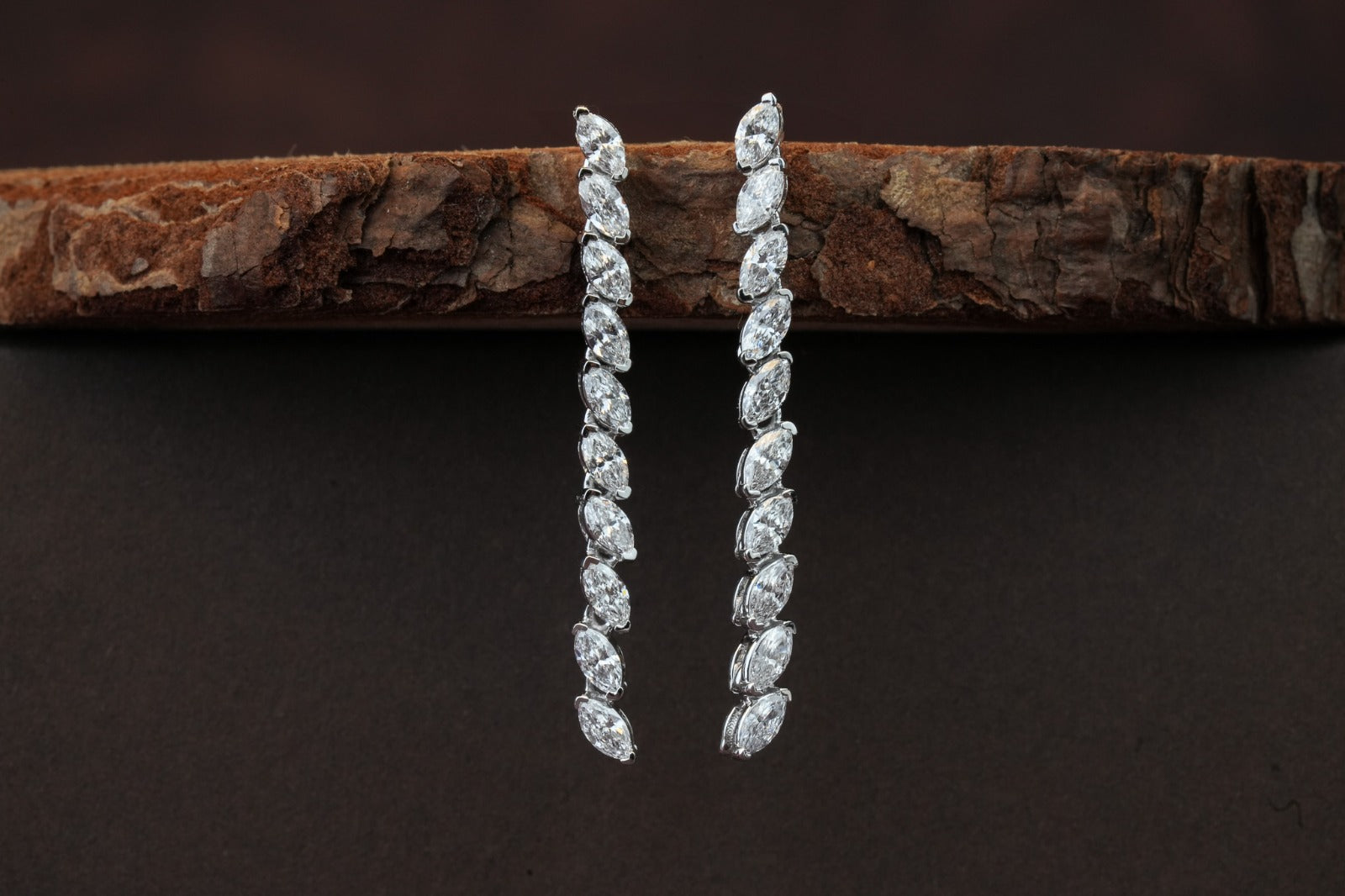
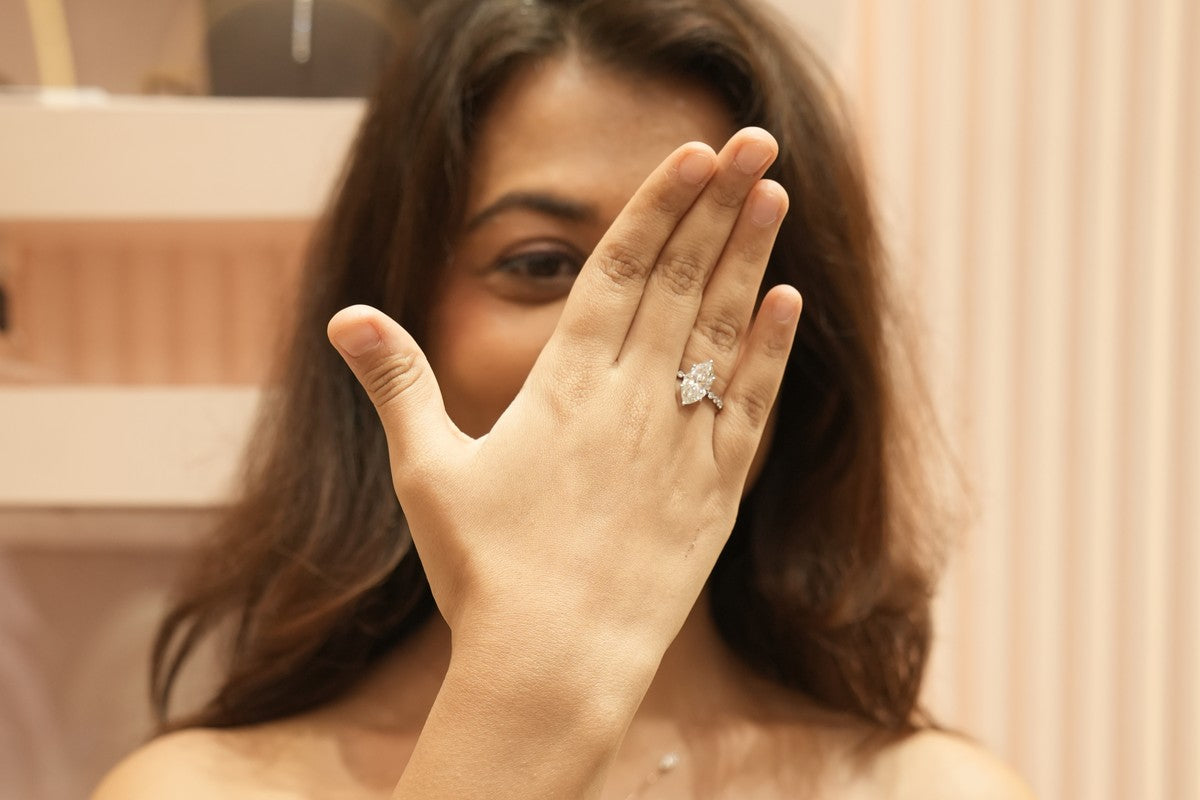
Marquise: The most elongated of all standard shapes — a narrow ellipse with points at both ends. The marquise makes any finger look slimmer and longer than any other shape. It's a bold, dramatic choice. Both points need protection in the setting. Marquise diamonds also exhibit the bowtie effect; the same advice applies — view carefully before purchasing.
Who these suit: Anyone wanting maximum finger-elongating effect. Pear is currently enjoying a strong fashion moment. Marquise is bolder and less common — if she's noticed them and expressed admiration, it's likely deliberate and personal.
The Architectural — Emerald and Asscher (Step Cuts)
Step cuts are completely different from brilliant cuts. Where brilliant cuts are designed to maximise sparkle through a multitude of angled facets, step cuts have broad, flat facets arranged in parallel steps. The result is not sparkle in the conventional sense — it's a deep, liquid reflection called the "hall of mirrors" effect. Light enters, reflects off the broad facets, and creates a sense of depth and drama rather than the flash-and-fire of a brilliant cut.
Emerald cut: Rectangular with cut corners and step facets. Originally developed for — unsurprisingly — emeralds, whose natural inclusions make them vulnerable to the stresses of brilliant cutting. The emerald cut's large, open facets create a window into the diamond that is elegant, sophisticated, and utterly unlike any brilliant cut. Art Deco in sensibility. Favoured by people who find conventional diamond sparkle excessive and want something more understated.
The catch: those same open facets reveal everything. Inclusions, colour — they're all more visible in an emerald cut than in a brilliant of the same grades. Plan to spend more on clarity (VS1 or better) and colour (G or higher) for an emerald cut. The savings from buying a fancy shape are partially offset by needing better quality grades.
Asscher cut: Like an emerald cut, but square rather than rectangular. Developed in 1902 by the Asscher Diamond Company in Amsterdam. It has a stronger Art Deco identity — the square step cut with cut corners creates an almost octagonal outline that is unambiguously vintage in character. The same clarity and colour advice applies as for emerald cuts.
Who these suit: Those with a sophisticated, unconventional aesthetic. Not for someone who wants the most sparkle — these shapes are for those who appreciate elegance over flash. Both shapes look exceptional in simple bezel or four-prong settings.
The Bold — Princess Cut

The princess cut is a square diamond with brilliant-style facets — which means it combines the geometric crispness of a square shape with genuine sparkle. It's the second most popular diamond shape after round brilliant, and it's significantly less expensive than a round of the same carat weight because it wastes less rough in cutting.

The sharp corners of a princess cut require attention in the setting. Those corners are points of structural vulnerability — they can chip if the setting doesn't protect them properly. Four-prong settings that bracket each corner are the correct choice for princess cuts. Bezel settings also work well.
Princess cut diamonds can look slightly smaller face-up than rounds of the same carat weight, because more of the stone's weight sits in the depth rather than the surface area. This varies by specific stone; worth checking proportions when buying.
Who it suits: Those who want brilliant-cut sparkle but prefer a more angular, geometric aesthetic to the traditional round. Works well for people who like clean, modern jewellery design.
How to Choose Based on Hand Shape and Finger Type
This isn't a rigid science, but there are some genuine compatibility principles worth considering.
- Short fingers: Elongated shapes — oval, pear, marquise, emerald — create the illusion of length. Avoid very wide shapes or large cushions that can make the finger appear shorter.
- Long fingers: Almost any shape works well. Long-fingered hands can carry larger stones and wider shapes elegantly. Cushion, round, and princess cuts can look especially balanced on longer fingers.
- Wide fingers: Elongated shapes again. Round brilliants and princess cuts can emphasise width; ovals and pears visually offset it.
- Slim fingers: Smaller, more delicate settings and stones tend to suit slim fingers better — a very large stone on a slim finger can look unbalanced in a way that's ultimately uncomfortable to wear.
These are considerations, not rules. We've seen cushion cuts look extraordinary on short fingers and round brilliants that suit every hand type perfectly. The final judge is always the person wearing the ring.
Shape and Setting — What Works Together
Shape and setting are a pair, not independent decisions. The wrong combination can undermine an otherwise beautiful stone.
- Solitaire: Works with every shape, but particularly iconic with round brilliant. For step cuts, a solitaire setting is essentially mandatory — it lets the stone speak for itself.
- Halo: Works exceptionally with cushion, oval, and round. A halo of smaller brilliant-cut diamonds around a step-cut centre can look incongruous — the facet styles conflict. Use consistent facet styles when combining stones.
- Three-stone: Works best with round, oval, and cushion centre stones. Side stones should complement, not compete — typically slightly different shapes or significantly smaller stones.
- East-west settings: Oval and marquise stones set horizontally ("east-west") rather than vertically are a strong current trend. It changes the finger-elongating effect considerably, but creates a distinctive, fashion-forward look.
- Pavé bands: Work with all shapes. The detail of pavé-set side diamonds tends to suit shapes with their own detail — brilliant cuts — more naturally than the clean minimalism of step cuts, though there are exceptions.
Related Reading
- The Men's Guide to Buying a Lab Grown Diamond Engagement Ring
- Lab Grown Diamond Price Guide India 2026
- Lab Grown Diamond vs Moissanite: What's Actually Different?
Frequently Asked Questions
Which diamond shape looks biggest for the money?
Oval, pear, and marquise shapes all appear larger face-up per carat than round brilliants because their mass is distributed across more surface area. Of these, marquise typically appears the largest. All three are priced below equivalent round brilliants, so you get more visual size for the same budget.
Is round brilliant always the most expensive shape?
Generally yes, for comparable quality grades. The round brilliant premium ranges from roughly 10–30% over most fancy shapes, driven by higher rough diamond waste in cutting. Princess and cushion are typically among the most affordable fancy shapes.
Do step cuts like emerald require higher clarity grades?
Yes, practically speaking. The broad open facets of step cuts make inclusions more visible than the complex faceting of brilliant cuts, which breaks up and hides inclusions. For emerald and Asscher cuts, we recommend VS1 or VS2 at minimum, and F–H in colour. The quality upgrade costs money, but it partially offsets the shape discount.
Can I change the shape of a diamond later?
No. A diamond can be re-cut or re-polished, but it would lose carat weight in the process, and the economics rarely make sense. Shape is a permanent decision. Setting and metal can be changed; shape cannot.
Shop Lab Grown Diamond Jewellery: Rings | Earrings | Pendants | Bracelets | Engagement Rings | Tennis Bracelets
Read more
Lab Grown Diamond vs Moissanite: What's Actually Different?
Lab grown diamond vs moissanite — what's the real difference in brilliance, hardness and value? An honest side-by-side comparison. Blu Diamonds.
Read more
Lab Grown Diamond Resale Value: The Honest Truth Nobody Tells You
The honest truth about lab grown diamond resale value — plus how Blu Diamonds' 80-90% buyback and lifetime exchange changes the equation entirely.
Read more