

Lab Grown Diamond Price Guide India 2026 — What You'll Actually Pay
If you've ever tried to shop for a diamond online in India, you already know the frustration. Prices vary wildly between stores. Nobody quotes the same number twice. One jeweller tells you a 1-carat diamond costs ₹80,000; the next quotes ₹2.5 lakh for something that looks identical. And when you ask why, you get a lot of vague answers about "quality" and "certification" and very little that actually helps you make a decision.
This guide cuts through all of that. We're going to tell you exactly what lab grown diamonds cost in India in 2026, what drives those prices, and what different budgets will realistically get you. No padding, no upselling. Just the information you need.
How Lab Grown Diamond Prices Have Changed (2020–2026)
The story of lab grown diamond pricing over the past five years is one of the most dramatic price collapses in the history of any luxury product category.
Between January 2020 and December 2024, wholesale lab grown diamond prices fell approximately 74%. That's not a typo. A stone that wholesaled at ₹100 in early 2020 was wholesaling at around ₹26 by end of 2024. The price drop continued into 2025, with year-on-year wholesale prices falling a further 26%.
What caused this? Primarily manufacturing scale. Lab grown diamonds are produced using two methods — HPHT (High Pressure High Temperature) and CVD (Chemical Vapour Deposition). Both technologies have become dramatically more efficient. Reactors got faster, larger, and cheaper to run. Production capacity surged, particularly out of India and China. Supply outpaced demand and prices fell accordingly.
The good news for buyers is that the pace of decline appears to be slowing. Quarterly price drops narrowed significantly in late 2025, and there's a reasonable argument that we're approaching a price floor — the level at which it genuinely costs money to produce the diamond, and below which producers simply stop producing. We're not going to promise prices have hit bottom, but the era of 40–50% annual declines does appear to be behind us.
For buyers, this means 2026 is a genuinely excellent time to purchase. You're getting stones at historically low prices, and the dramatic further drops of prior years are unlikely to repeat at the same rate.
What Determines the Price of a Lab Grown Diamond
Before we get to the actual numbers, you need to understand what you're paying for. Lab grown diamond pricing isn't arbitrary — it's driven by a set of well-established factors.
The 4Cs and Their Price Impact
Every diamond — lab grown or mined — is graded on four criteria: Cut, Colour, Clarity, and Carat weight. These are the 4Cs, and they are the primary drivers of price.
- Cut: This is the most important factor for beauty, and it also affects price. Cut grades range from Excellent/Ideal at the top through Very Good, Good, Fair, and Poor. An Excellent cut maximises the diamond's brilliance. We'd never recommend going below Very Good cut — the visual difference is immediate and permanent. Budget for at least Good; stretch for Excellent if you can.
- Colour: Diamonds are graded on a D-to-Z colour scale, where D is perfectly colourless and Z shows obvious yellow tint. For most people, the sweet spot is G–H — near-colourless, with any warmth effectively invisible to the naked eye once the stone is set. D–F grades command a premium for a difference that requires magnification and comparison to detect. J and below starts to show warmth that many people can see.
- Clarity: Refers to inclusions (internal characteristics) and blemishes. The scale runs from Flawless (FL) down through Internally Flawless (IF), Very Very Slightly Included (VVS1/VVS2), Very Slightly Included (VS1/VS2), Slightly Included (SI1/SI2), and Included (I1/I2/I3). For most buyers, VS2 or SI1 is the practical sweet spot — inclusions at this level are not visible without a loupe. Going FL or IF is mostly paying for a certificate grade rather than a visible difference.
- Carat: This is weight, not size — though the two correlate closely. Carat weight has an outsized effect on price because demand is heavily concentrated at certain sizes. A 1.00ct stone costs significantly more than two 0.50ct stones of equal quality, simply because of that round-number psychology. More on this below.
Shape (Round vs Fancy)

Shape matters more to price than most people realise. The round brilliant cut is the most popular diamond shape in the world — it accounts for roughly 60% of all diamond sales. It also commands a price premium of 10–30% over other shapes at equivalent carat weight and quality grades.
The reason is waste. Cutting a round brilliant from rough diamond crystal wastes more raw material than cutting a fancy shape like oval, cushion, or pear. That waste is priced into the round brilliant. If you want maximum size for your budget, a fancy shape will get you more diamond per rupee.
Certification
A certified diamond is graded by an independent gemological laboratory — for lab grown diamonds in India, the two main labs are IGI (International Gemological Institute) and SGL (Solitaire Gemological Laboratories). At Blu Diamonds, our solitaire diamonds carry IGI certification and our jewellery pieces are SGL certified.

Certified stones cost more than uncertified ones. Always pay for the certification. An uncertified diamond is a diamond whose quality claims you simply have to take on faith. With IGI or SGL certification, you know exactly what you're buying. The certificate isn't just paper — it's accountability.
Real Price Examples — What ₹X Gets You in 2026
Here's where we get specific. These are approximate retail price ranges for lab grown diamond jewellery in India in 2026. Actual prices will vary based on the jeweller, specific quality grades, and metal weight — but these are honest benchmarks.
Under ₹25,000
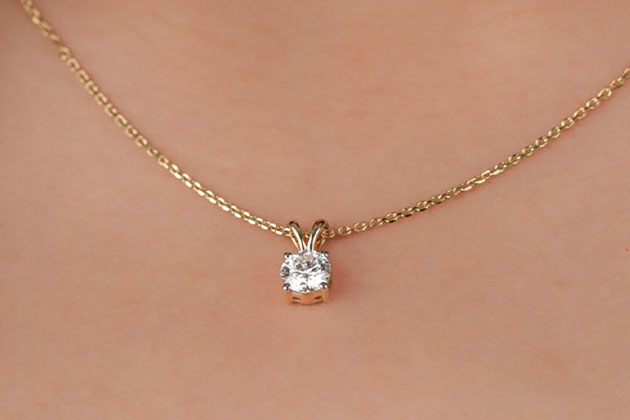
At this budget, you're typically looking at smaller solitaire earrings or pendants, or jewellery pieces with accent diamonds. Think a round brilliant solitaire pendant in the 0.25–0.40ct range, or diamond earrings with total carat weight under 0.50ct. You're not going to find a quality 1ct solitaire ring here, and anyone telling you otherwise is cutting corners on grades or certification.
This is still real diamond jewellery. A beautifully cut 0.30ct G VS2 diamond is a stunning stone — it just isn't large. For everyday wear pieces or gifts, this budget works well.
₹25,000–₹75,000
This is where lab grown diamonds genuinely democratise fine jewellery. At this budget, you can realistically get:
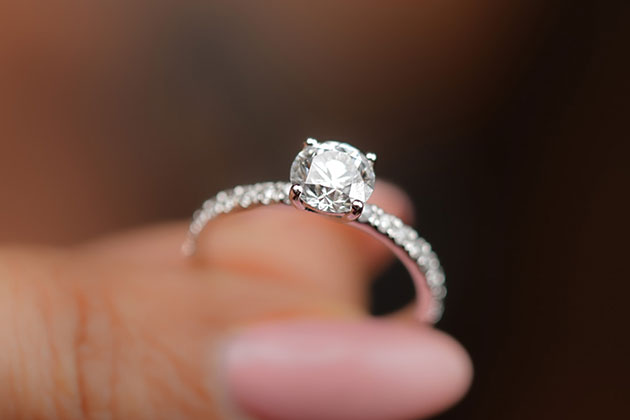
- A 0.50–0.70ct lab grown diamond solitaire ring in 14kt Yellow Gold, White Gold, or Rose Gold
- A 1.00ct lab grown diamond for the stone alone (at the lower quality grades), to be set separately
- A halo ring design with a 0.50ct centre stone and diamond accents
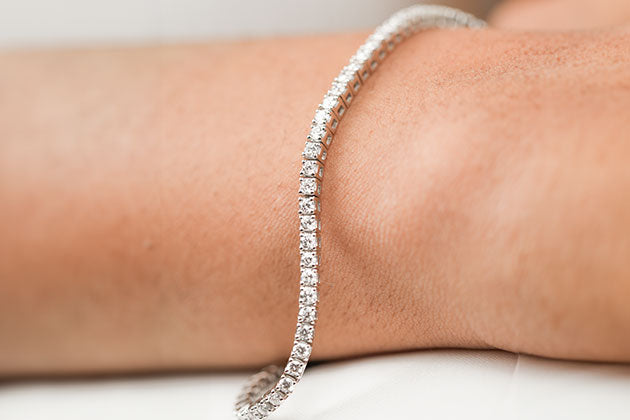
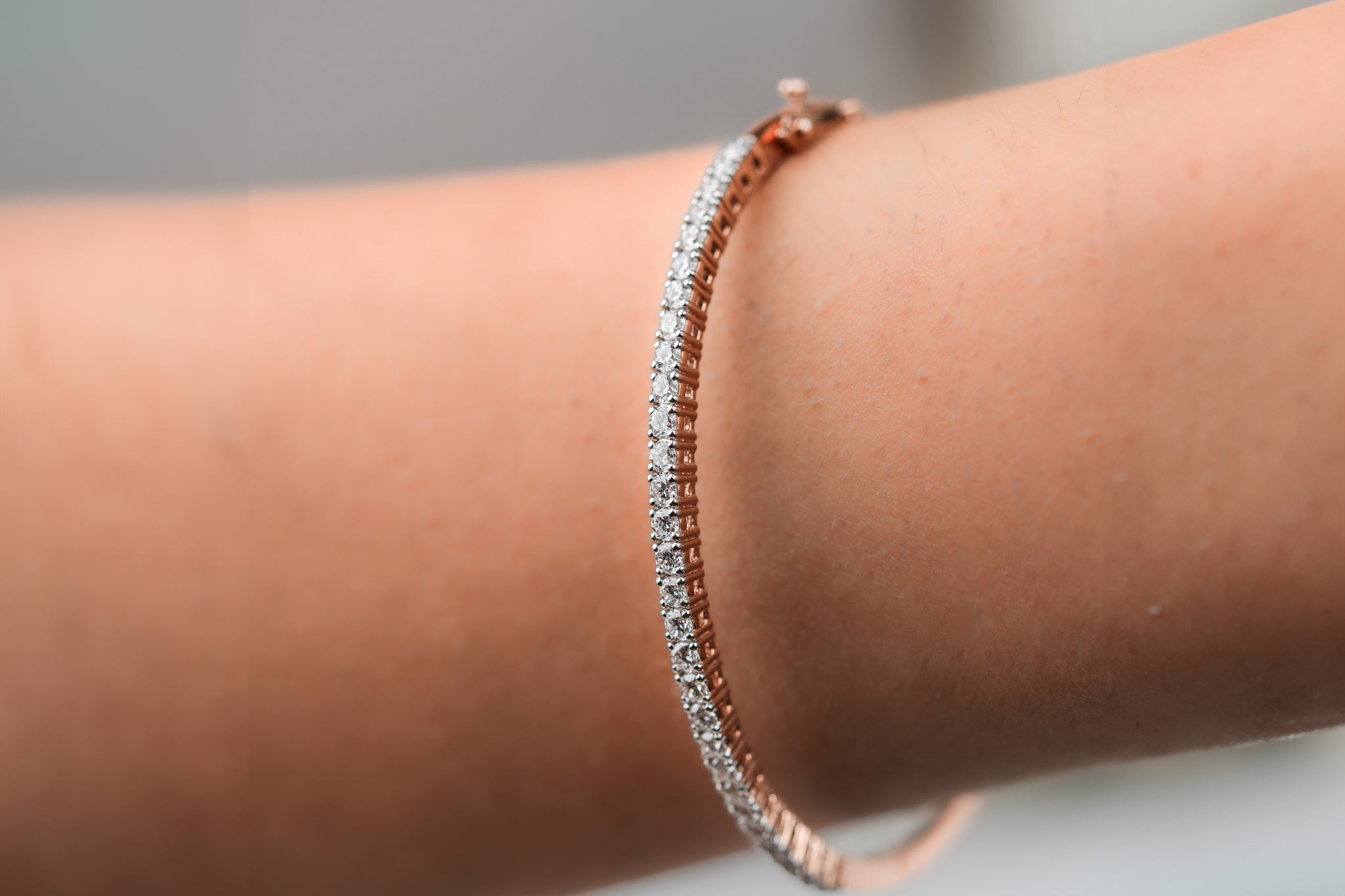
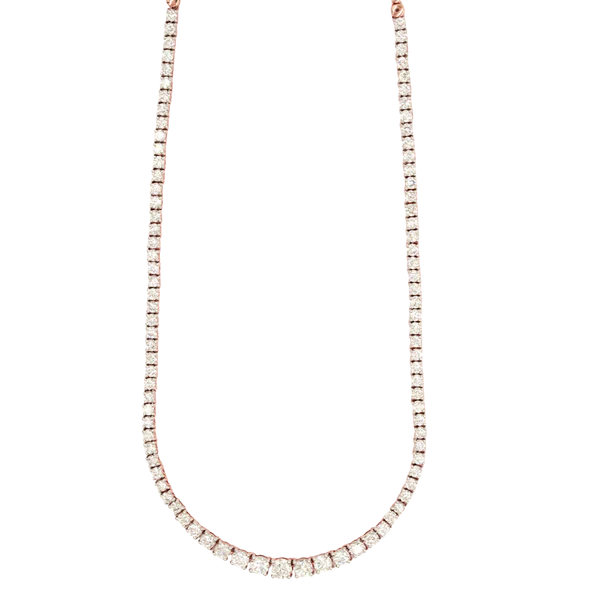
- A well-made diamond tennis bracelet with smaller stones
This is the most popular price range for engagement rings and gifting pieces in India right now, and honestly, it's extraordinary what you get for the money compared to even five years ago.
₹75,000–₹1,50,000
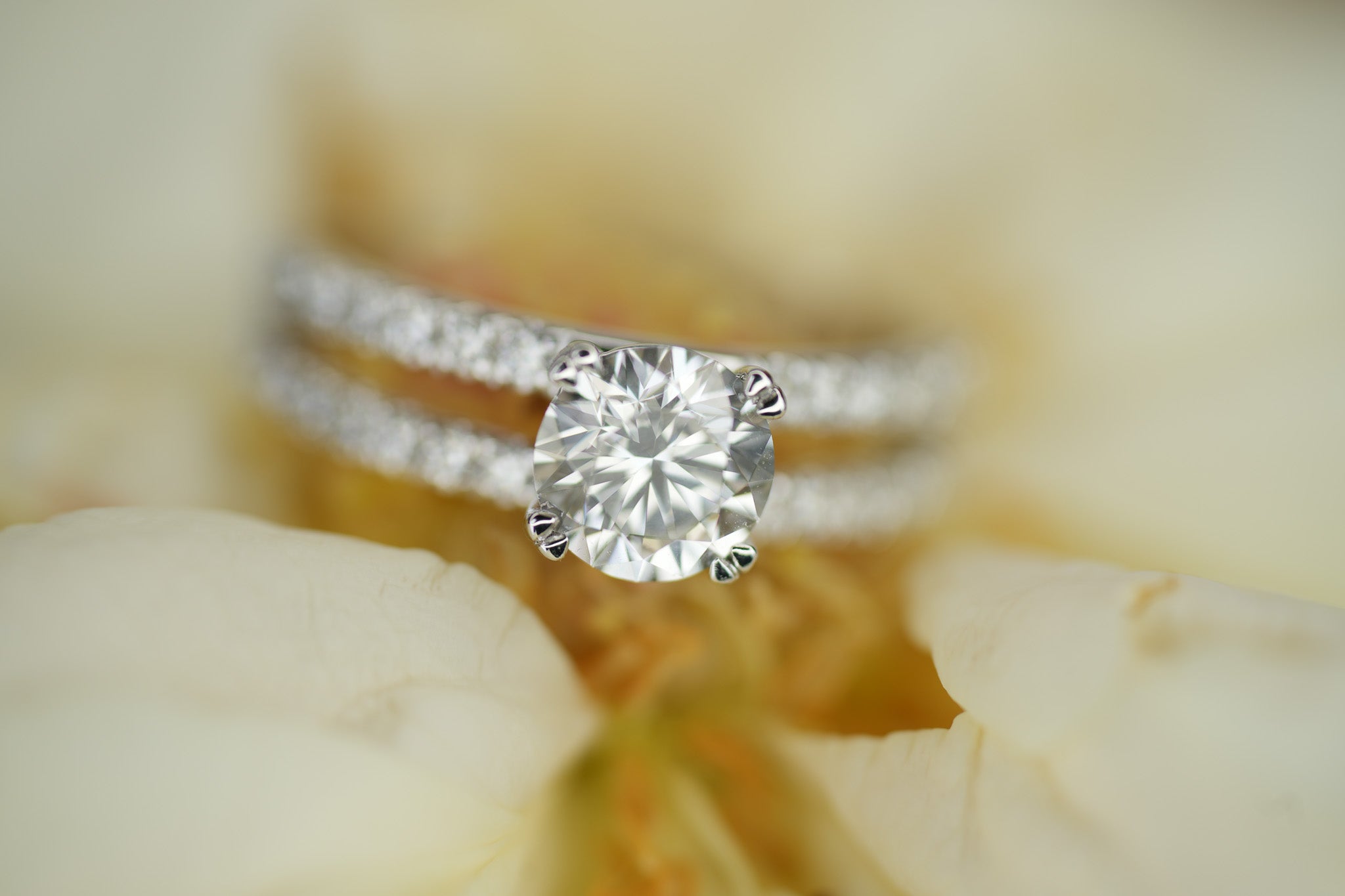
At this range, you're firmly in engagement ring territory. A 1.00ct G VS2 Excellent cut lab grown diamond solitaire in 18kt gold lands comfortably here. You can also step up to 1.50ct in slightly lower grade combinations, or invest in more complex settings — three-stone rings, elaborate halos, pavé bands with significant diamond coverage.
The combinations available at this budget are extensive. It's worth spending time with a knowledgeable jeweller who can show you how different trade-offs in the 4Cs affect both appearance and price — sometimes dropping one grade in one category and upgrading another gets you a visually superior stone for the same money.
Above ₹1,50,000
You're now in the territory of 2ct+ solitaires, high-colour high-clarity stones (D–F, VVS), elaborate custom designs, or significant diamond jewellery sets. Lab grown makes this entirely accessible in a way mined diamonds simply don't — the equivalent mined diamond jewellery at this tier would cost three to five times more.

Lab Grown vs Mined — The Price Gap in Numbers
Let's be concrete. A 1ct round brilliant, G colour, VS2 clarity, Excellent cut, IGI certified mined diamond in India currently retails at approximately ₹1.5–3 lakh, depending on the specific stone and retailer. The equivalent lab grown diamond costs approximately ₹25,000–45,000.

That is a 70–80% price difference. For the same stone, chemically and physically. The lab grown diamond is carbon, structured in the same cubic crystal lattice as the mined diamond, with the same hardness (10 on the Mohs scale), the same refractive index, the same thermal conductivity. A standard diamond tester cannot distinguish between them. A trained gemologist looking under magnification might spot growth characteristics — but the diamond itself is no different.
The price difference is entirely about origin and market dynamics, not quality.
What About the Gold? (Metal Pricing Explained)
The diamond gets most of the attention, but in a ring or bracelet, the gold is a real cost component that people often underestimate.
Gold prices in India in 2026 remain elevated. 14kt gold (58.5% pure gold, the most common purity for lab grown diamond jewellery internationally) is priced based on the daily gold rate. A typical solitaire ring band in 14kt gold might weigh 3–5 grams. At current gold prices, that's a meaningful component of the total ring price. Making charges — the labour cost of crafting the piece — add further to the final price.
18kt gold (75% pure) is more expensive per gram and is common in higher-end jewellery. Some buyers prefer 22kt for traditional Indian jewellery, but this is too soft for prong settings holding diamonds.
When comparing prices between jewellers, always check whether you're comparing like-for-like in terms of gold purity and weight. A lower-priced ring might use less gold or lighter gauge metal.
Is Now a Good Time to Buy?
Honestly? Yes. Not because prices will definitely rise — we won't make that claim — but because prices are at historically low levels and the pace of decline has slowed materially. You're unlikely to see another 74% drop in the next five years.
More importantly: jewellery isn't a financial instrument. The question isn't really "will this be worth more later?" It's "do I want a beautiful diamond piece now?" Lab grown diamonds at 2026 prices give you access to diamonds that would have been completely out of reach at equivalent budgets five years ago. That's a genuinely good deal for buyers.
Buy what you love. Buy certified. Buy from a jeweller who explains what you're getting. The rest is noise.
Related Reading
- Diamond Shape Guide: Round, Oval, Cushion, Pear, Emerald
- Lab Grown Diamond vs Moissanite: What's Actually Different?
- Lab Grown Diamond Resale Value: The Honest Truth
Frequently Asked Questions
Are lab grown diamonds real diamonds?
Yes. Chemically, physically, and optically identical to mined diamonds. They are carbon in a cubic crystal structure — exactly the same as the diamond in your grandmother's ring. The only difference is where they were made.
Why are lab grown diamond prices so different between jewellers?
Primarily because of quality differences (4Cs), certification status, gold purity and weight, and making charges. Always ask for the IGI or SGL certificate and compare stones of the same grade when comparing prices.
Will lab grown diamond prices fall further?
They may fall somewhat, but the dramatic drops of 2020–2024 are unlikely to repeat at the same rate. Production costs have a floor, and the market appears to be stabilising.
Is IGI certification worth paying for?
Always. An uncertified diamond is an unverified diamond. IGI certification gives you an independent, internationally recognised assessment of the stone's exact quality. It protects you at the point of purchase and matters if you ever want to insure the piece.
Shop Lab Grown Diamond Jewellery: Rings | Earrings | Pendants | Bracelets | Engagement Rings | Tennis Bracelets
Read more
How to Find Your Ring Size at Home — Complete Guide for India (2026)
Find your exact ring size at home with our simple guide. String method, paper strip method and printable ring sizer — works for Indian ring sizes.
Read more
Lab Grown Diamond vs Moissanite: What's Actually Different?
Lab grown diamond vs moissanite — what's the real difference in brilliance, hardness and value? An honest side-by-side comparison. Blu Diamonds.
Read more