

Lab Grown Diamond vs Moissanite: What's Actually Different?
This is a comparison that comes up constantly, and it deserves an honest answer rather than the usual jeweller hedging. So let's be direct: lab grown diamonds and moissanite are both real, legitimate products. Neither is a scam. But they are fundamentally different materials, and the decision between them comes down to what you actually want — not just your budget.
We'll lay out the facts clearly. By the end of this, you'll know exactly which one is right for you.
What Is Moissanite? (And Where Did It Come From?)
The origin story of moissanite is genuinely remarkable. In 1893, a French chemist named Henri Moissan was examining rock samples from a meteor crater in Arizona. He found tiny crystals that he initially believed to be diamonds. They weren't. They were silicon carbide — a compound of silicon and carbon, not pure carbon. He'd discovered a new mineral, which was later named moissanite in his honour.
Natural moissanite is extraordinarily rare — essentially non-existent in any quantity useful for jewellery. Every moissanite stone you see in a ring or earring today is laboratory created. The primary manufacturer and the name most people know is Charles & Colvard, though other producers have entered the market.
The fact that moissanite is lab-created is worth noting because it's sometimes presented as an "ethical" or "natural" alternative. It's neither natural nor mined — it's entirely a lab product. That's not a criticism; it's just accurate.
The Key Differences
Chemical Composition
This is the foundational difference, and it matters more than people realise.
A diamond — whether lab grown or mined — is pure carbon. The carbon atoms are arranged in a cubic crystal lattice structure, which is what gives diamond its extraordinary hardness and optical properties. A lab grown diamond is, at the atomic level, identical to a mined diamond. The same material that's been in the Queen's crown, in your grandmother's engagement ring, in every piece of fine jewellery described as a diamond for centuries.
Moissanite is silicon carbide. It has carbon in it, but it also has silicon, and the crystal structure is entirely different. It is a different material. A good one — but not a diamond.
This isn't a snobbery point. It's a factual distinction that affects how the stones behave, how they're graded, and what they mean to the person wearing them.
Hardness and Durability

Diamond is the hardest known natural material — 10 on the Mohs hardness scale. Nothing scratches a diamond except another diamond. For everyday jewellery that will be worn and knocked around over decades, this matters.
Moissanite scores 9.25 on the Mohs scale. That is genuinely excellent hardness — harder than sapphire, harder than ruby, harder than virtually everything else used in jewellery. For daily wear, moissanite is a durable choice and will not scratch easily.
In practical terms, both are good for daily wear. Diamond's edge in hardness is real but won't translate into a visible difference in normal use for most people.
How They Look — Brilliance, Fire, and the "Disco Effect"

This is where the difference becomes visible, and it's arguably the most important factor for many buyers.
The optical properties of a gemstone are described using two main terms: brilliance (the white light reflected back to your eye) and fire (the dispersion of light into spectral colours — those rainbow flashes). Both diamond and moissanite exhibit brilliance and fire, but in different proportions.
Diamond has a refractive index of 2.42. Moissanite's refractive index is 2.65–2.69 — actually higher than diamond. This means moissanite disperses more light into rainbow colours. More fire, more coloured flashes.
For some people, this is beautiful. In low light or candlelight, moissanite can be spectacular. In direct sunlight, though, many people find moissanite's fire somewhat overwhelming — too many coloured flashes, a "disco ball" quality that doesn't resemble the way a diamond handles light. Diamond's brilliance is brighter and cleaner; the fire is more subtle, more elegant.
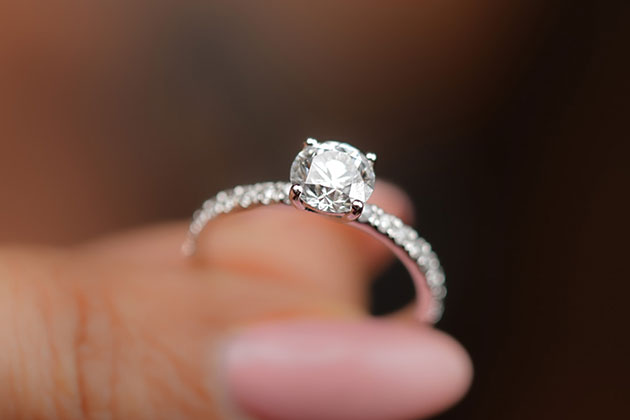
Whether you prefer diamond's look or moissanite's look is genuinely subjective. But they do not look identical, and an experienced eye — or simply someone who has spent time around real diamonds — will notice the difference. If it matters to you or the recipient that the stone looks like a diamond, this distinction is real.
Price
Moissanite is significantly less expensive than lab grown diamonds. A 1-carat equivalent moissanite stone in India typically costs somewhere in the ₹5,000–15,000 range. A 1-carat lab grown diamond — certified, good quality — costs approximately ₹25,000–45,000.
That's a meaningful difference. If budget is the primary constraint, moissanite gives you a large, sparkly stone for very little money.
However, context matters. The same 1-carat lab grown diamond would have cost ₹2–4 lakh as a mined diamond. Lab grown has already closed a huge portion of the price gap. For most buyers, the jump from moissanite to lab grown is now achievable with modest budget adjustment.
Certification
Lab grown diamonds are graded and certified by independent gemological laboratories — IGI (International Gemological Institute), SGL (Solitaire Gemological Laboratories), or GIA. These certificates grade the stone on cut, colour, clarity, and carat weight using internationally standardised criteria.
Moissanite is not certified by these labs because it isn't a diamond — it doesn't go through diamond grading. Moissanite has its own branding and quality claims (Charles & Colvard uses grading terminology like "Forever One"), but these are proprietary, not independent third-party assessments in the same sense.
At Blu Diamonds, our solitaires carry IGI certification and our jewellery pieces carry SGL certification. When a customer asks us "what exactly am I buying?" we can hand them a certificate from an independent laboratory. With moissanite, you're largely trusting the manufacturer's own claims.
Side by Side — The Quick Summary

| Factor | Lab Grown Diamond | Moissanite |
|---|---|---|
| Material | Carbon (identical to mined diamond) | Silicon carbide (SiC) |
| Is it a diamond? | Yes | No |
| Hardness (Mohs) | 10 | 9.25 |
| Refractive index | 2.42 | 2.65–2.69 |
| Fire (rainbow flashes) | Moderate, elegant | High — some find it excessive |
| Price (1ct equivalent) | ₹25,000–45,000 | ₹5,000–15,000 |
| Independent certification | IGI / SGL / GIA | No — manufacturer grading only |
| Resale value | Poor (10–30% of purchase price) | Very poor |
| Detectable as non-diamond? | Only with specialist equipment | With optical examination or specific tester |
When to Choose Moissanite

There are situations where moissanite is a perfectly rational choice, and we'll say so plainly.
Choose moissanite if your budget is genuinely very tight and you want a large, sparkly stone for a fashion piece or a casual gift. If the recipient loves maximum sparkle and isn't particularly concerned with material identity — they just want something that looks impressive — moissanite delivers that at a very low price point.
It's also a reasonable option for jewellery you might wear hard and worry about losing — a travel ring, a gym piece, something that might take a knock. You're not going to cry about losing a ₹10,000 ring the way you might a ₹50,000 one.
However: if you're buying for an engagement ring or a significant milestone gift, think carefully. If the recipient knows jewellery, values the "diamond" part of "diamond ring," or might later ask what stone it is — you want them to be proud of the answer. "It's a lab grown diamond, IGI certified" lands very differently from "it's moissanite."
When to Choose a Lab Grown Diamond
Choose a lab grown diamond when you want a real diamond. That sounds circular, but it's the honest answer. If the material matters — if you want what has historically been considered the world's most precious gemstone, grown in a laboratory using the same chemical process as nature uses — that's a lab grown diamond.
Choose it when you want independent IGI or SGL certification. When you want a stone whose value proposition can be clearly explained. When you want the look of a diamond specifically — that particular combination of white brilliance and restrained fire that's been prized for centuries.
And choose it because, at 2026 prices, the cost difference from moissanite is more manageable than it's ever been. The stone that would have cost ₹2 lakh five years ago now costs ₹30,000. That's genuinely accessible for most buyers who are serious about fine jewellery.
What About Cubic Zirconia?
We should mention CZ briefly because it still comes up. Cubic zirconia is a diamond simulant — a synthetic material designed to look like a diamond. It's inexpensive, scores around 8–8.5 on the Mohs scale, and scratches relatively easily with daily wear. After a year or two on a ring, CZ will look cloudy and dull in a way that diamond and moissanite simply won't. It's not a serious long-term option for any piece you intend to wear regularly. Moissanite is a better choice than CZ in every meaningful category except price, and lab grown diamond is better than both.
Related Reading
- Lab Grown Diamond Price Guide India 2026
- Diamond Shape Guide: Which Shape Suits You?
- Lab Grown Diamond Resale Value: The Honest Truth
Frequently Asked Questions
Can a jeweller tell the difference between moissanite and a lab grown diamond?
A standard thermal conductivity diamond tester — the pen-like tester most jewellers use — will actually read moissanite as a diamond. They both conduct heat similarly. You need an electrical conductivity tester or a moissanite-specific tester to distinguish them reliably. Visually, moissanite's stronger rainbow fire is often a giveaway to an experienced eye, particularly in direct light.
Does moissanite lose its sparkle over time?
No — moissanite is durable enough that it won't degrade or scratch under normal wear. Its optical properties remain stable. The "disco ball" fire doesn't change.
Is moissanite marketed as a diamond?
Reputable sellers don't market it as a diamond — it isn't one. Some less scrupulous sellers blur the line, which is why you should always ask specifically what material a stone is and get documentation.
Which has better resale value — moissanite or lab grown diamond?
Neither has good resale value, honestly. Lab grown diamonds retain somewhat more than moissanite in most markets, but neither should be purchased as a financial investment. Buy either for the enjoyment of wearing it, not the expectation of selling it later.
Shop Lab Grown Diamond Jewellery: Rings | Earrings | Pendants | Bracelets | Engagement Rings | Tennis Bracelets
Read more
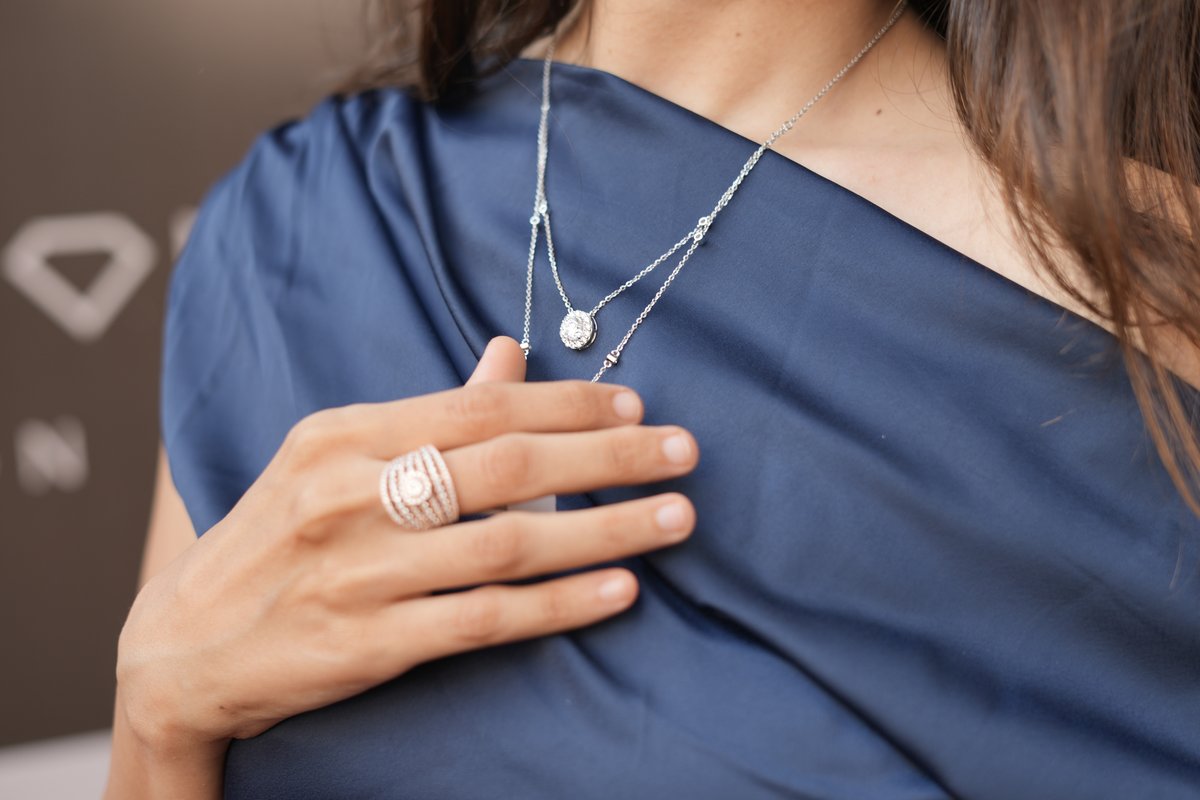
Lab Grown Diamond Price Guide India 2026 — What You'll Actually Pay
What do lab grown diamonds actually cost in India in 2026? Real prices by carat, cut and clarity — no inflated MRPs. Honest guide from Blu Diamonds.
Read more
Diamond Shape Guide: Round, Oval, Cushion, Pear, Emerald — Which Suits You?
Round, oval, cushion, pear or emerald — which diamond shape suits your hand and style? Complete guide with photos and expert tips. Blu Diamonds.
Read more