



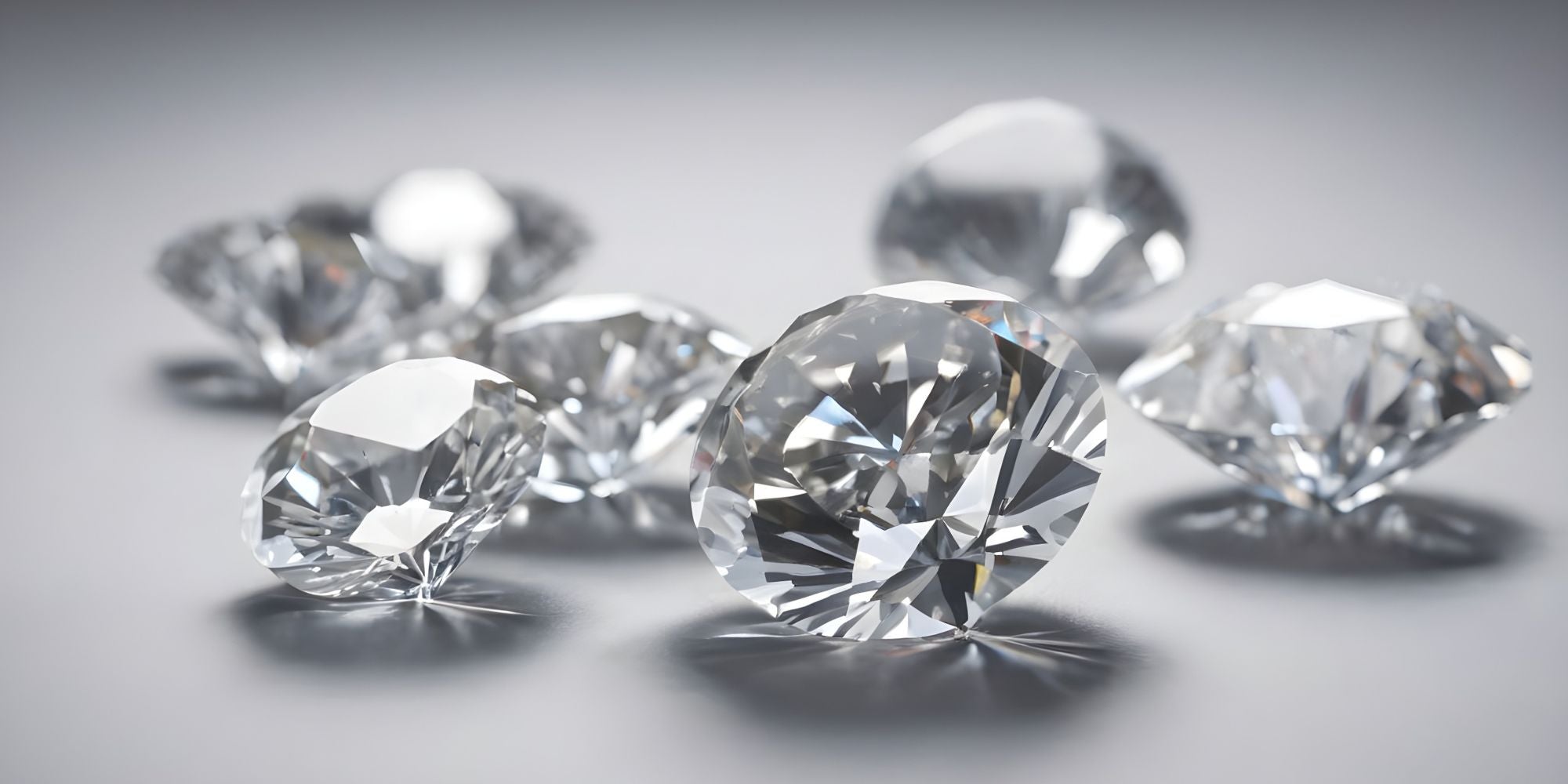
Exploring the Environmental Impact of Lab Grown Diamonds
In recent years, the jewellery industry has witnessed a revolutionary shift towards sustainable and ethical practices, with lab grown diamonds emerging as a prominent player in this movement. As consumers grow more environmentally conscious, the question of how our jewellery choices affect the planet has never been more relevant. Blu Diamonds, a distinguished name in the world of lab grown diamond jewellery, stands at the forefront of this environmental revolution.
- How Mined Diamonds Impact the Environment
- How Lab Grown Diamonds Are Made
- Environmental Footprint Comparison: Lab Grown vs Mined
- Energy Use in Lab Grown Diamond Production — The Full Picture
- Water and Land Use: Lab Grown vs Mining
- The Carbon Footprint Question — An Honest Assessment
- India's Role in Sustainable Diamond Production
- What Consumers Can Do: Making Informed Choices
- The Future: Towards Carbon-Neutral Lab Grown Diamonds
- Blu Diamonds: Committed to Sustainable Luxury
- Frequently Asked Questions
But what does the science actually say? Are lab grown diamonds truly better for the environment, or is it just marketing? In this comprehensive guide, we examine the environmental impact of both mined and lab grown diamonds honestly — acknowledging where lab grown diamonds excel and where the industry still has room to improve.
How Mined Diamonds Impact the Environment
To understand why lab grown diamonds matter, we first need to understand the environmental toll of traditional diamond mining. The scale of disruption is staggering.
Land Disruption and Habitat Loss: Open-pit diamond mines are among the largest man-made excavations on Earth. The Mir mine in Siberia stretches 1,200 metres across and 525 metres deep. The Jwaneng mine in Botswana covers over 520 hectares. For every single carat of diamond recovered, approximately 250 tonnes of earth must be moved. This massive displacement destroys ecosystems, displaces wildlife, and permanently alters landscapes that took millennia to form.
Water Consumption and Pollution: Diamond mining is extraordinarily water-intensive. Industry estimates suggest that mining a single carat of diamond requires around 480 litres of water. Beyond consumption, mining operations discharge contaminated water containing heavy metals, sulphates, and sediment into nearby rivers and groundwater systems, affecting communities and ecosystems downstream.
Carbon Emissions: From the diesel-powered excavation equipment to the transportation of rough diamonds across continents for cutting and polishing, mined diamonds carry a significant carbon footprint. Studies estimate that a single carat of mined diamond produces approximately 57 kg of carbon emissions — though this varies considerably depending on the mine, its location, and the methods used.
Ecosystem and Biodiversity Damage: Mining operations in diamond-rich regions — from the boreal forests of Canada to the river systems of West Africa to the marine environments off Namibia's coast — displace animal populations, destroy vegetation, and disrupt delicate ecological balances. Reclamation efforts, while improving, rarely restore land to its original state.
How Lab Grown Diamonds Are Made
Lab grown diamonds are real diamonds — physically, chemically, and optically identical to mined diamonds. They are produced using two primary methods, both of which replicate the conditions under which diamonds form naturally.
HPHT (High Pressure High Temperature): This method mimics the natural conditions deep within the Earth's mantle. A small diamond seed is placed in a chamber and subjected to temperatures exceeding 1,400°C and pressures above 5 GPa (roughly 725,000 pounds per square inch). Carbon dissolves from a source material and crystallises onto the seed, growing a diamond over several days to weeks. HPHT is energy-intensive but produces high-quality diamonds efficiently.
CVD (Chemical Vapour Deposition): In this process, a diamond seed is placed in a vacuum chamber filled with a carbon-rich gas (typically methane). The gas is ionised using microwave energy, breaking the carbon atoms free to deposit layer by layer onto the seed. CVD operates at lower pressures and temperatures than HPHT, and it allows for greater control over the diamond's properties. This is the method most commonly used by Indian manufacturers, particularly in Surat.
Both methods produce genuine diamonds that are graded by the same gemological laboratories (IGI, GIA, SGL) using the same Four Cs criteria applied to mined diamonds.
Environmental Footprint Comparison: Lab Grown vs Mined
When comparing the environmental impact of lab grown and mined diamonds, the data consistently favours lab grown — though the margin depends on the specific production facility and energy source.
Here is an honest comparison across key environmental metrics:
Carbon emissions: Mined diamonds produce an estimated 57 kg of CO2 per carat, while lab grown diamonds produce approximately 5–20 kg per carat depending on the energy source. Facilities powered by renewable energy push this figure to the lower end.
Land use: Mining a single carat disturbs approximately 100 square feet of land and creates nearly 6,000 pounds of mineral waste. Lab grown diamonds require the footprint of a manufacturing facility — a fraction of the land, with zero excavation.

Water use: Mined diamonds consume roughly 480 litres per carat. Lab grown diamonds use approximately 70 litres per carat — an 85% reduction.
Mineral waste: Diamond mining generates enormous quantities of waste rock and tailings. Lab grown diamond production generates negligible solid waste by comparison.
These numbers make a compelling case, but it is important to note that they are averages and estimates. The environmental impact of any individual diamond depends heavily on the specific mine or laboratory, the local energy grid, and the practices of the producer. This is why choosing a transparent, responsible brand matters — whether you are buying mined or lab grown.
Energy Use in Lab Grown Diamond Production — The Full Picture
The most common criticism of lab grown diamonds centres on energy consumption. Growing diamonds in a laboratory does require significant energy — and this is a fair point that deserves an honest response.

HPHT production consumes approximately 250–750 kWh per carat, while CVD production typically requires 100–300 kWh per carat. These are not trivial amounts. If that energy comes from coal-fired power plants, the environmental advantage narrows considerably.
However, the critical difference is this: energy sources can be changed; the environmental damage from mining cannot be reversed.
The lab grown diamond industry is actively transitioning to renewable energy. Several major producers have committed to 100% renewable energy targets. In India, the government's aggressive solar energy expansion means that Surat-based CVD manufacturers increasingly draw from a grid with growing renewable capacity. Some facilities have installed rooftop solar panels and entered into power purchase agreements with wind and solar farms.
The trajectory is clear: as global energy grids decarbonise, lab grown diamonds will only become cleaner. A mined diamond's environmental damage, by contrast, is locked in at the moment of extraction.
Water and Land Use: Lab Grown vs Mining
Water scarcity is one of the defining challenges of our time, and the jewellery industry's water footprint matters. Diamond mining operations consume vast quantities of water for processing ore, suppressing dust, and cooling equipment. In water-stressed regions of southern Africa, this consumption competes directly with agricultural and community needs.
Lab grown diamond production uses water primarily for cooling systems, and much of it is recycled within closed-loop systems. The net water consumption per carat is a fraction of what mining requires.
Land use presents an even starker contrast. A single diamond mine can occupy thousands of hectares and take decades to rehabilitate after closure — if rehabilitation happens at all. A lab grown diamond facility occupies a modest industrial building and, when decommissioned, leaves behind a structure that can be repurposed for any other industrial use. There are no tailings ponds, no waste rock piles, no permanent scars on the landscape.
For consumers who care about reducing their environmental footprint, this distinction is meaningful.
The Carbon Footprint Question — An Honest Assessment
We believe in transparency, so here is the full picture on carbon emissions.
Lab grown diamonds are not zero-carbon. The energy required for HPHT and CVD processes, the gases used in CVD chambers, and the transportation and cutting of finished stones all contribute to a carbon footprint. Anyone claiming lab grown diamonds have "zero environmental impact" is overstating the case.
What the evidence does show is that lab grown diamonds have a significantly lower carbon footprint than mined diamonds — typically 60–85% lower, depending on the energy source. And unlike mining, where emissions are an inherent consequence of the extraction process, lab grown diamond emissions are primarily a function of the energy grid — meaning they can be systematically reduced as clean energy adoption grows.
Some producers are already achieving near carbon-neutral production through a combination of renewable energy, carbon offsets, and process optimisation. The conscious luxury movement is pushing the entire industry in this direction.
The honest conclusion: lab grown diamonds are not perfect, but they are meaningfully better — and getting better every year.
India's Role in Sustainable Diamond Production
India has long been the world's diamond cutting and polishing capital, with Surat processing approximately 90% of the world's diamonds. In recent years, Surat has also emerged as a global hub for CVD lab grown diamond production.
This matters for sustainability because CVD — the less energy-intensive of the two production methods — is the dominant technology in India's lab grown diamond sector. Indian manufacturers have invested heavily in process efficiency, developing proprietary techniques that reduce energy consumption per carat while maintaining exceptional quality.
India's National Solar Mission and broader renewable energy targets are also relevant here. As India's energy grid incorporates more solar and wind capacity, the carbon intensity of Indian-produced lab grown diamonds decreases correspondingly. Several Surat-based manufacturers have proactively invested in on-site solar generation.
Blu Diamonds sources its lab grown diamonds from certified producers who adhere to strict environmental and ethical standards. Every diamond in our collection — from rings to earrings to pendants — carries the assurance of responsible, transparent production.

What Consumers Can Do: Making Informed Choices
Environmental impact is not just about the product — it is about the choices surrounding it. Here is how you can make your diamond purchase as sustainable as possible:
1. Choose lab grown diamonds. This is the single most impactful choice you can make. The environmental data consistently shows that lab grown diamonds have a substantially lower footprint across every major metric.

2. Ask about the producer's energy sources. Not all lab grown diamonds are equally green. Diamonds produced using renewable energy have a meaningfully smaller carbon footprint than those produced on coal-heavy grids.
3. Look for certified diamonds. Diamonds graded by reputable laboratories like IGI, GIA, or SGL provide assurance of quality and traceability.
4. Buy from transparent brands. Choose brands that openly discuss their sourcing, production methods, and environmental commitments — rather than those that simply use "eco-friendly" as a marketing buzzword.
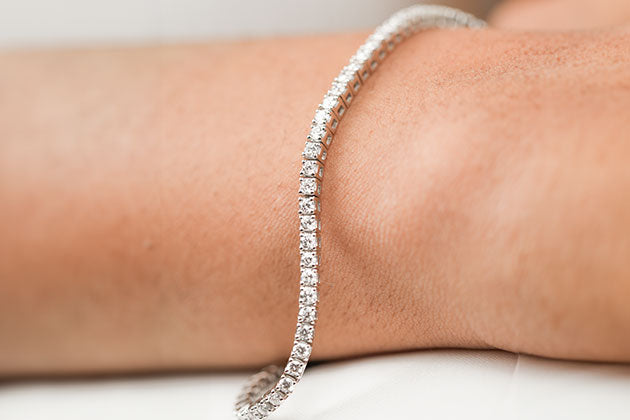
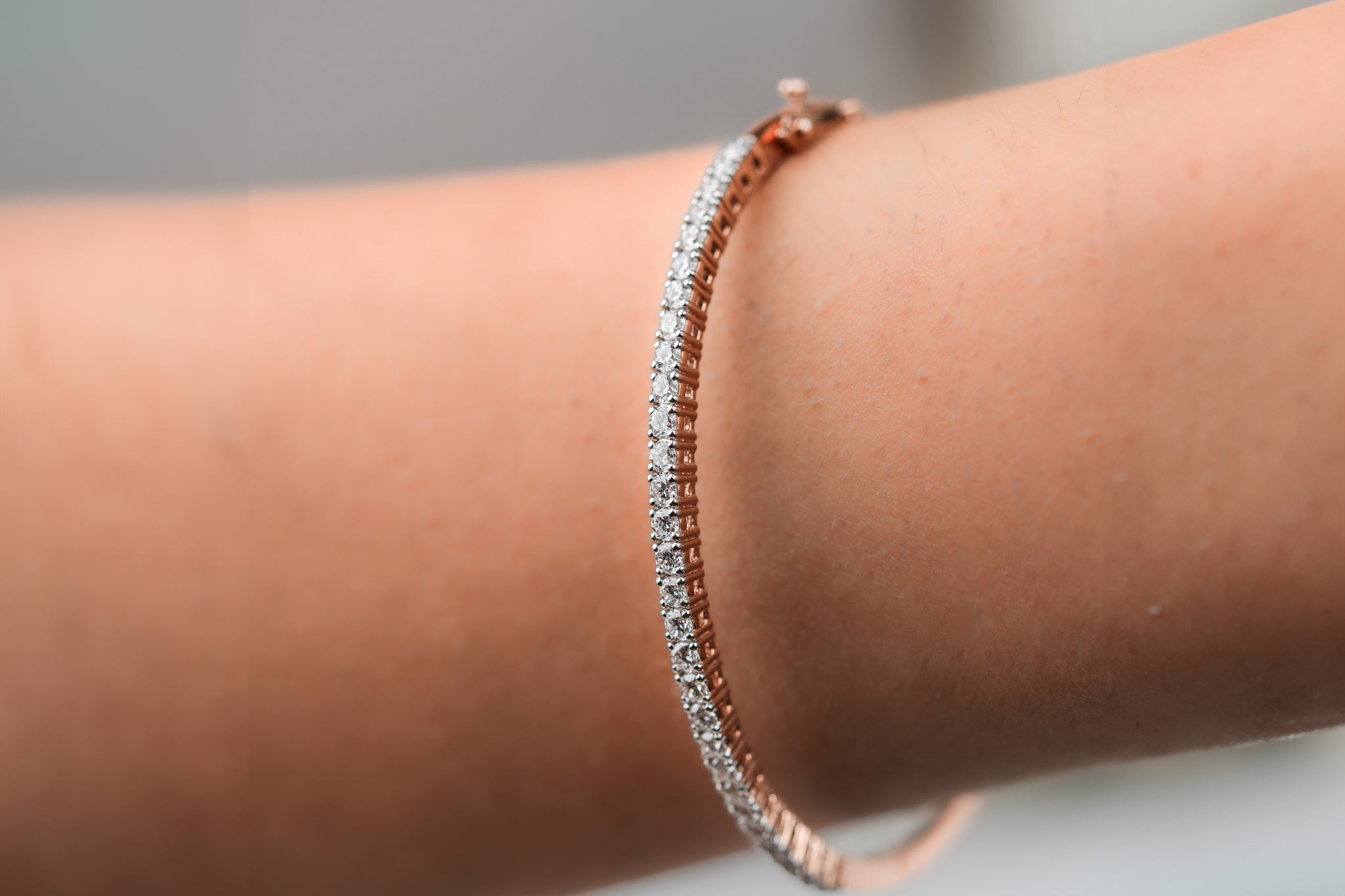
5. Consider the full lifecycle. A well-chosen piece of diamond jewellery can last generations. Timeless designs in durable settings — like those in Blu Diamonds' collections of bracelets and tennis bracelets — reduce the environmental cost per year of wear to nearly nothing.
The Future: Towards Carbon-Neutral Lab Grown Diamonds
The lab grown diamond industry is still young, and its environmental performance is improving rapidly. Several developments point towards an increasingly sustainable future:
Renewable energy integration: As solar and wind energy costs continue to fall, more producers are switching to 100% renewable power. This alone could reduce lab grown diamond emissions by 70% or more compared to grid-powered production.
Process efficiency gains: Advances in CVD and HPHT technology are reducing the energy required per carat. New reactor designs, optimised growth parameters, and better seed preparation all contribute to lower energy consumption.
Circular economy practices: Leading producers are implementing water recycling, waste heat recovery, and responsible gas management to minimise resource consumption beyond energy.
Carbon capture and offsets: Some producers are exploring direct carbon capture technologies and investing in verified offset programmes to achieve certified carbon-neutral status.
Industry standards and certification: As the market matures, expect to see standardised environmental certifications for lab grown diamonds — giving consumers even more transparency and confidence in their choices.
The direction is clear. While lab grown diamonds already represent a significant improvement over mined diamonds, the gap will only widen as the industry continues to innovate.
Blu Diamonds: Committed to Sustainable Luxury
At Blu Diamonds, sustainability is not a marketing angle — it is foundational to who we are. Our commitment to lab grown diamonds reflects a deliberate choice to offer luxury jewellery that aligns with the values of modern, conscious consumers.
Our extensive collection — available in 14kt Yellow Gold, White Gold, and Rose Gold — showcases that environmental responsibility and exquisite craftsmanship are not mutually exclusive. From engagement rings that mark life's most meaningful moments to everyday earrings that add a touch of sparkle, every piece carries the promise of beauty without compromise.
We believe that the most beautiful jewellery is jewellery you can feel good about wearing — not just because of how it looks, but because of what it represents.
Frequently Asked Questions
Are lab grown diamonds truly eco-friendly?
Lab grown diamonds are significantly more eco-friendly than mined diamonds, but they are not zero-impact. They require energy to produce and have a measurable carbon footprint. However, they eliminate land disruption, drastically reduce water consumption, and produce far less carbon than mining. The honest answer is: they are not perfect, but they are meaningfully better.
How much energy does it take to grow a diamond?
A one-carat lab grown diamond typically requires 100–750 kWh of energy depending on the production method (CVD uses less than HPHT). For context, this is roughly equivalent to the energy a typical Indian household uses in 1–3 months. As producers shift to renewable energy, the environmental cost of this energy consumption drops substantially.
Are lab grown diamonds as durable as mined diamonds?
Yes. Lab grown diamonds are physically, chemically, and optically identical to mined diamonds. They score 10 on the Mohs hardness scale, have the same thermal conductivity, and will last just as long. The only difference is their origin — a laboratory rather than the earth.
Do lab grown diamonds have resale value?
Like all diamonds, lab grown diamonds do depreciate from their retail price. However, their significantly lower purchase price means consumers get more diamond for their budget. Most buyers choose diamonds for their beauty and meaning rather than as investments.
How can I verify that a lab grown diamond is ethically produced?
Look for diamonds certified by recognised gemological laboratories (IGI, GIA, SGL) and buy from brands that are transparent about their sourcing and production practices. Blu Diamonds provides certification with every purchase and maintains full traceability across our supply chain.
Will lab grown diamonds ever be truly carbon-neutral?
Several producers are already approaching carbon-neutral production through renewable energy and offsets. As global energy grids decarbonise and production technology improves, carbon-neutral lab grown diamonds are not a question of if, but when.
Shop Lab Grown Diamond Jewellery: Rings | Earrings | Pendants | Bracelets | Engagement Rings | Tennis Bracelets
Related Reading: Lab Grown vs Natural Diamonds | The Four Cs Explained | Diamond Certification Guide | Price Guide India 2026 | 5 Ways to Reduce Your Footprint
Read more
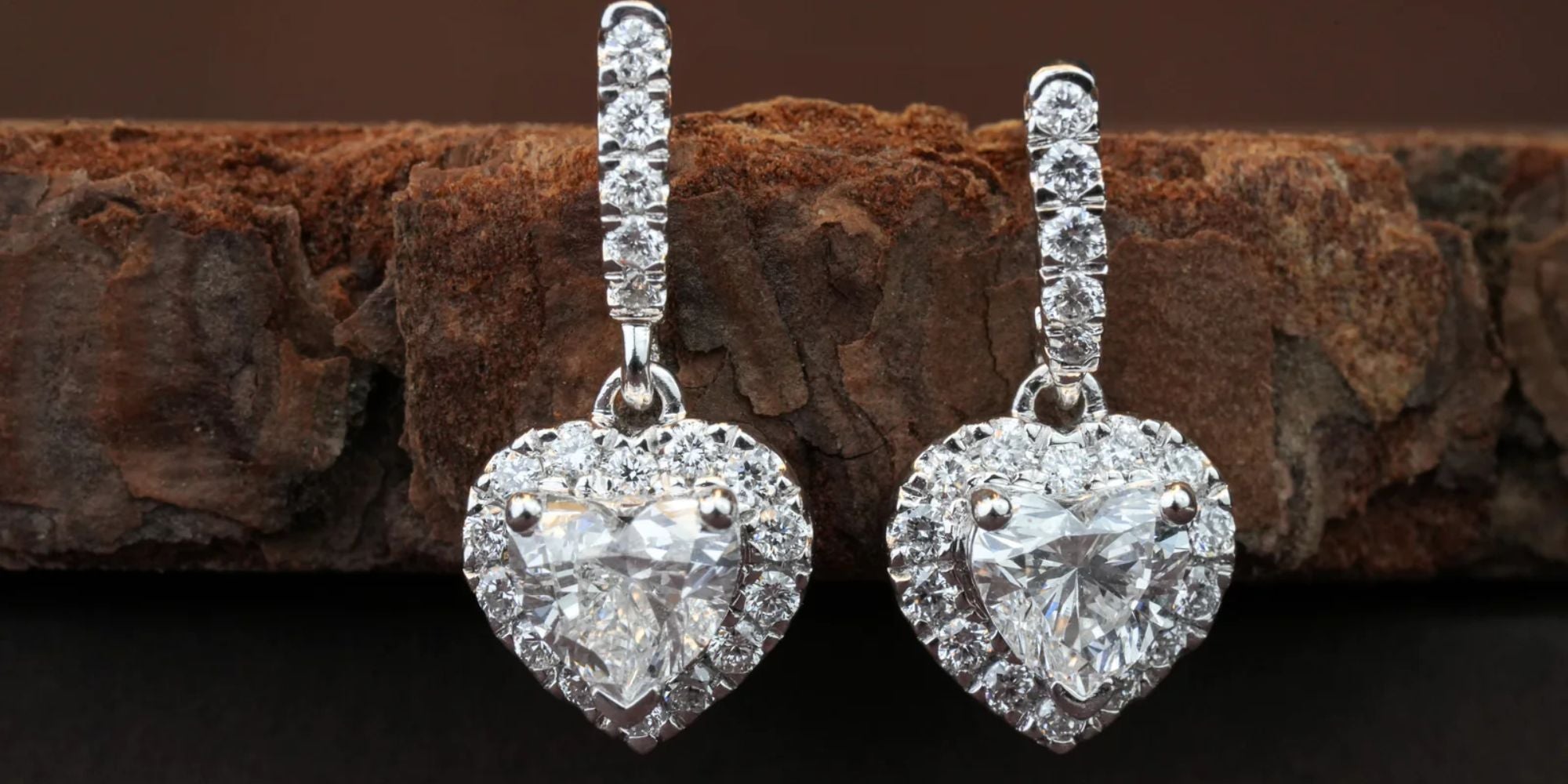
Lab Diamonds in India: Unveiling the Elegance of Solitaire and Promise Earrings
Lab grown diamonds have emerged as a contemporary and ethical alternative in the realm of fine jewellery, captivating the attention of. Blu Diamonds.
Read more
Lab Grown Diamond Certification: Ensuring Quality and Transparency
IGI vs SGL vs GIA — which diamond certificate should you trust? Compare grading standards, costs and reliability for lab grown diamonds in India.
Read more